

A business student internship is an opportunity to gain real-world experience, make industry connections, and launch your career before you’ve even graduated – and knowing how to find internships effectively can set you apart from the competition.
The good news? With the right approach, you can learn how to find internships in Canada, build valuable skills, and even turn that temporary role into a full-time job.
Here’s how to go about getting internship opportunities.
Key Takeaways
- Learning how to find internships strategically helps you access competitive business internships across finance, marketing, tech, and more.
- Students who know how to find business internships through networking, job boards, and career services gain stronger opportunities and industry connections.
- Whether you want marketing internships, finance internships, or Toronto internships in Canada, using the right tools and resources dramatically improves your results.
The Advantages of an Internship for Students in Business
If you’re wondering whether getting an internship is really worth the effort, consider this: The average business intern salary in Canada is approximately $85,000 per year (or $43.59 per hour), with entry-level positions starting around $48,750 per year.
But beyond the paycheck, the advantage of an internship for students is the experience you gain. Here’s why every business student should prioritize securing an internship:
- Real-World Experience – An internship helps you apply classroom knowledge in a practical setting.
- Networking Opportunities – 70% of professionals land their jobs through networking (and a staggering 80% of jobs aren’t even listed online).
- Skill Development – 41% of employers look at skills first when reviewing resumes, with 88% prioritizing hard skills.
- Potential for Full-Time Employment – Many internships lead directly to job offers, giving you a foot in the door at top businesses.
Steps to Getting an Internship as a Business Student
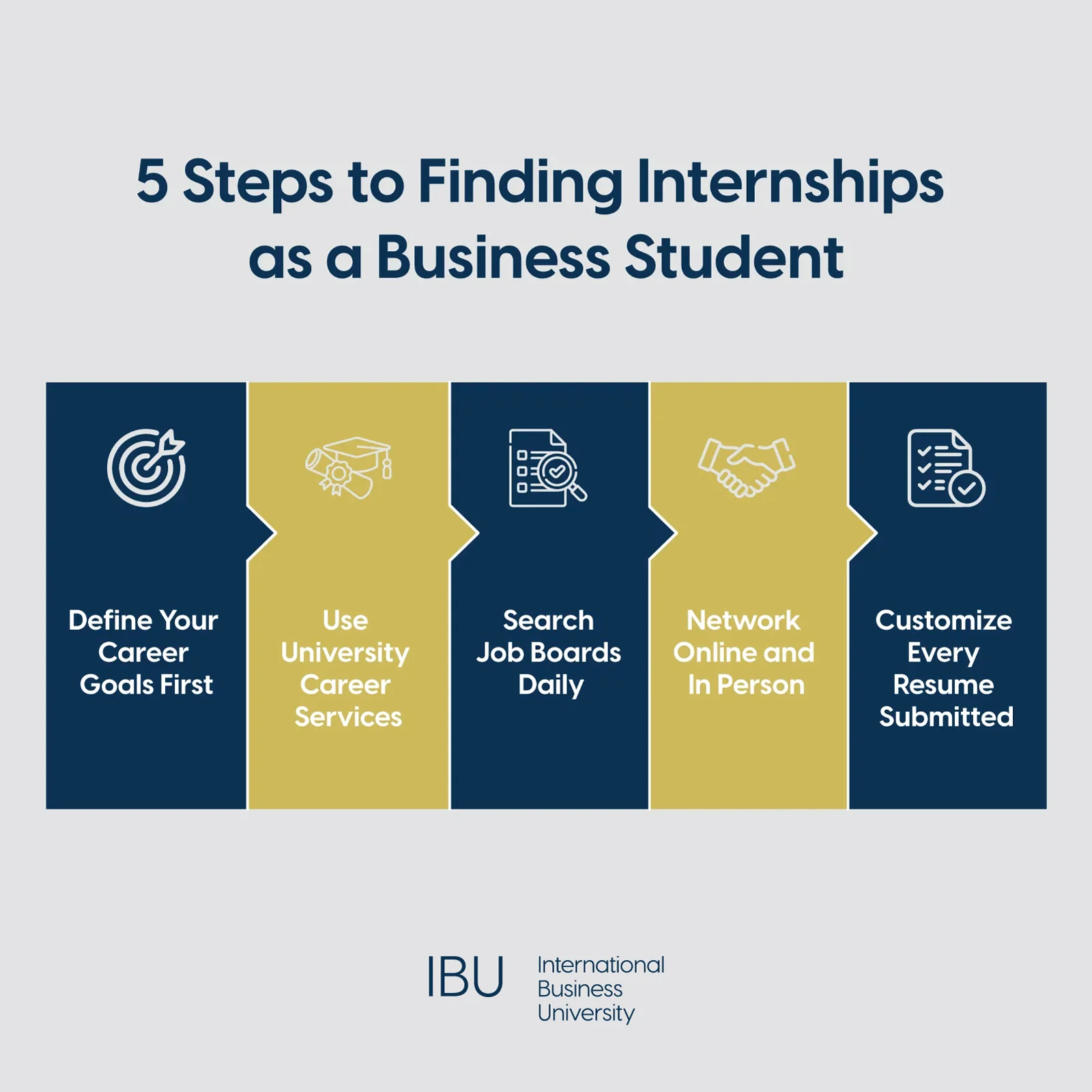
1. Define Your Career Goals and Internship Preferences
Before learning how to find an internship, start by deciding what you want from the experience.
Ask yourself:
- What industry interests me most? (Finance, marketing, entrepreneurship, tech?)
- What skills do I want to develop?
- Do I prefer a remote, hybrid, or in-person business internship?
- Am I looking for paid or unpaid internships?
2. Leverage University Career Services
If you’re wondering how to find internships, your school’s career centre may be the most valuable support you have. Many universities offer resume workshops, interview prep, and internship placement programs.
At the International Business University (IBU) in Toronto, our BCOM and MBA programs connect students with top Toronto internships in Canada, mentorship programs, and networking events.
Explore additional student support through IBU’s Student Services.
3. Search Online & Use Job Boards
While networking is powerful, job boards remain one of the best methods when learning how to find internships in Canada:
- LinkedIn Jobs – One of the best platforms for connecting directly with recruiters.
- Glassdoor & Indeed – Great for filtering paid internships.
- TalentEgg & Canada Job Bank – Specialize in entry-level opportunities for students.
- Company Career Pages – Many companies post internships only on their websites.
Set up job alerts so you never miss new internship postings!
4. Network & Attend Career Fairs
As mentioned, around 70% of professionals land jobs through networking. Here’s how to network effectively:
- Attend campus and industry career fairs
- Reach out to alumni working in your field
- Improve your communication by reading more about Communication Skills That Shape Career Success.
- Build a strong LinkedIn profile
- Request informational interviews with professionals in your desired role.
Networking is one of the strongest tools when figuring out how to find business internships.
5. Apply Strategically and Tailor Your Resume
What can you do to ensure your resume stands out in a sea of talent? Customize it for each job! Here are some tips:
- Use keywords from the job description.
- Emphasize transferable skills like leadership, communication, data analysis, and project management.
- Keep it to one page – recruiters scan resumes quickly, so keep it concise.
This approach works across business internships, marketing internships, finance internships, and human resources internship roles.
6. Prepare for Interviews and Follow Up
Once you land an interview, preparation is key. Qualifications are important, but employers also want to see confidence, problem-solving skills, and teamwork abilities. Most importantly, always research the company thoroughly before the interview.
Finally, it’s also considered polite to follow up 24 – 48 hours after the interview, thanking the interviewer for their time and expressing your interest in the position once more.
Unlock the Support You Need to Build Your Career
IBU’s Student Services team helps you polish your resume, build professional skills, and access internship opportunities across Toronto and Canada.
How to Turn Your Internship Into a Full-Time Job
Securing an internship is step one. But if you want to turn that internship into a full-time job, you need to treat it like an extended interview and do the following:
- Go Above and Beyond – Deliver work ahead of deadlines, offer to take on extra projects, and show initiative.
- Be Proactive & Ask Questions – Show curiosity and a desire to learn.
- Network Within the Company – Build relationships with team members and decision-makers.
- Seek Out Feedback – Check in with your supervisor regularly to improve your performance.
- Express Your Interest in Staying – Before your internship ends, ask about full-time opportunities.
Learning how to find internships is the first step, turning them into long-term success is where true career growth begins.
By following these steps, you can find internships that match your business career goals, gain valuable industry experience, and even turn that opportunity into a full-time role.
FAQ
How do I start learning how to find internships effectively?
Begin by identifying the type of internship you want, your preferred industry, and the skills you want to build. Then use both networking and job boards to explore available opportunities. University career centres also provide guidance, resume help, and employer connections. When combined, these steps help you find internships faster and more strategically.
What are the best ways to find internships in Canada?
Online job boards, LinkedIn, and talent platforms are excellent options for finding internships in Canada. University career centres also maintain partnerships with employers offering opportunities in Toronto and across the country. Networking with alumni and attending career fairs increases your chances significantly. Combining these methods gives you the strongest results.
How do I find business internships if I have no experience?
Focus on transferable skills such as communication, teamwork, leadership, and problem-solving. Use campus resources, introductory job boards, and beginner-friendly opportunities such as marketing internships, human resources internship roles, or finance internships. Building a strong resume and LinkedIn profile helps employers see your potential. Many companies prefer passionate learners over experienced applicants.
How can I turn an internship into a full-time role?
Show initiative, meet deadlines consistently, and ask for more responsibility whenever possible. Build relationships with team members and decision-makers across the company. Request feedback often to improve your performance and demonstrate commitment. Before the internship ends, clearly express your interest in long-term employment.
Taking Action Toward Your Internship Success
Building a strong future starts with understanding how to find internships and using the right strategies to secure them. When you combine networking, career services, and tailored applications, you dramatically increase your chances of landing competitive opportunities. Every internship helps you gain real experience, build confidence, and grow your professional network. Start now, stay consistent, and treat each step as an investment in your long-term career.
Learn What You Can Do With a Business Degree
Learn how different business paths, from finance to marketing to HR, connect to internships and long-term career growth.