

Project management in healthcare determines how effectively care systems plan, execute, and improve initiatives that directly affect patients, professionals, and outcomes. Healthcare environments operate under constant pressure from limited resources, regulatory oversight, and rising demand. Without disciplined project management, even well-intentioned initiatives stall. This guide explains how project management in healthcare supports reliable delivery, aligns teams around patient needs, and improves productivity across the health industry.
Core Principles of Project Management in Healthcare
Project management in healthcare operates within systems where precision and accountability carry real consequences. Every initiative touches patient safety, staff workload, compliance standards, and budget discipline. Core principles exist to maintain control without slowing progress.
Healthcare projects require a clear scope definition. Vague objectives create confusion across departments. Strong project leaders translate strategy into measurable outcomes that teams can track confidently.
Accountability anchors execution. Defined roles reduce overlap and miscommunication. When ownership remains clear, timelines hold and decision-making accelerates.
Adaptability also matters. Healthcare environments shift rapidly due to policy updates, technology adoption, and patient demand. Project management frameworks must support structured flexibility rather than rigid plans.
Best Practices for Project Management in Healthcare Delivery
Healthcare delivery projects demand coordination across clinical, administrative, technical, and regulatory teams.
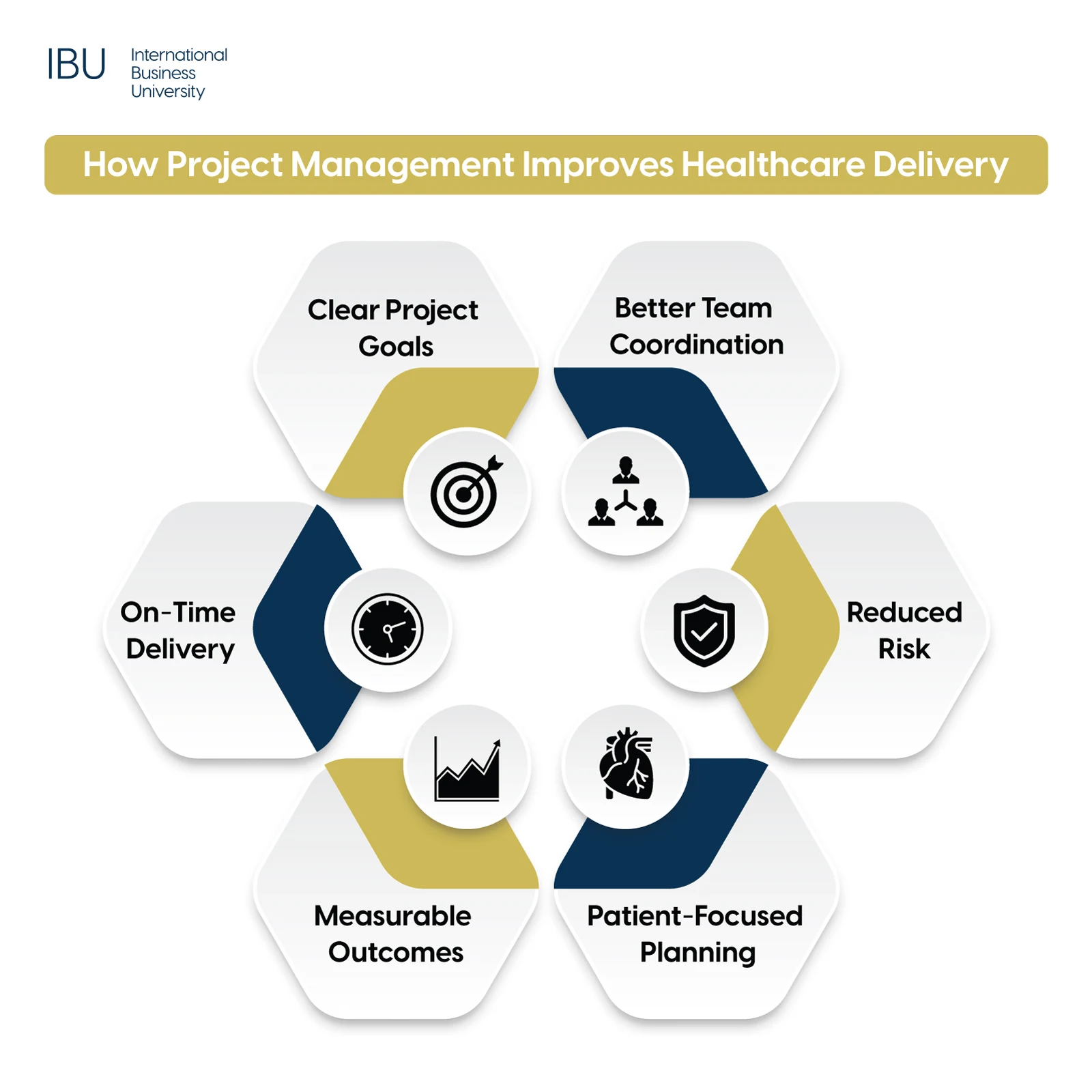
Unlike typical business initiatives, these projects operate inside environments where patient safety, compliance, and continuity of care are always present. Research published in the journal Procedia Computer Science shows healthcare technology projects fail at a rate of up to 70% when failure includes any unintended consequence such as a delay, cost overrun, or abandoned goal. Best practices exist to reduce friction, align decision-making, and protect care quality while still allowing progress to move forward.
1. Establish Clear Project Ownership
Every healthcare project needs a clearly identified owner with decision authority and accountability for outcomes. This role serves as the single point of coordination between clinical leaders, operations, IT, vendors, and compliance teams. Ownership is not symbolic. It includes responsibility for resolving conflicts, prioritizing trade-offs, and making timely decisions when constraints arise.
Projects without clear ownership often stall when consensus is required across departments. Decisions get delayed, issues get escalated repeatedly, and accountability becomes diffused. A visible owner creates momentum by ensuring progress continues even when full agreement is difficult.
2. Engage Clinical Staff Early
Projects that impact clinical workflows perform better when frontline clinicians are involved from the start. Early engagement brings practical insight into how care is actually delivered, not how it appears on paper. Clinicians help identify hidden dependencies, safety risks, and workflow bottlenecks that planning teams often miss.
When clinical voices shape early decisions, rework decreases later in the project lifecycle. Adoption improves because staff see their expertise reflected in the final outcome. Trust builds as teams recognize that the project supports care delivery rather than disrupting it.
3. Define Success Metrics Upfront
Healthcare projects require success metrics that extend beyond completion dates and budgets. Clear metrics should connect directly to care quality, operational efficiency, patient experience, and regulatory compliance. These measures guide trade-offs when competing priorities emerge.
Defined success criteria act as a decision filter throughout execution. Teams move faster because they understand what matters most. Ambiguity decreases, scope creep becomes easier to manage, and stakeholders stay aligned around shared outcomes rather than personal preferences.
4. Standardize Communication Channels
Healthcare environments generate high information volume across multiple teams and locations. Standardizing communication channels prevents fragmentation and message loss. Regular status updates, shared dashboards, and scheduled review meetings create a predictable information flow.
Consistency reduces cognitive load. Teams know where to find updates, how issues are escalated, and when decisions will be reviewed. Predictable communication rhythms build confidence and keep projects moving even during periods of operational pressure.
5. Build Realistic Timelines
Healthcare projects operate alongside patient care responsibilities, staffing constraints, and regulatory reviews. Realistic timelines account for these realities rather than assuming uninterrupted availability. Planning should factor in clinical peak periods, approval cycles, training time, and contingency buffers.
Balanced timelines protect both staff well-being and project quality. When schedules reflect actual operating conditions, teams stay engaged and outcomes improve. Unrealistic timelines often lead to shortcuts that introduce risk and erode trust.
6. Document Processes Continuously
Continuous documentation supports stability in complex healthcare environments. Recording decisions, workflows, changes, and lessons learned ensures knowledge remains accessible beyond individual contributors. Documentation strengthens handoffs, onboarding, and future initiatives.
Instead of treating documentation as a final task, effective teams embed it into daily execution. This approach improves transparency, supports audits, and allows future projects to build on proven practices instead of repeating early mistakes.
Build Healthcare Project Skills
IBU’s MBA in Healthcare Management develops the planning, stakeholder coordination, and operational leadership skills healthcare projects require.
Aligning Project Management in Healthcare with Patient Needs
Patient needs sit at the centre of every healthcare initiative. Project management ensures those needs remain visible throughout planning and execution.
Patient-centered alignment begins with understanding impact. Teams evaluate how changes affect care access, experience, and safety. This perspective shapes priorities and sequencing.
Cross-functional collaboration supports alignment. Clinical, administrative, and technical teams share responsibility for outcomes. Project leaders translate patient goals into actionable tasks.
Feedback loops sustain relevance. Patient input and care data inform adjustments during execution. Alignment strengthens when projects respond to lived experience rather than assumptions.
Risk Management Strategies in Healthcare Projects
Risk management protects patients, staff, and organizations from avoidable harm. Healthcare projects involve regulatory, operational, and clinical risk that requires proactive control.
Risk identification starts early. Teams assess dependencies, resource constraints, and compliance requirements during planning. Early visibility reduces escalation later.
Mitigation strategies prioritize prevention. Contingency planning, phased rollouts, and validation checkpoints reduce exposure. Prepared teams respond calmly when variables shift.
Ongoing monitoring sustains control. Regular reviews assess emerging risk signals. Active oversight prevents small issues from expanding into systemic failures.
Tools and Techniques for Effective Project Management in Healthcare
Healthcare projects succeed when teams have the right tools to stay aligned, informed, and accountable. Tools and techniques in healthcare project management must balance structure with usability. When tools feel heavy, teams avoid them. When tools feel clear, adoption increases and execution improves.
The most effective tools reduce ambiguity, support collaboration, and create visibility across clinical and administrative roles. Professionals who understand ways project management in healthcare is different choose tools that reflect those structural realities rather than generic project environments. They help teams focus on outcomes rather than process confusion.
Project Charters
Project charters act as the foundation for every healthcare initiative. They clearly define scope, objectives, timelines, responsibilities, and success criteria before work begins. In healthcare settings, this clarity prevents misalignment across departments that operate under different priorities.
Charters also create shared understanding among leadership, clinicians, and project teams. When expectations are documented early, decisions become easier later. This structure limits scope drift and protects both timelines and resources.
Workflow Mapping
Workflow mapping visualizes how work moves through a system from start to finish. In healthcare, this often includes clinical steps, approvals, data entry, and handoffs between teams. Seeing these steps on one map exposes inefficiencies that written descriptions often miss.
Mapping allows teams to identify bottlenecks, duplication, and risk points before implementation. It also supports safer adoption by clarifying how changes affect patient care. Clear workflows reduce errors and improve coordination.
Milestone Tracking
Milestones divide large healthcare projects into smaller, measurable phases. Each milestone marks progress toward the final goal while providing natural checkpoints for review. This structure prevents teams from drifting too far off course before issues are noticed.
Milestone tracking improves visibility for leadership and frontline teams. Everyone knows what has been completed and what comes next. This transparency builds confidence and keeps momentum steady.
Stakeholder Dashboards
Stakeholder dashboards centralize project updates, metrics, and status indicators in one shared view. In healthcare environments, where teams work across shifts and departments, dashboards prevent information silos.
Dashboards support faster decision-making by presenting real-time data. Leaders rely on current information rather than assumptions or outdated reports. Shared visibility improves trust and alignment across the organization.
Change Control Logs
Change is unavoidable in healthcare projects. Change control logs provide a structured way to document, review, and approve adjustments to scope, timelines, or resources. This discipline protects projects from uncontrolled expansion.
Each proposed change is evaluated for impact before approval. Teams understand trade-offs clearly. Controlled change maintains stability while allowing necessary adaptation.
Post-Implementation Reviews
Post-implementation reviews close the loop after project delivery. Teams compare outcomes against original objectives and identify gaps. This reflection transforms execution into learning.
Reviews capture insights that improve future projects. Lessons learned reduce repeated mistakes and strengthen institutional knowledge. Over time, this practice raises overall project maturity.
Lead Health Initiatives With Confidence
IBU’s MBA in Digital Health and Data Analytics trains professionals to manage complex health technology projects from planning through delivery.
Digital Transformation in Healthcare and Project Management
Digital transformation in healthcare adds technical complexity to every phase of project planning and execution. As health systems adopt electronic records, AI diagnostics, telehealth platforms, and integrated data environments, project managers must coordinate clinical validation alongside technical integration. These initiatives require phased deployment plans, regulatory alignment, and structured governance to protect care continuity throughout rollout.
Healthcare project managers who understand digital transformation lead these initiatives with greater precision, managing both technology risk and clinical readiness across every workstream.
Measuring Success in Project Management in Healthcare Initiatives
Measurement confirms whether project efforts delivered real value. In healthcare, success extends beyond completion. Projects must demonstrate impact on care quality, efficiency, and sustainability.
Consistent measurement creates accountability and supports continuous improvement, and data analytics in healthcare gives project teams the real-time visibility needed to act on those measurements before issues escalate. When success criteria remain visible, teams align actions with outcomes rather than activity alone.
Outcome Achievement
Outcome achievement measures whether projects met their defined goals. These goals often relate to care quality, safety, efficiency, or compliance. Clear outcomes keep teams focused on results that matter.
Measuring outcomes prevents success from being defined loosely. Projects either delivered intended benefits or they didn’t. This clarity strengthens decision-making for future initiatives.
Timeline Adherence
Timeline adherence tracks whether projects progressed according to plan. In healthcare settings, delays can affect staffing, patient access, and operational planning. Monitoring schedule performance reveals planning accuracy.
Predictable delivery builds trust with leadership and stakeholders. It also reduces disruption across dependent teams. Reliable timelines support smoother operations.
Resource Utilization
Resource utilization evaluates how effectively staff time, budgets, and tools were managed. Healthcare organizations operate under tight constraints, making efficiency critical. Resource metrics reveal where effort produced value and where waste occurred.
Balanced utilization supports sustainability. Projects that overuse resources create strain elsewhere. Efficient use protects long-term capacity.
Stakeholder Satisfaction
Stakeholder satisfaction reflects how well the project met user needs. Feedback from clinicians, administrators, and leadership reveals adoption quality. High satisfaction indicates clear communication and usable solutions.
Engaged stakeholders support sustained success beyond implementation. Satisfaction also predicts long-term adherence to new processes.
Patient Experience Indicators
Patient experience indicators connect projects to real-world impact. Feedback, wait times, safety metrics, and satisfaction scores reveal whether initiatives improved care delivery. These indicators ground project success in patient outcomes.
When patient experience improves, accountability becomes tangible. Projects remain aligned with healthcare’s core purpose.
Process Improvement Gains
Process improvement gains measure lasting operational changes. Reduced errors, faster workflows, and clearer accountability demonstrate progress. These gains indicate that projects strengthened systems rather than added complexity.
Sustained improvement signals maturity in project management practices. Productivity rises as systems become more reliable and efficient.
Key Takeaways

Project management in healthcare improves coordination across clinical, operational, and administrative teams
Structured project practices reduce risk while supporting patient-focused outcomes
Healthcare organizations that measure project performance consistently achieve higher productivity
Apply These Skills at IBU
IBU’s MBA in healthcare management prepares professionals to lead structured, patient-focused project delivery across health systems.
Frequently Asked Questions
What makes project management in healthcare different from other industries?
Healthcare projects operate within clinical risk, regulatory oversight, and patient safety priorities. Decision-making requires collaboration across diverse professional roles. These factors demand structured flexibility and disciplined communication.
How does project management in healthcare improve patient outcomes?
Structured project practices ensure initiatives align with care quality goals. Clear coordination reduces errors and delays. Patients benefit from consistent, reliable improvements.
Which skills matter most for healthcare project managers?
Successful leaders demonstrate communication clarity, analytical discipline, and stakeholder coordination. They balance structure with adaptability. These skills support steady execution in complex environments.
What role does healthcare operations management play in project delivery?
Healthcare operations management defines the process structures, resource models, and performance frameworks that project management depends on during execution. Projects that align with strong operational foundations face fewer conflicts over capacity, accountability, and workflow ownership. Operations management reduces project friction by ensuring teams have clear standards before change is introduced.
What does project management for healthcare professionals actually involve?
Project management for healthcare professionals covers the structured planning, execution, and measurement of initiatives within clinical, regulatory, and operational environments. It includes stakeholder coordination, patient safety risk assessment, budgeting under reimbursement constraints, and documentation that meets audit and compliance standards. Professionals in this field balance disciplined delivery with the care continuity demands that make healthcare projects unlike any other sector.
What is health project management and who practices it?
Health project management refers to the structured discipline of planning and delivering initiatives within healthcare organizations including hospitals, public health agencies, and life sciences companies. Professionals who practice it typically hold roles in clinical operations, health IT, administration, or strategy. Credentials such as PMP, CAPM, or healthcare-specific certifications support advancement into senior roles and system-wide initiatives.
How is Six Sigma in healthcare applied to project management?
Six Sigma in healthcare is a quality improvement methodology used to reduce process variation and eliminate errors in clinical and administrative workflows. Project managers apply its DMAIC framework to drive measurable change in care delivery, operational efficiency, and regulatory compliance. Many healthcare project managers combine Six Sigma techniques with agile or hybrid approaches to balance analytical rigor with the adaptability complex health environments require.
Project Management in Healthcare Boosts Health Industry Productivity
Project management in healthcare strengthens productivity by aligning people, processes, and priorities around shared goals. Structured execution reduces waste, manages risk, and supports consistent delivery across complex systems. Healthcare organizations that invest in disciplined project practices achieve better coordination, improved outcomes, and sustainable progress. When projects remain patient-focused and data-driven, productivity rises without compromising care quality.