

MSc in Applied AI
(Data Engineering Specialization)
Duration
Delivery
Location
Toronto
Credits
Start Dates
January 6, 2027
May 5, 2027
September 8, 2027

Building the Data Foundations of the Intelligent Economy
The MSc in Applied Artificial Intelligence with a Data Engineering specialization at IBU helps you build the systems that power AI and smarter decision-making. You’ll learn how to work on data architectures, automate workflows, and work with machine learning models, all while connecting technical skills with practical strategy.
Along the way, you’ll develop the ability to manage and improve entire data ecosystems. By the end of the program, you’ll be ready to turn complex data into useful insights and AI-driven solutions across industries like finance, healthcare, logistics, and technology.
Why Choose This Specialization
- Data-Centric AI Focus: Develop end-to-end expertise in data architecture, pipelines, and machine learning integration.
- Applied and Technical: Gain hands-on experience with advanced tools for data analysis, visualization, and AI deployment.
- Future-Ready Skills: Master cloud computing, big data engineering, and ethical data governance in this data architecture graduate degree in Ontario.
- Personalized Mentorship: Benefit from direct faculty engagement and industry-aligned guidance in small class settings.

Have Questions?
Speak with a Program Advisor
Simply choose a time that works for you. You’ll receive a Microsoft Teams link by email.
This is your moment to start something bigger.
Curriculum Timeline
- Fundamentals of Artificial Intelligence (3 credits)
- Machine Learning and Deep Learning (3 credits)
- Data Science and Data Mining Techniques (3 credits)
- Human-Computer Interaction Design (3 credits)
- Applications of Artificial Intelligence in Services (3 credits)
- Data Engineering and Architecture (3 credits)
- Engineering for Data Analysis (3 credits)
- Advanced Engineering for Data Analysis (3 credits)
Choose any 2 of the following courses:
- Information Systems and Digital Transformation (3 credits)
- Project Management: Social-Technical Approach (3 credits)
- Advanced Business Analytics (3 credits)
Required Courses:
- Artificial Intelligence and Cybersecurity (3 credits)
- Applied Research Methods (3 credits)
- Capstone Project: Artificial Intelligence and Data Engineering (6 credits)
To find out more about this course please download MSc in Applied AI (PDF)
Learning Outcomes
Build End-to-End Data Solutions: Develop, select, and deploy data engineering solutions across diverse organizational environments.
Design and managesecure, scalable data architectures that support AI systems
Evaluate Organizational Fit: Assess how AI and data engineering tools apply within complex organizational contexts.
Design Scalable Architectures: Create and manage secure, scalable data systems that support AI applications.
Apply AI Deployment Methods: Use advanced engineering approaches to implement AI solutions effectively.
Secure Responsible Data Use: Maintain ethical, compliant, and responsible data practices across all environments.
Who This Specialization Is Designed For
This program is designed for students who want to build applied expertise in artificial intelligence and data engineering, with a focus on how these skills are used in professional settings.
It’s a strong fit if you’re looking to:
- Design, evaluate, and deploy AI and data engineering solutions
- Understand how data systems support effective AI applications
- Develop a critical perspective on the opportunities and limitations of these technologies
Applicants typically have an undergraduate degree in a technical field.

Career Pathways
Data Engineer
Machine Learning Engineer
AI Solutions Architect
Business Intelligence Manager
Big Data Specialist
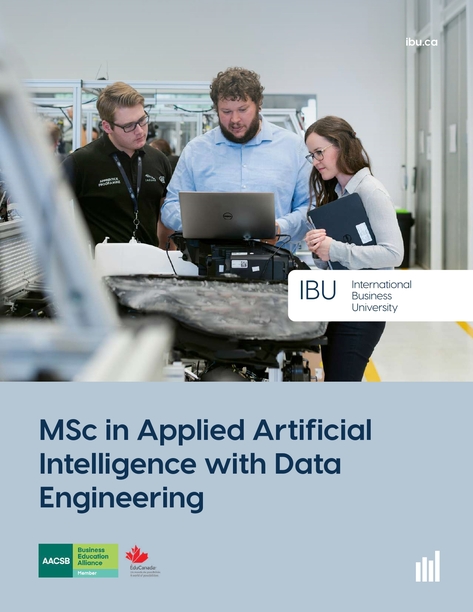
Ready to take your career to the next level?
Download our leaflet to learn everything you need to know about IBU’s MSc in Applied AI (Data Engineering). Design and manage data infrastructure that powers intelligent systems and enables artificial intelligence to transform industries.
Ready to Join IBU?
Ready to Join IBU?
This institution has been granted the consent for Master of Science in Applied Artificial Intelligence in Industrial Innovation and Data Engineering by the Minister of Colleges, Universities, Research Excellence and Security to offer these programs for a five-year term starting March 5, 2026.
Prospective students are responsible for satisfying themselves that these programs and the degree will be appropriate to their needs (e.g., acceptable to potential employers, professional licensing bodies or other educational institutions).