
Most business degrees teach marketing and sales as separate tracks, taught by different departments, aimed at different careers. A BCOM in digital sales and marketing management merges them deliberately, because in most Canadian companies today, the same person is expected to generate a lead, nurture it through digital channels, and close it. This degree builds a graduate who can do all three.
The result is a business generalist with a revenue specialty. Students learn core business fundamentals, finance, operations, organizational behavior, alongside applied coursework in digital marketing platforms, sales methodology, and customer analytics.
Key Takeaways
Here is where applied AI creates the most career opportunity in Canada right now.

The degree combines sales and digital marketing training in one program, reflecting how revenue roles actually function in most Canadian companies today.
It differs from a general business or marketing degree by including sales methodology as a core discipline, not an elective.
Graduates enter roles that require both persuasion skills and platform fluency, including digital marketing, business development, and account management positions.
What an Applied Campaign Project in This BCOM Looks Like
The applied projects follow a consistent structure regardless of which platform or product a student is assigned.
A student typically starts with a defined audience and a limited budget, builds a campaign brief around it, and produces the actual creative and targeting plan an active campaign would need. Once the campaign launches in a simulated environment, the assignment shifts: the same student has to work the leads that campaign generates, qualify them, and carry them through a sales process to a close or a documented loss reason. Instructors then review both halves together, since a strong campaign that produces leads nobody follows up on is treated as a failure, not a partial success.
That structure is deliberate. It forces students to feel the handoff between marketing and sales that breaks down inside many companies, and to practice owning both sides of it rather than blaming the other department when a lead goes cold.
What BCOM in Digital Sales and Marketing Management Actually Covers
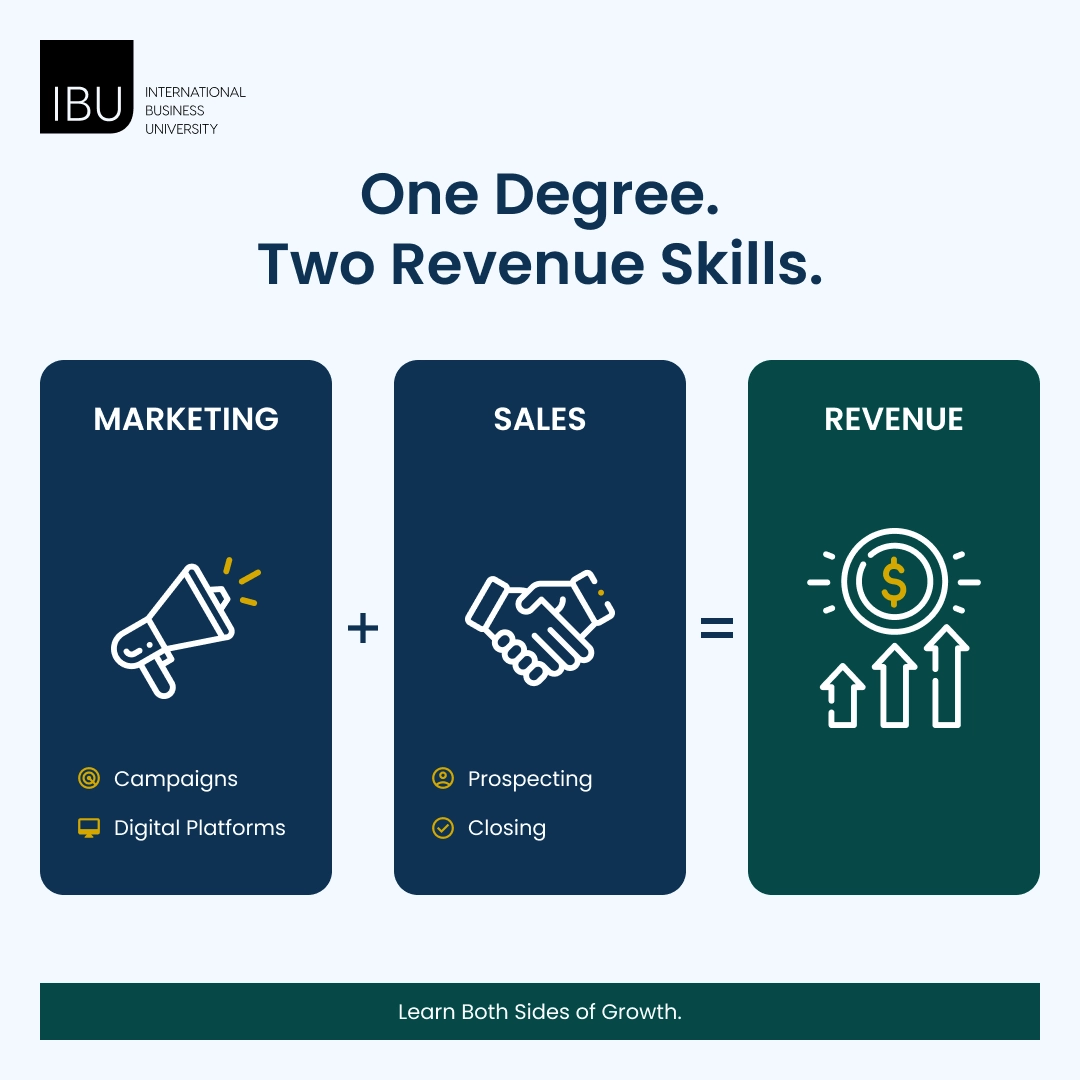
The program blends three layers of training. The first is a business foundation shared across BCOM programs: accounting, economics, and organizational behavior. The second is digital marketing: content strategy, search and social platforms, and campaign analytics. The third, and the layer that sets this stream apart, is sales: prospecting, negotiation, and pipeline management.
Students typically complete applied projects that require them to build a marketing campaign and then execute the sales process that follows it, so they graduate having practiced the full revenue cycle rather than one isolated piece of it.
How This BCOM Stream Differs From a General Business or Marketing Degree
A general business degree gives broad exposure to every business function without specializing in revenue generation. A standalone marketing degree goes deep on brand, campaigns, and consumer behavior, but rarely touches sales methodology at all.
- General BCOM: Broad foundation across finance, operations, and management, with no revenue specialization.
- Standalone marketing degree: Deep marketing and brand training, typically without formal sales coursework.
- BCOM in digital sales and marketing management: Marketing training paired directly with sales methodology, built for roles that require both.
This distinction matters because most entry-level revenue roles, from digital marketing coordinator to business development representative, expect candidates to understand how marketing activity converts into a sale, not just how to run a campaign in isolation.
Build Skills Across Marketing and Sales
Learn how campaigns, leads, and revenue connect.
The Career Paths This Degree Is Built to Open in Canada
Graduates typically move into one of a few clear tracks, depending on which half of the discipline they lean toward. Each track draws on the same core coursework, but the day-to-day work and the pace of advancement differ enough that it’s worth understanding all five before deciding which one to target first.
None of these paths are mutually exclusive starting points either, since the combined marketing and sales training this degree builds is what makes moving between them possible later on.
Digital Marketing Coordinator or Specialist
Manages campaigns, content, and platform performance, and is usually the first to see if a channel is actually converting. Day-to-day work includes scheduling content across platforms, monitoring ad spend against target cost-per-lead, and flagging underperforming campaigns before a manager has to ask why the numbers look off. This role sits closest to the tools themselves, which makes it the fastest entry point for a new graduate comfortable with platform dashboards.
Business Development Representative
Generates and qualifies leads for a sales team, often the entry point into a broader sales career. The work is outbound-heavy in the first year, research on prospects, cold outreach, and a first qualifying conversation before handing a lead to an account executive. Performance here is usually tracked in hard numbers (calls made, meetings booked), which gives a new graduate an unusually clear, early read on how they’re doing.
Account Manager
Manages client relationships and renewal revenue, applying marketing instincts to keep an existing account engaged. This role differs from the first two in that success is measured over months, not campaigns, retention, upsell revenue, and whether a client renews without a discount fight. Graduates who move here directly usually do so after an internship or co-op placement that already put them in front of clients.
Marketing Manager
Oversees strategy and campaign execution at a broader level, a path covered in more depth in exploring career paths with a BCOM degree. This is rarely a first job out of the program. Most graduates arrive here after two to four years in one of the roles above, once they’ve built a track record of campaigns that produced results a hiring manager can point to.
Sales Operations Analyst
Uses data to optimize pipeline and campaign performance, sitting between the marketing and sales teams to keep both sets of numbers honest. The role involves reconciling what marketing reports as qualified leads against what sales actually closes, which means the person in this seat needs to be comfortable telling both departments where their numbers disagree.
The overlap between marketing and sales training means graduates can move between these roles more easily than someone trained in only one discipline, which supports faster career mobility in the first five years after graduation.
What Digital Sales Skills Employers Are Actually Testing For Today
Employers hiring for digital sales and marketing roles consistently test for a specific combination of skills during interviews and case exercises.
- Platform fluency: Working knowledge of digital advertising, CRM software, and analytics dashboards.
- Data interpretation: The ability to read campaign performance data and adjust strategy accordingly.
- Persuasive communication: Written and verbal skills for both marketing copy and sales conversations.
- Pipeline discipline: Understanding how to track and move a prospect through defined sales stages.
- Adaptability: Comfort switching between creative marketing tasks and structured sales processes in the same week.
Candidates who can only speak to one side of this list, marketing creativity without sales process, or sales technique without digital fluency, are increasingly screened out at the resume stage for combined revenue roles. Government of Canada job market data on digital marketing specialist roles shows steady demand for candidates who can move between the creative and analytical sides of the job, rather than specializing narrowly in one.1
Why the IBU Digital Sales and Marketing BCOM Includes Sales as a Core Discipline
Most digital marketing programs treat sales as an afterthought, if they cover it at all. IBU’s program includes sales as a required discipline because Canadian employers consistently report that marketing graduates struggle in roles that require direct client interaction and pipeline ownership.
Building sales training directly into the degree closes that gap before graduation, rather than leaving students to learn it on the job. This mirrors the broader shift in management skills every BCom and MBA graduate needs, where employers increasingly expect business graduates to combine technical competence with direct commercial skills.
One Degree. Two Revenue Skills
Develop digital marketing, communication, and sales process skills.
Frequently Asked Questions
What is BCOM in digital sales and marketing management and what does it cover?
It is a business degree that combines core business fundamentals with applied training in digital marketing and sales methodology. Students learn to build marketing campaigns and manage the sales process that converts campaign activity into revenue. The program prepares graduates for careers that require both skill sets together.
What jobs can you get with a BCOM in digital sales and marketing in Canada?
Graduates commonly move into digital marketing coordinator, business development representative, account manager, and sales operations roles. The combined skill set also supports a path toward marketing management as experience grows. Many graduates use the degree as a foundation for an MBA later in their career.
Is BCOM in digital sales better than a standalone marketing degree for getting hired?
The better option depends on the target role. A standalone marketing degree fits roles focused purely on brand and campaign work, while this BCOM fits roles that combine marketing activity with direct sales responsibility. Employers hiring for combined revenue roles tend to favor candidates with formal sales training already built in.
What digital skills do employers expect from a BCOM graduate in Canada today?
Employers expect working knowledge of digital advertising platforms, CRM systems, and campaign analytics tools. They also expect graduates to interpret performance data and adjust strategy without heavy supervision. Communication skills that work across both marketing content and direct sales conversations remain the most consistently requested skill in job postings.
Choosing the Degree That Matches How Revenue Actually Works
A BCOM in digital sales and marketing management is built for students who want to enter the workforce ready for roles that blend creativity with direct commercial responsibility. The degree removes the artificial separation between marketing and sales that leaves many graduates underprepared for entry-level revenue roles. Before choosing a program, map out the specific roles you want in your first three years and confirm the curriculum covers both halves of that job description. This degree is built for candidates who want that overlap covered from day one.
Start Your Digital Sales Career Path
Apply to IBU and build practical revenue skills from year one.