
International business degree programs prepare graduates for roles in global marketing, trade, finance, and management across diverse industries by pairing core business subjects with curriculum focused on cross-border operations, cultural differences, and international trade policy. By providing students with technical business skills alongside practical experience through case studies, faculty mentorship, and programs like those at the International Business University (IBU), these degrees equip graduates with the expertise to navigate and manage organizational operations across different global markets.
What Is an International Business Degree?
An international business degree prepares students to manage the complex relationships between markets, people, and organizations operating across different countries. It combines business fundamentals such as finance, marketing, operations, and management with global perspectives that reflect today’s interconnected economy.
Students develop skills in communication, cultural awareness, and problem-solving that help them adapt to diverse work environments. Programs like IBU’s BCOM in International Management and Technology emphasize both academic learning and experiential education, allowing students to apply their knowledge through case studies, projects, and global internships.
By graduation, students are ready to navigate multinational companies, trade networks, and international partnerships, all while understanding how local business decisions influence global outcomes.
Start Your Application
Apply to IBU’s BCOM or MBA programs and build the credentials behind an international business career.
Why Choose an International Business Degree?
Choosing an international business degree means preparing for a career that’s relevant across every major industry. Global trade, supply chains, and digital transformation have reshaped how businesses operate, and organizations now seek professionals who can coordinate across regions and cultures.
Students build skills in communication, cultural awareness, and problem solving that carry into a wide range of work environments. IBU’s BCOM in International Management and Technology pairs academic coursework with case studies, applied projects, and international placements, giving students a chance to apply what they learn before graduation.
By the end of the program, graduates are prepared to work inside multinational companies, manage trade relationships, and support international partnerships, while understanding how decisions made in one market affect outcomes in another.
Why Study International Business Over Other Business Degrees?
International business differs from a general business degree in scope rather than subject matter. Both cover finance, marketing, and management, but international business adds a layer focused on trade policy, currency movement, cultural management, and the operational differences between markets.
Why study international business instead of a general business administration degree? The answer comes down to the kind of roles each path leads to. A general business degree prepares graduates for management positions inside a single organization or market. An international business degree adds the skills needed to manage operations, partnerships, and teams that cross borders, which matters for any graduate aiming at multinational employers, trade-focused roles, or global consulting work.
For a closer side-by-side comparison, see IBU’s article on international business vs. business administration.
What Can an International Business Degree Do for You?
A strong academic background in international business can completely reshape your career outlook. You’ll learn how to evaluate international markets, negotiate with global partners, and understand the policies that shape trade and investment.
- International marketing and logistics: graduates are prepared for entry-level and management roles across marketing, logistics, and consulting.
- Cross-cultural team management: coursework builds the confidence to manage and coordinate teams spread across regions.
- Global finance and economic development: exposure to international finance gives graduates a base for roles in banking, investment, and development work.
This range of outcomes explains why graduates with an international business degree end up across so many different industries. The combination of analytical skill, cultural awareness, and strategic thinking applies in roles that a narrower degree does not prepare graduates for.
Top Career Opportunities With an International Business Degree
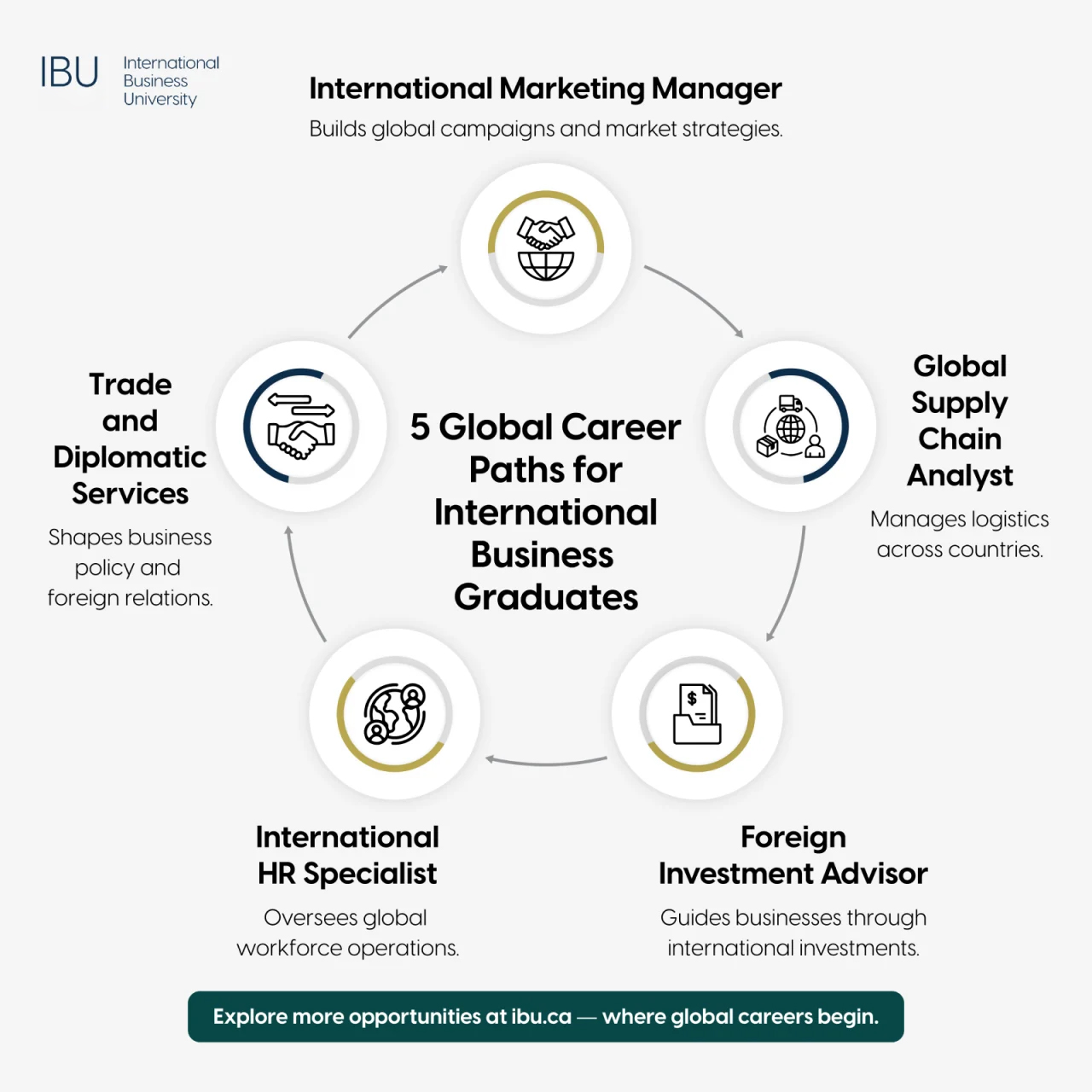
Graduates often ask, Is an international business degree worth it? The answer depends on your goals, yet most find that it offers a clear path toward professional growth and financial success. Below are some of the most rewarding career directions.
1. International Marketing Manager
These professionals manage global campaigns, research consumer behavior across regions, and adapt strategies for local markets. The role blends creativity with analytics, making it one of the highest-paying jobs with an international business degree.
2. Global Supply Chain Analyst
This position involves managing logistics, operations, and vendor relations across multiple countries. With the rise of e-commerce and global production, supply chain expertise is among the most in-demand skills in international business.
3. Foreign Investment Advisor
These experts guide clients through international investments, helping organizations evaluate risk and identify opportunities in emerging markets. Their work directly influences strategic business growth.
4. International Human Resources Specialist
As companies expand overseas, HR professionals ensure compliance with international labor standards, manage talent mobility, and align company culture with global operations.
5. Diplomatic and Trade Services
Graduates interested in government or global policy can pursue roles in trade negotiation, international relations, or economic development. These careers combine business expertise with a focus on public service.
You can explore more detailed examples in IBU’s article on Top International Business Degree Jobs in Canada.
Main Text: Apply to IBU
Apply now to start building toward one of these career paths through IBU’s BCOM or MBA programs.
Is an International Business Degree Worth It?
An international business degree is worth it for graduates aiming at roles in global marketing, trade, finance, or multinational management, since these positions consistently require the cross-border and cultural skills the degree builds.
Canada’s economy depends heavily on international trade. Government of Canada trade data shows that jobs at foreign and Canadian multinational enterprises operating in Canada totaled 5.20 million in 2024, while the country maintains 15 free trade agreements spanning 51 countries that connect Canadian businesses to more than 61 percent of global GDP. Graduates entering this environment with cross-border training have a wider set of employers to consider than graduates trained for a single domestic market.
How well the degree pays off for a specific graduate still depends on the roles they target and the experience they build alongside coursework, through internships, study placements, and applied projects.
The Value of a Bachelor’s Degree in International Business
A bachelor’s degree in international business gives you a foundation in economics, data-driven decision-making, and leadership, skills that translate across industries. Students learn to evaluate global opportunities, build business models for new markets, and understand international trade regulations.
IBU’s BCOM in International Management and Technology adds specialized training in technology and analytics on top of this foundation, preparing graduates for export management, financial services, business development, and global consulting roles. The program also serves as a direct path into IBU’s MBA in Global Business Management or a master’s-level international business program for graduates planning to continue their education.
Advancing With a Master’s Degree in International Business
Once you’ve built experience or completed your undergraduate studies, advancing to a master’s degree in international business can accelerate your growth. An MBA with an international focus strengthens your leadership and strategic decision-making abilities while deepening your global expertise.
At IBU, the MBA in Global Business Management helps professionals transition into senior-level, cross-border positions. You’ll work on global strategy simulations, international case studies, and leadership development projects that reflect real market challenges.
Graduates often move into positions such as:
- Regional Business Director: oversees operations and strategy for a company’s presence in a specific region or country group.
- Global Operations Manager: coordinates supply chain, production, and logistics functions across multiple country operations.
- International Strategy Consultant: advises companies on market entry, expansion, and competitive positioning across borders.
Understanding how multinational corporations function, MBA graduates can influence business expansion and policy decisions worldwide.
Meeting International Business Degree Requirements
Each university sets its own international business degree requirements, but strong communication skills, curiosity about global systems, and a willingness to adapt are essential for success.
At IBU, entry into the BCOM program typically requires secondary school completion with proficiency in English and mathematics, while MBA applicants need a bachelor’s degree and relevant professional experience.
These requirements ensure students enter the program prepared to engage deeply with the academic and practical components of global business.
Skills You Gain Through an International Business Degree
Graduates of international business programs develop a well-rounded skill set that makes them adaptable and employable across industries.
- Strategic thinking: Analyzing markets and business environments.
- Cultural intelligence: Working effectively with international teams.
- Data literacy: Using analytics to guide decisions.
- Negotiation and communication: Managing client and stakeholder relations.
- Ethical leadership: Understanding corporate responsibility in a global context.
These competencies align with IBU’s mission to create business professionals who are not only employable but also capable of driving global impact.
Take the Next Step Toward Your International Career
Apply today to join IBU’s global business community and start building the skills, connections, and confidence to succeed worldwide.
Exploring Careers With an International Business Degree
The career scope for international business graduates is expanding faster than ever. According to global employment reports, companies are increasingly recruiting professionals who understand international regulations, sustainability practices, and digital business models.
Graduates can work in:
- Financial institutions like banks and investment firms
- Government departments focusing on trade and foreign affairs
- Consulting agencies specializing in market entry and globalization
- Technology companies operating across international markets
Each of these industries values the ability to connect global strategy with local execution, a skill developed through programs such as IBU’s BCOM and MBA pathways.
For a closer look at how this compares to other business fields, visit International Business vs. Business Administration: A Comparative Overview.
Building Experience Through Study Abroad and Internships
Applied learning turns classroom theory into working knowledge. IBU students gain exposure to international markets through study placements and work terms that build professional confidence before graduation.
These placements show students how different economies operate and how cultural values shape business negotiation in practice. They also create early opportunities to build a professional network ahead of the job search.
For more on applying international business skills outside the classroom, see IBU’s guide on mastering international business.
Why an International Business Degree Is Worth It
So, is an international business degree worth it? Absolutely.
Graduates step into roles that offer professional mobility, competitive salaries, and global exposure. The degree’s combination of business fundamentals, cultural understanding, and international strategy prepares you for leadership positions that influence how organizations operate worldwide.
With global markets continuing to evolve, companies will keep seeking graduates who can navigate uncertainty, innovate across regions, and make data-driven decisions that align with international goals. Whether your ambition is to manage multinational operations or launch your own cross-border venture, your journey begins with education that prepares you for both the local and global stages.
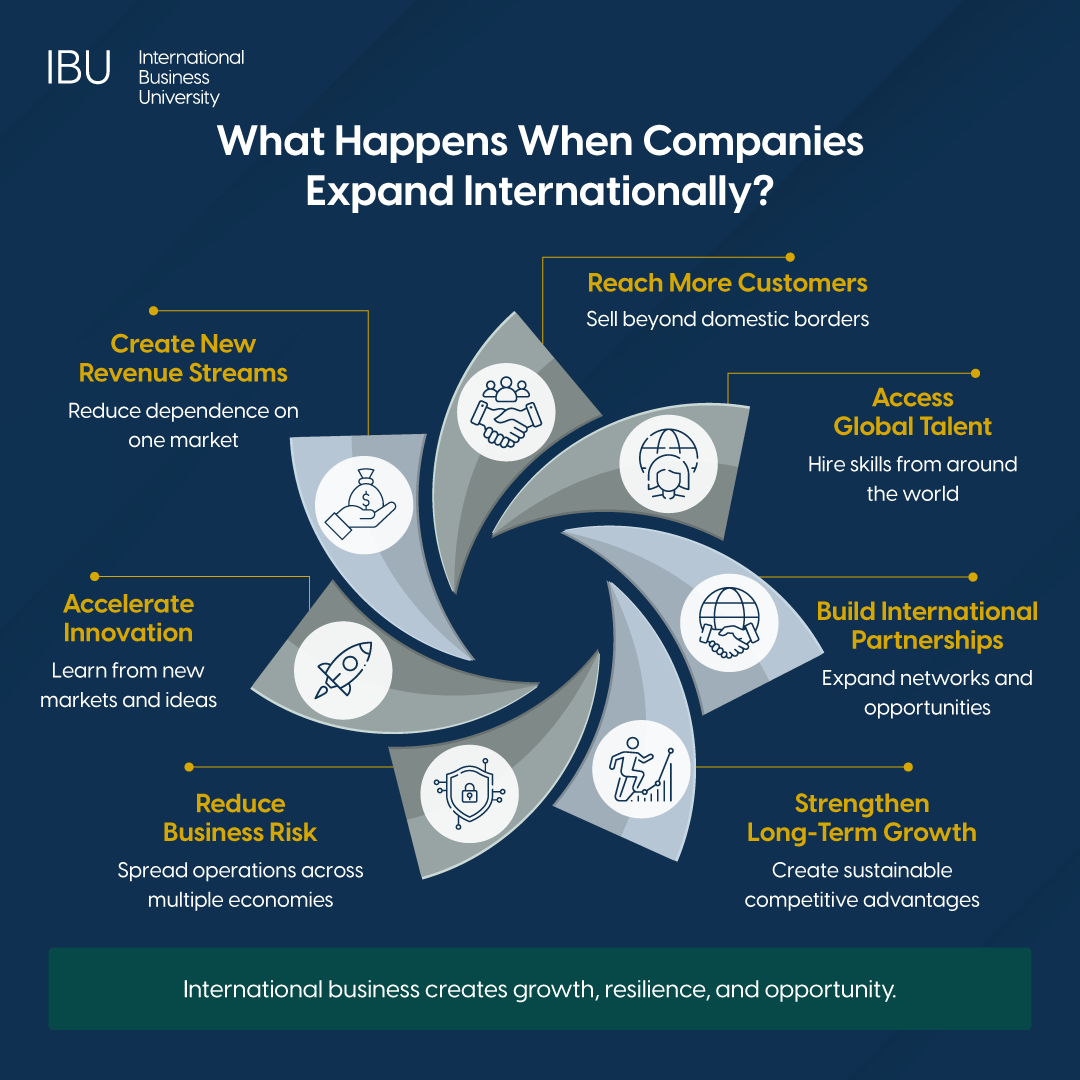
Setting a Future With an International Business Degree
A career built on an international business degree starts with a program that combines academic training, applied experience, and exposure to global markets. IBU’s BCOM and MBA programs are structured around this combination, connecting coursework with case studies, mentorship, and international placements throughout the program.
As global trade activity continues to grow, employers will keep recruiting graduates who can manage cross-border operations, work across cultures, and apply analysis to international business decisions. An international business degree from IBU prepares graduates for that range of roles, from managing operations for a multinational company to building a cross-border venture of their own.
Key Takeaways

Career range: an international business degree leads to roles in global marketing, finance, trade, and management, with strong demand across Canada’s exporting economy.
Program structure: IBU’s BCOM and MBA programs combine core business training with international case studies and mentorship from faculty with industry experience.
Applied skills: Graduates build cross-cultural management, market analysis, and global strategy skills that apply across industries and regions.
Frequently Asked Questions
What is an international business degree
An international business degree combines finance, marketing, and management coursework with cross-border trade, cultural management, and global market analysis. The program prepares graduates for work that spans multiple countries rather than a single domestic market.
Is an international business degree worth it in Canada?
Canada’s economy depends on international trade, with close to 48,000 exporting enterprises and 5.20 million jobs tied to multinational enterprises according to recent Statistics Canada and Government of Canada data. Graduates with cross-border training qualify for roles at these organizations that a general business degree does not typically prepare for.
What jobs can you get with an international business degree?
Common roles include international marketing manager, global supply chain analyst, foreign investment advisor, international human resources specialist, and trade or diplomatic services positions. IBU’s guide to top international business degree jobs in Canada covers these roles, along with typical entry requirements, in more detail.
What is the difference between an international business degree and a regular business degree?
A general business degree focuses on operating within a single market, while an international business degree adds coursework in trade policy, currency movement, and cross-border management. The distinction affects which roles and employers a graduate is prepared for after graduation.
What are the benefits of an international business degree?
Graduates gain strategic thinking, cultural awareness, data literacy, and negotiation skills that apply across industries and regions. These skills support work in marketing, finance, consulting, and trade-focused roles that a narrower degree does not typically cover.
How long does an international business degree take in Canada?
A bachelor’s degree in international business, such as IBU’s BCOM in International Management and Technology, generally takes three to four years to complete. An MBA in international or global business management, such as IBU’s MBA in Global Business Management, typically takes one to two years depending on the program format and a student’s prior experience.
Setting a Future With an International Business Degree
A career in international business begins with the right foundation, one that merges academic excellence, practical experience, and global perspective. The International Business University (IBU) provides exactly that.
Through programs designed to connect theory with practice, IBU helps students develop the confidence to succeed in roles that influence economies, build global partnerships, and lead teams across continents.
No matter where your career takes you, an international business degree ensures your skills, vision, and mindset stay relevant in a world that rewards global thinkers and innovative leaders.
Choose an Education Built for Global Business
Learn how IBU’s internationally focused business programs prepare graduates for careers in consulting, finance, technology, and management.