
Key Takeaways
- Creative thinking helps businesses generate stronger solutions when traditional approaches stall
- Organizations that encourage creative thinking move faster from insight to execution
- Teaching creative thinking early prepares future leaders for complex decision-making
The Role of Creative Thinking in Modern Business Success
Creative thinking sits at the centre of modern business performance. Markets shift faster than playbooks can update. Customer expectations change without warning. Competitive pressure increases even when demand stays flat. In this environment, repeating what worked last year rarely delivers the same results.
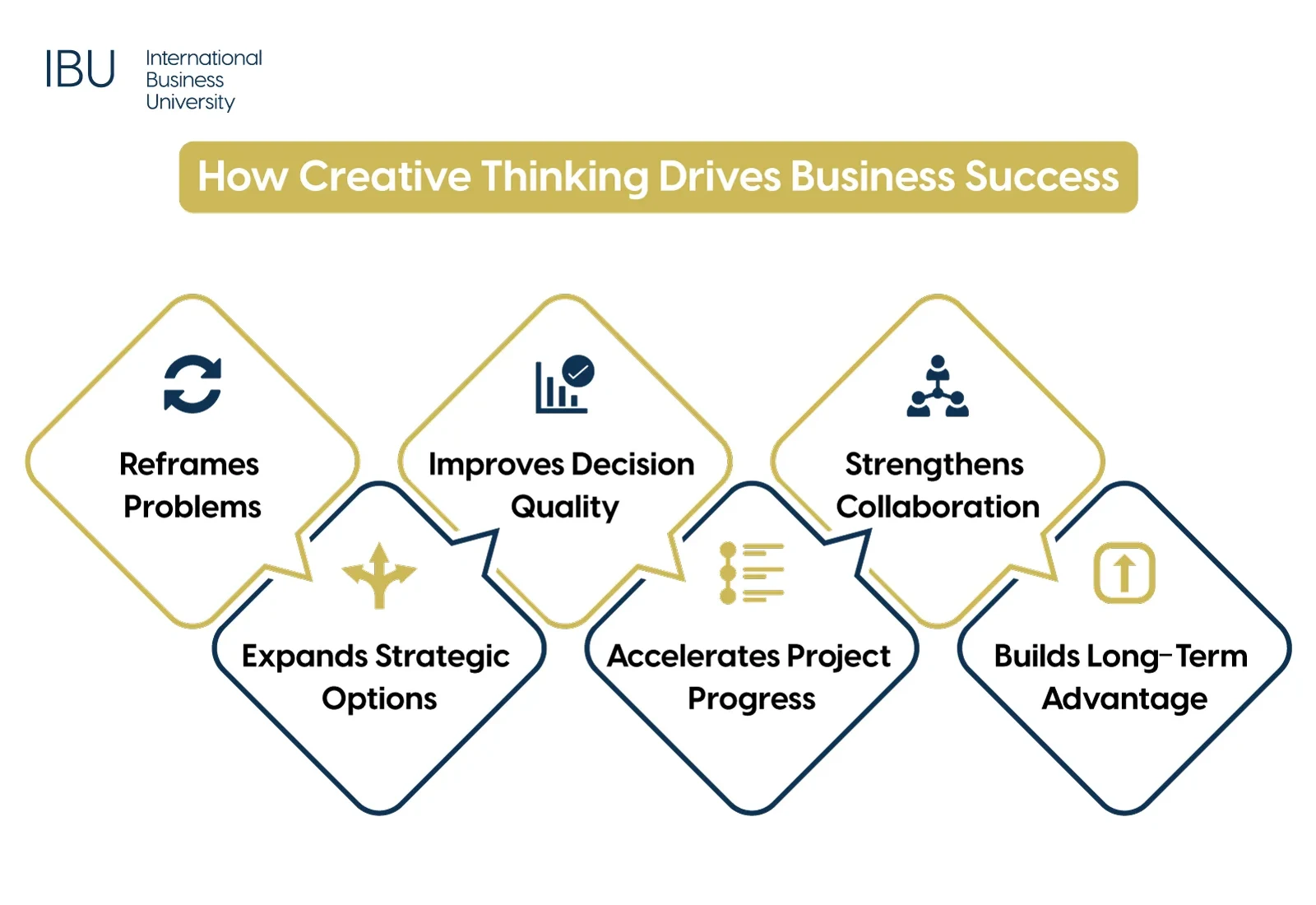
Businesses that rely solely on standard frameworks often struggle when conditions shift. Creative thinking allows teams to reframe challenges, see opportunities others overlook, and adapt strategy without losing direction. This capability influences product development, marketing performance, operational efficiency, and leadership effectiveness.
Consider how businesses approach growth today. Revenue targets remain aggressive. Budgets face scrutiny. Customers expect relevance at every touchpoint. Creative thinking helps teams identify new channels, refine value propositions, and improve conversion without inflating cost. It fuels progress without reckless risk.
Creative thinking also supports resilience. When plans encounter resistance, creative thinkers adjust rather than freeze. They test alternatives, evaluate trade-offs, and keep momentum alive. In business, momentum matters as much as precision.
How Creative Thinking Develops Effective Problem-Solving Skills
Reframing Challenges as Design Constraints
Creative thinkers interpret obstacles as boundaries that guide solutions rather than blocks that stop progress. This mental shift encourages exploration within limits, which often produces stronger outcomes. Constraints clarify direction and reduce wasted effort by narrowing focus.
Asking Better Questions Instead of Chasing Answers
Traditional problem-solving often aims for immediate resolution. Creative thinking prioritizes inquiry by asking questions that reshape the problem itself. Better questions uncover assumptions, reveal hidden variables, and expose opportunities missed by surface analysis.
Exploring Multiple Solution Paths Simultaneously
Creative thinking trains the mind to consider several options at once without confusion. When one approach loses momentum, alternatives already exist. This flexibility preserves progress and prevents decision paralysis during uncertainty.
Balancing Logical Analysis with Imaginative Thinking
Creative problem-solvers ground ideas in data while remaining open to unconventional options. Logic provides structure, while imagination expands the solution space. This balance prevents narrow conclusions and supports innovative yet practical outcomes.
Reducing Pressure Through Cognitive Flexibility
Holding multiple possibilities reduces emotional strain during decision-making. Creative thinking removes the need to commit prematurely. This flexibility supports calm evaluation and steadier judgment under pressure.
Analyzing Business Information through Creative Thinking
Business data becomes valuable only when interpreted effectively. Creative thinking enhances analysis by connecting information across context, behaviour, and intent. It transforms raw numbers into insight that supports smarter decisions.
Moving Beyond Surface-Level Metrics
Dashboards and reports present activity, not meaning. Creative thinking encourages deeper interpretation beyond visible trends. This approach helps you understand why changes occur rather than simply noticing that they happened.
Identifying Patterns Across Disconnected Data Sets
Creative analysis looks for relationships between metrics that appear unrelated. Engagement, timing, messaging, and audience behaviour gain meaning when examined together. Pattern recognition strengthens forecasting and strategic clarity.
Asking What the Data Suggests and Omits
Creative thinkers question what information fails to show. Missing data often carries as much value as visible results. Exploring gaps prevents false confidence and improves decision quality.
Connecting Data to Human Behavior
Numbers reflect actions driven by motivation and emotion. Creative thinking links performance metrics to audience intent, expectations, and response patterns. This connection leads to adjustments that resonate more effectively with real users.
Reducing Bias Through Multiple Interpretations
Creative analysis explores several explanations before settling on conclusions. This habit limits premature assumptions and confirmation bias. Flexibility in interpretation improves risk assessment and strategic planning accuracy.
Developing Strategic Alternatives with Creative Thinking
Strategy depends on options. Creative thinking expands the range of viable alternatives when decisions matter most.
When businesses face strategic crossroads, default choices feel safe. They follow precedent. Creative thinking challenges that instinct. It encourages leaders to ask what else could work under current constraints.
Developing alternatives strengthens resilience. If one strategy underperforms, others remain available. This optionality reduces dependence on a single outcome and supports adaptive execution.
Creative thinking also improves scenario planning. Teams imagine different futures, evaluate responses, and prepare accordingly. This practice enhances confidence and reduces reaction time when a change occurs.
In competitive markets, strategic advantage often comes from unexpected moves. Creative thinking enables differentiation without abandoning discipline. It allows businesses to evolve while protecting core values and objectives.
Prepare to lead organizations in complex global markets
Build advanced capabilities in strategy, leadership, and cross-border business management
Driving Project Progress by Applying Creative Thinking
Projects stall when teams follow plans too rigidly. Creative thinking keeps progress moving when conditions change.
Every project encounters friction. Timelines shift. Resources tighten. Stakeholder expectations evolve. Creative thinking allows teams to adjust their approach without abandoning their objectives.
Instead of asking how to force the original plan, creative thinkers ask how to achieve the outcome differently. This mindset unlocks alternative workflows, sequencing changes, and resource reallocation.
Creative thinking also improves collaboration. Teams share ideas openly, challenge assumptions respectfully, and co-create solutions. This dynamic reduces conflict and increases ownership.
Project leaders who apply creative thinking manage risk more effectively. They anticipate obstacles, test small changes early, and refine execution continuously. Progress stays steady because adaptability replaces rigidity.
FAQ
Why is creative thinking valuable in business decision-making?
Creative thinking improves decision quality by expanding available options and reducing reliance on default solutions. It helps leaders respond effectively when conditions shift unexpectedly. This flexibility supports better outcomes across strategy, operations, and growth initiatives.
How does creative thinking differ from traditional analytical thinking?
Traditional analysis focuses on evaluating known variables, while creative thinking explores new perspectives and interpretations. Together, they create balanced decisions grounded in data and imagination. This combination improves adaptability and long-term performance.
Can creative thinking be developed through education?
Creative thinking strengthens through practice, exposure, and structured learning. Educational environments that encourage experimentation and reflection accelerate this development. Students trained in creative thinking enter careers with stronger problem-solving confidence.
The Importance of Teaching Creative Thinking to Business Students
Teaching creative thinking prepares students for realities they will face after graduation. Business environments rarely present textbook problems. They demand judgment, adaptability, and confidence under uncertainty.
Students trained only in formulas struggle when situations lack clear answers. Creative thinking equips them to interpret ambiguity and generate options responsibly. This capability improves employability and leadership readiness.
Creative thinking also enhances communication. Students learn to articulate ideas, justify decisions, and collaborate effectively. These skills translate directly into workplace impact.
Institutions that prioritize creative thinking produce graduates who contribute faster. They analyze information critically, adapt strategy intelligently, and support innovation across teams. Teaching creative thinking is not enrichment. It is preparation.
Lead innovation and build ventures that scale with discipline
Develop the strategic, entrepreneurial, and execution skills used by founders and innovation leaders across industries
Final Perspective
Creative thinking gives businesses and individuals the flexibility to grow when conditions shift and certainty fades. It strengthens problem-solving, improves analysis, and fuels strategic progress without sacrificing discipline. When developed early and applied consistently, creative thinking becomes a long-term advantage across careers and organizations. The businesses and leaders who invest in it today shape opportunities tomorrow.