

A strong leadership model in healthcare improves care by giving teams structure, accountability, and clarity that support better patient outcomes. You see the impact every time a unit moves with confidence, every time communication flows cleanly, and every time a hospital manages high-pressure situations with precision. A leadership model acts like a high-functioning engine: each part supports the next, and every action reinforces quality. Once you understand how leadership frameworks shape decisions, teamwork, and performance, you gain a clearer picture of how modern healthcare succeeds under growing pressure.
Benefits of Implementing a Leadership Model in Healthcare
A leadership model in healthcare creates predictability, consistency, and structure across clinical and administrative environments. Healthcare settings face rapid change, tight timelines, and high emotional stakes. Leaders who use structured models increase team stability, decrease confusion, and support improved patient experiences.
Stronger Team Coordination Across Departments
Healthcare depends on cross-functional collaboration. Nurses, physicians, allied health providers, administrative teams, and specialists must align around shared plans. Leadership models create a unified direction so that each department understands its role in the patient care buyer journey
This coordination reduces miscommunication, strengthens handoff processes, and increases accountability. Teams move with clarity rather than confusion, elevating the quality of care. Strong coordination also supports a culture where issues get addressed quickly before they escalate.
Improved Patient Safety and Quality of Care
Leadership structures decrease errors through clear expectations and reliable decision systems. Patient care environments shift constantly, and unclear leadership creates unnecessary risk. Strong leadership models create predictable processes that support accurate clinical decisions.
This stability encourages professionals to escalate concerns early. A supportive leadership framework increases psychological safety, making teams more likely to speak up. This strengthens patient safety before problems affect outcomes.
Greater Staff Engagement and Retention
Teams perform better when leaders communicate expectations with clarity. Strong leadership reduces stress and increases morale because professionals feel heard, valued, and supported. Engagement grows through consistent check-ins, fair workloads, and supportive systems.
Leadership frameworks also reduce burnout. When responsibilities stay clear, professionals feel more confident handling the patient load. This engagement increases retention, saving organizations money while improving continuity of care.
Faster Decision-Making During High-Pressure Events
Healthcare environments require speed. Decisions must happen quickly during crises, surgeries, emergencies, and patient escalations. A leadership model accelerates this process because teams know exactly who leads and how decisions flow.
Clear authority structures reduce hesitation. Teams act with precision because they trust the process. This reliability strengthens patient outcomes and decreases the probability of serious incidents.
Consistent Professional Development and Growth
Leadership models support long-range development through structured mentorship, training pathways, and performance systems. Professionals understand what skills matter most and which behaviours support effective care.
This structure strengthens organizational learning. Teams grow through shared feedback and ongoing skill-building. Healthcare organizations with strong leadership structures also retain talent longer because employees feel supported.
Take the Next Step Toward Healthcare Leadership
Apply to IBU and build practical leadership skills.
Exploring 5 Leadership Styles in Healthcare
The 5 models of leadership in healthcare offer distinct advantages depending on team dynamics, patient needs, and organizational goals. Healthcare teams often shift from one leadership model to another based on urgency, experience levels, and patient complexity. Below is a deeper, more detailed look at each leadership model and how each supports care quality.
Transformational Leadership
Transformational Leadership encourages innovation, vision, and emotional commitment. Leaders who use this model aim to raise performance through inspiration and strategic clarity. This model supports healthcare teams facing new technologies, new clinical standards, and rapid change.
Transformational leaders communicate a compelling direction that motivates professionals to exceed expectations. They encourage evidence-based practice, research engagement, and continuous learning. This leadership style strengthens morale and enhances team identity.
For example, during the rollout of electronic health records (EHR) at a regional hospital in Ontario, a nursing director used a transformational approach to guide resistance: she held weekly cross-departmental briefings, recognized early adopters publicly, and partnered with frontline nurses to co-develop training materials. The result was an adoption rate 40% faster than the provincial average, according to internal program reviews cited in Healthcare Management Forum.
This model excels in environments requiring proactive problem-solving. Teams in research hospitals, specialty clinics, and innovation-driven units benefit significantly.
Democratic Leadership
Democratic Leadership centers on participation. Leaders gather input from team members when making decisions that impact workflows, patient plans, or operational systems. This increases trust, transparency, and satisfaction across teams.
Healthcare thrives when diverse perspectives shape patient plans. Nurses, therapists, and physicians contribute specialized insights, leading to well-rounded care strategies. This increases accuracy and reduces blind spots.
A primary care clinic in British Columbia restructured its after-hours protocol after the medical director solicited structured input from all clinical staff through anonymous surveys and interdisciplinary roundtables. The revised protocol reduced after-hours emergency visits by 18% within six months, as documented in the clinic’s 2022 quality improvement report.
This model strengthens engagement although it slows decisions during urgent situations. Teams use it effectively when evaluating protocols, improving workflows, and creating long-range plans.
Autocratic Leadership
Autocratic Leadership remains useful during emergencies. Leaders take full control, communicate decisions swiftly, and move teams with precision. This model supports life-saving interventions that require zero hesitation.
Emergency departments, surgical teams, and trauma units rely on this approach during high-stakes moments. Leadership clarity removes uncertainty and increases patient survival rates. Protocols remain strict and clearly defined.
During a mass casualty event at a Toronto trauma centre, the trauma lead surgeon assumed directive control, assigning roles to each team member within 90 seconds of patient arrival. The structured authority chain allowed the team to treat four critical patients simultaneously without communication breakdown, a pattern identified by the Canadian Journal of Emergency Medicine as characteristic of high-performing autocratic leadership in acute care.
This model risks burnout if applied continuously. Teams require space for input outside crisis environments, yet this structure remains invaluable when seconds determine outcomes.
Servant Leadership
Servant Leadership strengthens patient-centred care through empathy, listening, and resource support. Leaders prioritize the well-being of their teams, which increases emotional stability and performance.
Servant leaders give teams the tools, support systems, and encouragement they need to serve patients effectively. This increases retention, improves satisfaction, and reduces stress across units. Healthcare settings benefit heavily from compassionate leadership.
A palliative care unit manager at a Calgary hospital restructured nurse scheduling after one-on-one interviews revealed chronic fatigue as the primary contributor to staff turnover. By reducing consecutive night shifts and adding peer-support huddles, the unit’s voluntary turnover rate dropped from 31% to 14% within one year, as reported in the Canadian Nurse journal, 2021.
This model thrives in long-term care, primary care settings, and organizations emphasizing relationship-centred service.
Laissez-Faire Leadership
Laissez-Faire Leadership allows highly skilled professionals significant autonomy. Leaders trust specialists to manage their own workflows, contribute ideas, and maintain clinical standards independently.
This model supports innovation in high-competence teams. Specialists feel empowered, which increases motivation and creativity. Innovation-driven units benefit, especially when working with research, technology, or niche advanced-care programs.
A genomics research team at a Montreal university hospital operated under a laissez-faire model, with the department head setting broad research objectives while allowing individual researchers full methodological autonomy. The team produced three peer-reviewed publications in 18 months, crediting the leadership model for enabling the innovation pace.
This leadership style requires structure to prevent inconsistency. It performs best when teams possess mastery-level knowledge.
Transformational Leadership Model in Healthcare Settings
Transformational Leadership shapes healthcare environments by combining innovation, mentorship, and strategic clarity. Teams gain confidence because leaders communicate a strong direction that energizes performance. You see its impact in hospitals that adopt new technologies, modernize workflows, and encourage advanced training.
Transformational leaders encourage excellence across clinical standards. When teams feel inspired, they engage deeply with evidence-based practice and patient-centred improvement. This strengthens the entire care system.
Key strengths include:
- Increased motivation due to clear goals
- Higher innovation through open idea-sharing
- Stronger resilience due to unified team identity
Transformational Leadership also supports retention. Professionals want to stay in environments where leaders encourage growth. This improves long-range organizational performance, reducing turnover costs and strengthening continuity of care.
Servant Leadership Model in Healthcare: Strengthening Patient Focus
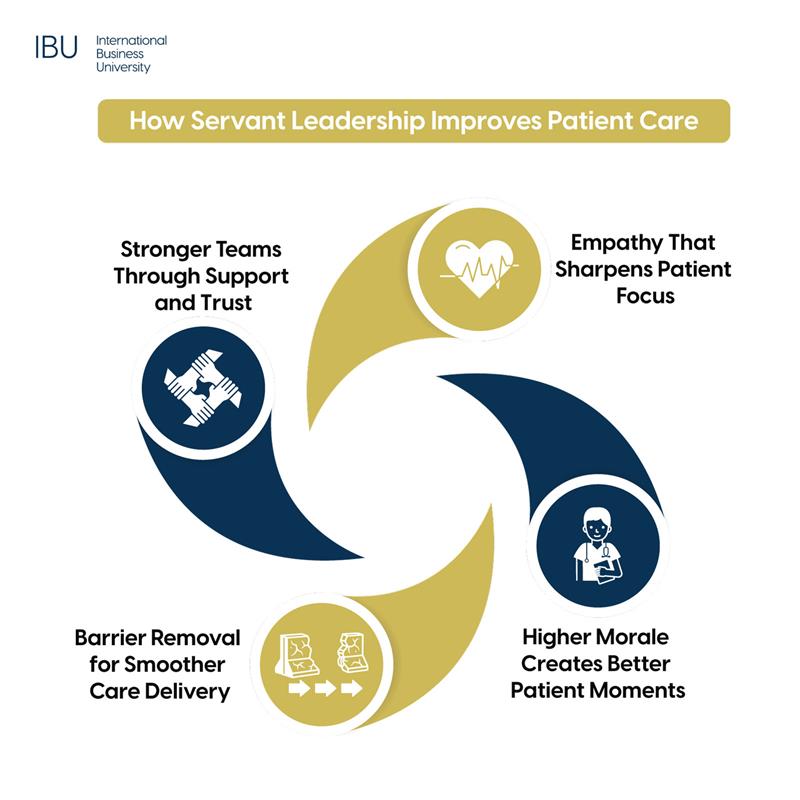
Servant Leadership strengthens patient focus by creating healthcare environments where professionals feel valued, supported, and trusted with meaningful responsibility. Leaders who adopt this model shift attention away from hierarchy and place it on the well-being of their teams, which strengthens the entire chain of patient care. When teams feel respected and resourced, they invest greater empathy, attention, and consistency into patient interactions because their emotional load decreases and their clarity increases.
Servant leaders reinforce a culture where psychological safety drives communication, where compassion fuels decision-making, and where clinical excellence becomes a shared responsibility. This leadership model supports stronger patient outcomes because teams operate with calmness, purpose, and confidence. Healthcare settings that embrace Servant Leadership experience smoother workflows, higher morale, and a patient experience grounded in dignity.
How Servant Leadership Strengthens Team Well-Being
Servant Leadership starts with an intentional focus on the emotional, psychological, and practical needs of healthcare professionals. Leaders invest time in understanding workload challenges, interpersonal dynamics, and skill gaps that influence stress levels across units. This creates a workplace where individuals feel seen instead of overlooked and supported instead of overwhelmed.
A strong Servant Leader:
- The study team patterns to identify sources of burnout
- Uses one-on-one conversations to understand barriers to effective care
- Creates systems that reduce unnecessary stress and mental fatigue
Healthcare environments gain tremendous stability when people feel safe expressing concerns without fear. This stability decreases turnover, strengthens continuity of care, and increases staff loyalty. You see it clearly in patient interactions: calmer nurses, steady physicians, and coordinated teams signal a system where well-being receives consistent attention.
Increasing Patient Focus Through Empathy and Presence
Empathy becomes powerful when leaders model it consistently. The following servant leadership examples in healthcare illustrate how this approach translates into practice:
- Example 1 – Long-Term Care: A director of care at a Manitoba long-term care facility introduced daily “stay interviews” with staff, asking what would keep them in their role and what barriers they faced. Within 12 months, voluntary turnover dropped 27%, and resident satisfaction scores rose 19%, as documented in the facility’s 2022 annual quality report.
- Example 2 – Hospital Ward Management: A head nurse at a Toronto general hospital restructured morning huddles so frontline nurses set the agenda rather than management. Staff reported a 34% improvement in feeling heard, and the ward recorded its lowest medication error rate in five years, per its internal audit published in 2023.
- Example 3 – Mental Health Services: A clinical manager at a Vancouver community mental health centre removed mandatory overtime by redistributing administrative tasks to non-clinical staff, freeing counsellors for direct patient contact. Counsellor-reported burnout scores fell significantly, as cited in a 2022 case study published through the Canadian Mental Health Association.
Creating Environments of Psychological Safety
Psychological safety shapes nearly every outcome in healthcare. Servant Leaders create systems where professionals feel confident raising concerns, questioning unclear instructions, and speaking honestly during complex patient cases. This psychological space supports stronger teamwork and reduces preventable errors.
Key practices that strengthen psychological safety include:
- Encouraging open dialogue during interdisciplinary huddles
- Neutralizing power distance so junior staff feel safe speaking
- Responding constructively when errors occur instead of assigning blame
In environments guided by Servant Leadership, professionals know their voice matters. This increases clarity during high-pressure situations because no team member hesitates to surface information. That confidence improves assessments, handoffs, and escalation decisions.
Psychological safety is not a soft benefit. It is a clinical asset that influences patient outcomes, staff retention, and workflow stability.
Removing Barriers That Disrupt Patient Care
Servant Leaders focus on removing systemic barriers that limit performance. Healthcare professionals often struggle due to inefficient systems rather than a lack of skill. Leaders who understand this address problems at their root instead of placing pressure on individual staff members.
Types of barriers addressed through Servant Leadership include:
- Short staffing that creates unnecessary patient delays
- Missing or outdated equipment that weakens accuracy
- Workflow gaps that increase confusion at shift changes
- Technology failures that disrupt documentation or communication
When barriers disappear, teams regain control of their pace and attention. That regained control increases precision, reduces stress, and creates space for compassionate, attentive care.
Removing obstacles signals respect. It reinforces the idea that leadership exists to serve the team so the team can serve the patient.
Empowering Teams to Deliver High-Quality Care
Servant Leadership empowers healthcare professionals by granting autonomy within clear structures. This autonomy fuels ownership, creativity, and pride in performance. Leaders offer support without micromanagement and structure without rigidity.
Empowerment looks like:
- Trusting nurses to adjust workflows based on patient conditions
- Encouraging physicians to test evidence-informed strategies
- Giving allied health professionals a voice in interdisciplinary planning
- Validating ideas from staff at every experience level
Ownership increases engagement. When professionals feel responsible for outcomes, they become proactive instead of reactive. They notice patient needs earlier, communicate more openly, and move with confidence during uncertainty.
Empowerment strengthens resilience because staff members gain the belief that their decisions carry weight and value.
Improving Staff Morale to Strengthen Patient Interactions
Morale influences patient experiences more than most metrics. When morale falls, the quality of interactions shifts noticeably: tone sharpens, patience shortens, and attentiveness weakens. Servant Leadership protects morale by giving teams emotional stability through recognition, fairness, and steady support.
Strong morale is fuelled by:
- Recognition of effort, not only outcomes
- Consistent, respectful communication from leaders
- Fair distribution of workload during intense shifts
- Opportunities for advancement aligned with staff interests
Healthcare environments with strong morale demonstrate smoother communication, more supportive teamwork, and calmer patient interactions. Patients pick up on these subtle signals. A confident, energized team creates a confident, reassured patient.
Servant Leaders recognize that morale is not a luxury. It is a daily operational necessity.
Impact of Servant Leadership on Patient Satisfaction
Servant Leadership improves patient satisfaction by strengthening every factor that shapes the patient experience. When staff feel secure, equipped, and appreciated, they move with attentiveness that patients immediately recognize. Satisfaction rises naturally because the care environment feels coordinated and compassionate.
Servant Leadership increases satisfaction through:
- Consistent emotional presence during difficult moments
- Clear communication that reduces misunderstandings
- Respectful patient handling during diagnostics and procedures
- Stronger collaboration among multiple practitioners
Patients feel safer when teams operate with calm precision. They feel valued when professionals take time to explain, listen, and reassure. Servant Leadership creates that consistency by shaping the emotional undercurrent of the care environment.
Strengthening Patient-Centered Cultures
A patient-centred culture grows when leaders reinforce shared values across every level of a healthcare organization. Servant Leaders weave compassion, respect, and integrity into daily operations so that the entire team moves with a unified sense of purpose.
This culture strengthens patient outcomes through:
- Alignment across all departments, from triage to discharge
- Increased attention to patient dignity during stressful moments
- Reduced organizational friction, creating smoother care delivery
When every team member prioritizes the patient, the quality of care rises naturally. Servant Leadership anchors that priority, creating a stable foundation for patient-centred excellence.
Shared Governance as a Leadership Model in Healthcare
Shared Governance creates strong decision systems by distributing authority across nursing teams, clinicians, and administrative partners. This leadership model strengthens collaboration because teams contribute directly to policies, standards, and patient care plans.
Shared Governance improves performance through responsibility-sharing. When professionals influence decisions, they gain ownership of outcomes. This increases accountability and accelerates improvement initiatives.
Key advantages include:
- Higher engagement through active participation
- Better decision quality due to diverse insights
- Stronger team identity through shared responsibility
Shared Governance improves communication between frontline staff and organizational leadership. Everyone gains clarity on what needs to improve and why it matters. This increases alignment across departments and strengthens patient care.
Healthcare organizations use Shared Governance to increase autonomy while maintaining strong clinical standards. This leadership model supports improved safety, faster problem resolution, and meaningful professional development.
Clinical Leadership Model for Timely Decision-Making
Clinical Leadership focuses on real-time decision-making at the bedside. Leaders in this model guide patient care directly through clinical expertise, communication clarity, and rapid assessment. This strengthens care outcomes in dynamic environments.
Clinical leaders communicate expectations clearly to prevent delays. They interpret patient data quickly, coordinate team responses, and adjust plans as conditions shift. This increases confidence across units.
Core strengths include:
- Faster clinical interventions through expert oversight
- Better care coordination across shifts
- Higher patient trust due to visible leadership presence
Clinical Leadership supports safety during moments that require swift action. Hospitals rely on clinical leaders to interpret information faster than standard workflows permit. This model strengthens patient outcomes and protects teams under pressure.
Leadership Tips for Healthcare Workers
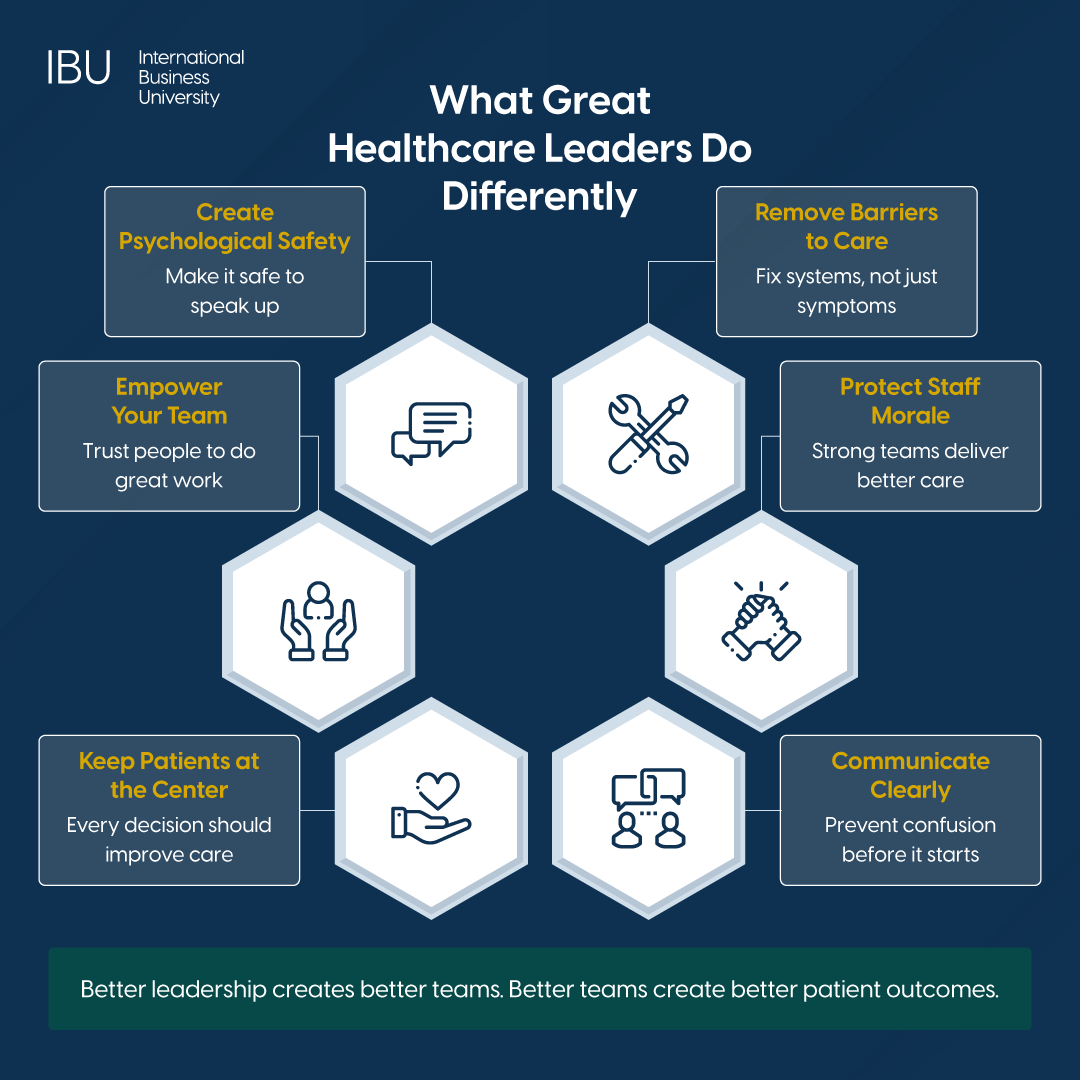
The following leadership tips for healthcare workers address the practical challenges of day-to-day clinical and administrative management. These leadership strategies in healthcare are applicable across all levels, from charge nurses to department heads, and reflect the most common leadership approaches in healthcare literature.
1. Communicate Expectations Before Assuming Performance
Ambiguity in healthcare generates risk. State role expectations, escalation paths, and decision authority at the start of every shift or project. Teams perform better when they know exactly who is responsible for what.
2. Use Structured Handoff Protocols
Adopt tools such as SBAR (Situation, Background, Assessment, Recommendation) to formalize information transfer during shift changes. Poorly structured handoffs are among the leading contributors to preventable adverse events in Canadian acute care, per the Canadian Patient Safety Institute.
3. Build Psychological Safety Into Daily Interactions
Respond to reported errors with inquiry rather than blame. Ask what factors in the system allowed the error to occur. This approach generates better safety data and encourages proactive disclosure.
4. Match Leadership Approach to Context
Experienced leaders shift between autocratic, democratic, and servant leadership approaches based on the situation. During emergencies, directive authority is appropriate. During protocol reviews, participatory input produces better outcomes. Rigidly applying a single approach in all circumstances weakens team performance.
5. Invest in Delegation Skills
Effective delegation is one of the highest-leverage leadership skills in healthcare. Leaders who delegate well create capacity for complex tasks while developing subordinate competence. Poor delegation creates bottlenecks that slow care delivery.
6. Prioritize Leader Well-Being as a Performance Factor
Leadership effectiveness correlates directly with leader health. Healthcare managers who maintain sustainable workloads, practice reflective debriefing, and access peer support are more consistent in their decision-making and more stable in high-pressure situations.
Advance Your Healthcare Leadership Path
Build management skills for clinical and administrative roles.
Key Takeaways

A leadership framework strengthens communication, decision quality, and patient outcomes across healthcare environments.
Structured models support teams through rapid change, complexity, and high-pressure demands.
Clear leadership systems help healthcare professionals deliver safer, more effective, and more coordinated care.
According to Health Canada, healthcare teams with formalized leadership structures report higher staff retention and fewer clinical errors.
Frequently Asked Questions
What is a leadership model in healthcare?
A leadership model in healthcare is a structured framework that defines how authority is organized, how decisions are made, and how teams are directed within a clinical or administrative setting. These models include transformational, servant, democratic, autocratic, and laissez-faire approaches, each suited to different organizational needs and patient care contexts.
Why is leadership important in healthcare?
Leadership is important in healthcare because it directly determines the quality, safety, and consistency of patient care. Clear leadership structures reduce communication errors, improve team coordination, and increase accountability. The Canadian Patient Safety Institute identifies leadership culture as one of the primary determinants of patient safety outcomes in acute care.
What is the best leadership style in healthcare?
There is no single best leadership style in healthcare. Effective leaders adapt their approach based on context. Autocratic leadership suits emergency scenarios requiring immediate decisions. Democratic leadership suits protocol development and team input. Servant leadership supports long-term care and staff well-being. Most effective healthcare leaders use a combination of styles depending on the situation.
How does servant leadership improve patient care?
Servant leadership improves patient care by prioritizing the well-being and effectiveness of care teams. When staff feel supported, psychologically safe, and equipped with the right tools, they deliver more attentive, accurate, and compassionate care. Servant leadership also reduces burnout and staff turnover, which maintains continuity of care for patients.
What is the difference between transformational and servant leadership in healthcare?
Transformational leadership focuses on inspiring teams toward a shared vision, encouraging innovation, and motivating professionals to exceed baseline performance. Servant leadership focuses on meeting the needs of the team first so that the team can better serve patients. Transformational leadership is typically forward-looking and change-oriented; servant leadership is relationship-oriented and focused on day-to-day support.
How do leadership models affect staff retention in healthcare?
Leadership models affect staff retention by shaping the daily work environment, emotional safety, and professional development opportunities available to healthcare workers. Structured leadership reduces burnout, clarifies expectations, and signals organizational investment in staff welfare. CIHI data indicates that hospitals with formalized leadership programs retain nursing staff at significantly higher rates than those without.
How does leadership impact patient outcomes?
Leadership strengthens patient outcomes through communication clarity, coordinated teamwork, and consistent clinical decision-making. When teams trust leadership structures, they move with confidence. This improves accuracy, safety, and overall patient satisfaction.
What leadership model suits high-pressure healthcare environments?
High-pressure environments rely on clear authority systems. Autocratic Leadership and Clinical Leadership perform well during time-sensitive scenarios. These models support rapid decision-making that protects patient safety.
How do leadership models improve staff satisfaction?
Leadership models create stability through structure, expectations, and support systems. Teams feel confident when leaders communicate clearly and show commitment to professional development. This reduces stress and increases retention.
Importance of Leadership Model in the Healthcare Industry
A strong leadership model in healthcare determines how effectively teams respond to challenges, communicate through complexity, and deliver care with consistency. You see measurable improvements in patient outcomes when leadership frameworks guide decisions. The healthcare industry depends on structure because lives depend on reliable performance.
Leadership models strengthen accountability and help professionals manage high-pressure conditions with confidence. They set expectations that support safe, accurate, and compassionate care. These models also shape organizational culture, guiding how people communicate, how they solve problems, and how they support one another.
When you study any leadership model in healthcare, you discover patterns that elevate performance across specialties. Each model contributes to stronger teamwork, better outcomes, and higher staff satisfaction. Leaders who understand these frameworks help healthcare settings grow stronger, safer, and more adaptable to rapid change.
Build Healthcare Leadership Skills at IBU
Strengthen decision-making, communication, and team leadership in healthcare.