
How to become a product manager in Canada’s IT industry does not start with a computer science degree. It starts with business judgment, the ability to prioritize competing demands, and enough technical fluency to work credibly with engineering teams.
Most guides to this career assume a technical background as the default path. A business degree, especially one with applied technology and entrepreneurship training, builds the other half of the role that technical candidates often lack.
The 7-Step Path Into Product Management
Employers hiring entry-level product managers screen for a specific combination of business judgment, technical fluency, and demonstrated output, not simply a completed MBA. The sequence below builds that combination in order, and skipping a step usually costs more time in the job search than it saves.
- Build core business fundamentals: Market sizing, financial modeling, and stakeholder communication developed through MBA coursework, rather than assumed to develop naturally on the job.
- Choose a technology-focused specialization: An MBA in Technology, Innovation, and Entrepreneurship concentrates coursework in the areas of product roles.
- Add baseline technical literacy: Enough understanding of how software gets built, including sprints, releases, and basic data concepts, to hold a credible conversation with an engineering team.
- Produce one product artifact: A case study or mock product plan built during school that mirrors an actual product manager deliverable, not a general business plan.
- Target the right entry point: Associate product manager roles directly, or an adjacent business analyst, strategy, or operations role that can convert into a product role as relevant experience accumulates.
- Build a network before applying: Warm introductions through classmates, mentors, and alumni, since many product roles are filled through referrals before they are posted publicly.
- Demonstrate judgment once hired: Consistent strategic decisions on the job, which determine promotion speed more than tenure or academic performance alone.
Graduates who complete these steps in order to enter the job search with a concrete answer to the question every interviewer eventually asks: what software feature or product have you actually helped build and bring to market?
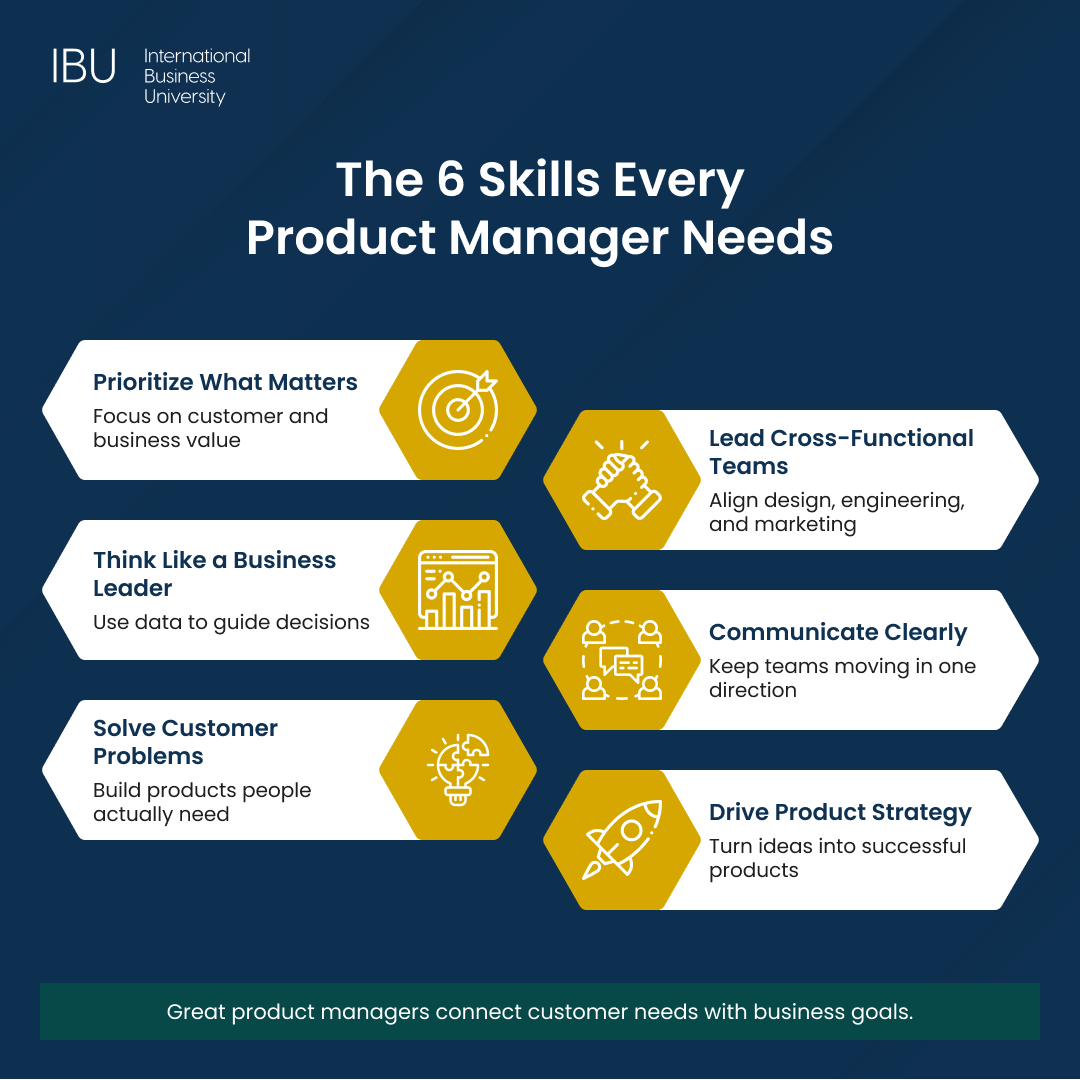
What Product Managers Actually Own Inside Canadian Tech Companies
The role is frequently misunderstood before someone actually steps into it.
- Prioritization: Deciding what a team builds next, and just as often what it does not build, based on business impact rather than technical interest.
- Cross-functional coordination: Aligning engineering, design, marketing, and sales around a single product direction.
- Business case ownership: Justifying a feature or product decision with data and a clear connection to revenue or retention.
None of these responsibilities require writing code, though they do require enough technical literacy to evaluate trade-offs credibly.
A Typical Week in the Role
Most of a product manager’s week involves meetings with engineering, design, and stakeholders rather than solo analysis. Roadmap reviews, sprint planning input, and customer feedback sessions fill most calendars.
Business graduates often adjust to this pace faster than expected, since it closely mirrors group project work and case competitions from their coursework.
What the Role Is Not
Product management is not a technical execution role, and it is not a marketing role either, though it overlaps with both. Confusing it with either leads to a mismatched skill set and a slower path into the role.
Candidates who understand this distinction early can target the right coursework and experience instead of building skills that do not move the needle.
Day-to-day fluency with coordination tools such as Monday, ClickUp, and Asana signals readiness to step into that coordination-heavy work from day one, since Canadian product teams rely on these platforms to track roadmaps, sprints, and cross-team hand-offs.
Why Business Judgment and Entrepreneurship Training Make You PM-Ready
The skills a strong product manager needs overlap closely with core business and entrepreneurship coursework.
- Market sizing: Entrepreneurship coursework trains the same estimation skill product managers use to evaluate a new feature’s potential.
- Stakeholder negotiation: Business programs build the influence skill needed to align engineering and sales around one roadmap.
- Financial fluency: Understanding unit economics and revenue models lets a product manager defend decisions in business terms executives respect.
Technical candidates frequently need to build these skills after they are already in the role. Business graduates can walk in with them already in place.
Build the Business Skills Product Teams Actually Need
IBU’s MBA in Technology, Innovation, and Entrepreneurship prepares graduates for product and technology leadership roles.
The Product Manager Career Path From Associate to VP in Canada
The role follows a fairly consistent progression across Canadian tech companies, though titles vary by company size.
- Associate product manager: Owns a narrow feature area under the direction of a senior product manager, typically the first role for new graduates.
- Product manager: Owns a full product area independently, including roadmap decisions and cross-functional coordination.
- Senior and group product manager: Manages other product managers and owns a broader product strategy across multiple teams.
- VP of product: Sets product strategy at the company level and represents product in executive decisions.
Business graduates most often enter at the associate level, then move faster through the middle stages once they demonstrate strategic judgment on the job.
Technology Careers in Product Management: Why Business Judgment Is the Role Most MBAs Target
Among technology career paths, product management draws the highest number of MBA graduates for a specific reason.
- Closest fit to MBA training: The role rewards the same strategic and financial thinking an MBA curriculum builds directly.
- Leadership track visibility: Product management is one of the clearest paths from individual contributor to executive leadership inside a tech company.
- Cross-industry transferability: Product management skills transfer across sectors, unlike some technical roles tied to a specific stack or platform.
That combination is why product management appears consistently on the shortlist of target roles for MBA graduates entering technology careers.
The Portfolio and Experience Signals That Canadian Tech Companies Look For
Hiring managers screen for evidence of product thinking, not just interest in the role.
- A completed case study: A written breakdown of how a candidate would improve an existing product, with clear reasoning tied to business goals.
- Cross-functional project experience: Any project, academic or professional, that required aligning people who did not report to the candidate.
- Basic technical fluency: Enough familiarity with how software gets built to ask engineering teams informed questions, without needing to code.
Candidates who arrive with even one of these signals stand out clearly from applicants who only list product management as an interest.
Turn Your MBA Into a Product Management Career
Learn how IBU’s Technology, Innovation, and Entrepreneurship stream builds these exact signals into coursework.
How to Make the Pivot From MBA Directly Into a Product Manager Role
Business graduates without prior tech experience can still enter product management directly, with the right preparation.
- Target associate roles first: Direct entry into a mid-level product role without prior product experience is rare, even with an MBA.
- Build one product case study: A single well-built case study demonstrates product thinking far more effectively than a list of business courses taken.
- Network into warm introductions: Product management roles are frequently filled through referrals before they are posted publicly.
Graduates who treat the case study and network building as part of their coursework, not an afterthought, enter the job search with a clear advantage. IBU’s guide on powerful business skills for aspiring leaders covers several of these transferable skills in more depth.
Key Takeaways

No coding required: product management rewards business judgment and cross-functional coordination, not technical execution.
MBA skills transfer directly: market sizing, stakeholder negotiation, and financial fluency map closely onto core product management tasks.
Entry point matters: most business graduates enter at the associate level and move up faster once they show strategic judgment on the job.
Portfolio beats interest: a single strong product case study demonstrates readiness more effectively than expressed interest in the role.
Start Building Your Product Management Case Study
Speak with an admissions advisor about IBU’s Technology, Innovation, and Entrepreneurship MBA stream.
Frequently Asked Questions
Do I need a technical background to become a product manager?
A technical background helps but is not required. Business judgment, prioritization, and cross-functional coordination matter more for most product roles.
What is the typical product manager career path in Canada?
Most graduates start as an associate product manager, move to product manager, then senior or group product manager, and eventually VP of product. Progression speed depends on demonstrated strategic judgment rather than tenure alone.
Can an MBA graduate become a product manager without prior tech experience?
Entry is realistic, especially at the associate level, where companies weigh business judgment and coordination skills over technical depth. A completed product case study strengthens this path significantly.
What skills do Canadian tech companies look for in product manager candidates?
Hiring managers look for prioritization skill, cross-functional experience, and basic technical fluency. A written product case study is one of the strongest signals a candidate can provide.
How does IBU prepare MBA students for product management roles?
IBU’s Technology, Innovation, and Entrepreneurship stream builds market sizing, stakeholder negotiation, and financial fluency directly into coursework. These are the same skills product management hiring managers screen for.
How long does it take to move from associate to senior product manager?
Timelines vary widely, but two to four years is common for graduates who show consistent strategic judgment. Demonstrated impact on business outcomes moves this timeline faster than tenure alone.
Turning an MBA Into a Product Management Career
Product management rewards the same business judgment an MBA curriculum is built to develop, not a computer science background. Graduates who pair that judgment with one strong case study and a network of warm introductions enter the job search with a clear advantage over candidates who rely on interest alone.