
An AI solutions architect designs how artificial intelligence systems fit into an organization’s existing technology and business processes. The role sits between deep technical work and strategic business decisions, requiring genuine fluency in both rather than specialization in one area alone.
Canadian employers building out AI capability increasingly need architects who can translate a business problem into a clear technical system design. This article covers what the role actually involves and how an MSc in Applied AI builds toward it directly.
What an AI Solutions Architect Actually Does Inside a Canadian Organization
The daily work spans system design, stakeholder communication, and technical oversight rather than hands-on model building alone. Understanding this full scope helps candidates target the right skills early in their overall preparation.
- System design: Deciding how AI models integrate with existing data infrastructure and core business applications.
- Technical oversight: Guiding a team of engineers and data scientists on implementation without necessarily writing all production code directly.
- Business translation: Converting a business problem into clear technical requirements a development team can act on.
Architects who lack the business translation skill often produce technically sound systems that never quite solve the actual problem a company originally faced.
How the AI Solutions Architect Role Differs From a Data Scientist or ML Engineer
These three roles overlap in required knowledge but differ sharply in daily focus and scope of responsibility. Understanding the distinction helps candidates position themselves correctly for each path.
- Data scientist: Focuses on building and validating models to answer a specific analytical question.
- ML engineer: Focuses on deploying and maintaining models reliably in a production environment.
- AI solutions architect: Focuses on how multiple systems, models, and business processes fit together at an organizational scale.
Architects typically progress from one of the other two roles rather than entering directly, since the position depends on broader system-level experience gained across several completed projects over time.
Build Toward an AI Solutions Architect Career
IBU’s MSc in Applied Artificial Intelligence builds the technical and business skills this role requires.
AI Solutions Architect: The Technical and Business Skills Canadian Employers Require
Job postings for this role consistently list a specific combination of requirements that differ from a pure technical position focused only on model building.
- Systems thinking: Understanding how a change in one part of an AI system affects other connected systems and workflows.
- Stakeholder communication: Explaining technical tradeoffs to non-technical executives in terms tied to business outcomes.
- Cost and infrastructure judgment: Balancing model performance against the actual infrastructure cost of running it at scale.
Candidates who can speak to all three areas in an interview move through hiring processes noticeably faster than candidates presenting technical depth alone.
Why an MSc in Applied AI Is the Credential That Opens This Role Fastest
A general computer science background covers technical fundamentals without necessarily building the business and systems judgment this specific role depends on.
- Applied technical depth: Coursework builds hands-on experience with the AI systems architects need to evaluate and design around directly.
- Business integration training: Coursework pairs technical material with business context, closing a gap common computer science programs leave open.
- Applied capstone project: Requires students to design a system architecture for a live business scenario, mirroring actual architect work.
Graduates leave with a concrete architecture project to reference directly in interviews, backed by both technical and business reasoning behind every design decision made.
Industrial Innovation: How IBU’s Track Builds AI Solutions Architect Competencies
IBU’s industrial innovation track pairs AI systems training with applied business problem-solving drawn from Canadian industry contexts.
- Cross-functional coursework: Students work through scenarios requiring both technical design and stakeholder communication together.
- Industry mentorship: Students connect with professionals working inside Canadian companies building AI capability.
- Applied system design projects: Students design system architectures for actual business problems rather than working through abstract technical exercises.
That structure mirrors the exact combination of skills employers screen for when hiring into architect-level roles.
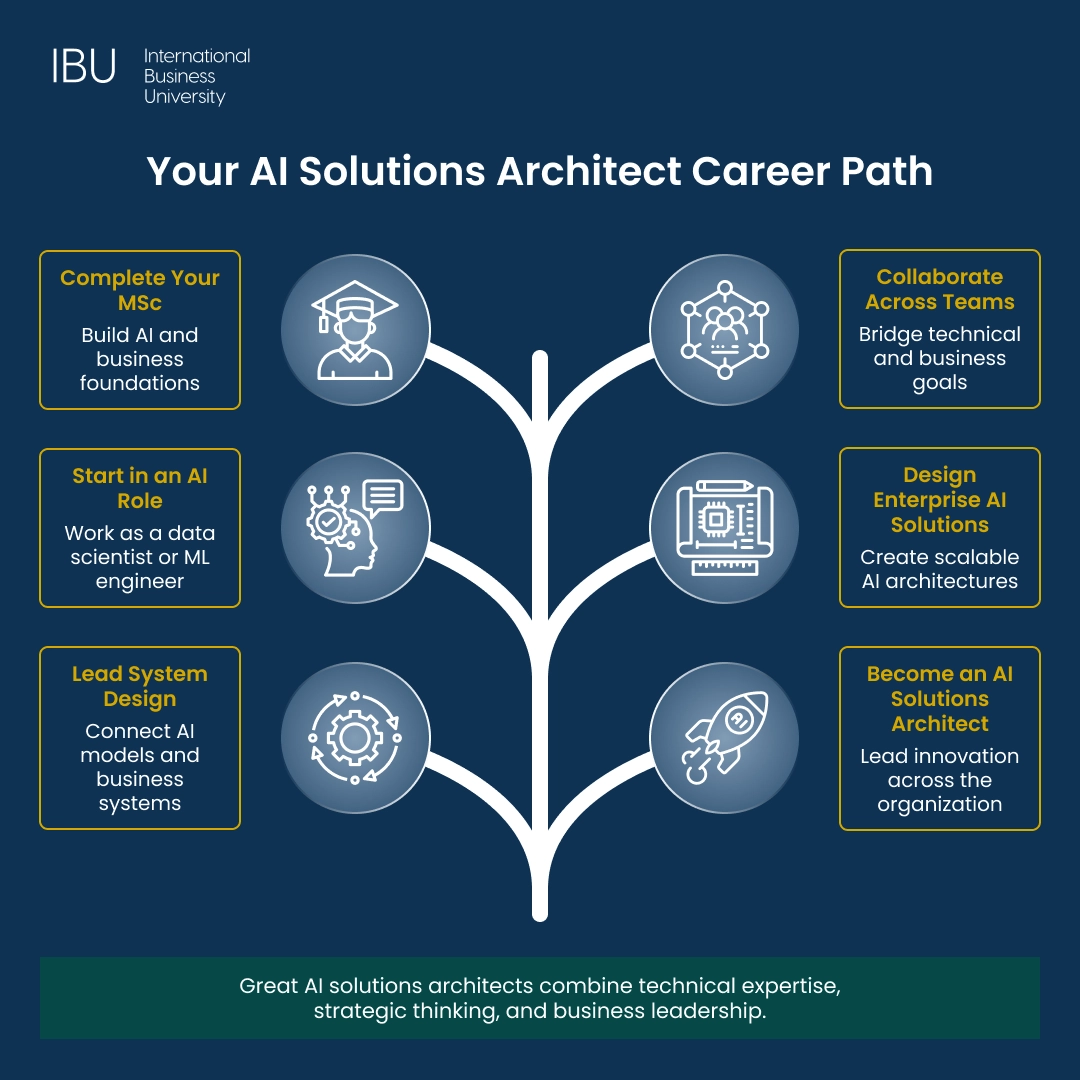
The Career Path From MSc Graduate to AI Solutions Architect in Canada
The role sits several steps into a technical career rather than serving as a typical first position after graduation.
- Entry role: Most graduates start as a data scientist, ML engineer, or data engineer, building foundational technical experience.
- Mid-level progression: Professionals take on broader system design responsibility as they demonstrate cross-functional judgment.
- Architect-level roles: Professionals move into architecture positions once they have led system-level decisions across multiple projects.
IBU’s guides on the data engineering roadmap and the operations consultant role cover related entry points into this broader career track.
How to Position Your MSc in Applied AI for an AI Solutions Architect Role
Positioning for this role depends on how a candidate frames prior technical experience, not just the credential itself.
- Lead with system-level projects: Highlight any project involving multiple connected systems, not just a single model.
- Quantify business impact: Framing technical decisions in terms of cost, performance, or business outcome achieved.
- Reference cross-functional collaboration: Describing experience working directly with non-technical stakeholders on a technical project.
Candidates who frame their experience this way signal architect-level readiness even before holding the title formally in any organization.
Key Takeaways
Four points summarize what separates architect-ready candidates from purely technical ones.

The role blends two skill sets: system design and business translation matter as much as deep technical knowledge alone.
It is rarely a first role: most architects progress from a data scientist, ML engineer, or data engineer position first.
Three skills drive hiring decisions: systems thinking, stakeholder communication, and cost judgment appear consistently in job postings.
Applied training accelerates the path: IBU’s capstone structure gives graduates a concrete architecture project to bring into interviews.
Frequently Asked Questions
What is the difference between an AI solutions architect and a data scientist?
A data scientist focuses on building and validating models to answer a specific analytical question. An AI solutions architect focuses on how multiple systems, models, and business processes fit together at an organizational scale.
Can I become an AI solutions architect directly after an MSc in Applied AI?
Most graduates enter as a data scientist, ML engineer, or data engineer before progressing into architecture roles. The position typically requires broader system-level experience gained across multiple projects first.
What skills do Canadian employers look for in AI solutions architect candidates?
Employers consistently look for systems thinking, stakeholder communication, and cost and infrastructure judgment. Candidates who can speak to all three tend to move through hiring processes faster.
How does an MSc in Applied AI prepare graduates for this role better than a computer science degree?
The program pairs applied technical depth with business integration training, closing a gap many computer science programs leave open. An applied capstone project also gives graduates concrete architecture experience to reference.
How does IBU's Industrial Innovation track build toward this role specifically?
The track pairs AI systems training with applied business problem-solving and industry mentorship from Canadian companies. Students design system architectures for actual business problems rather than abstract technical exercises.
How long does it typically take to reach an AI solutions architect role?
Most professionals spend three to six years in data scientist, ML engineer, or data engineer roles before progressing into architecture positions. Demonstrated system-level judgment across multiple projects matters more than years of tenure alone.
Building Toward an AI Solutions Architect Career
The AI solutions architect role rewards candidates who combine deep technical knowledge with business translation skill, not one alone without the other. Graduates who build both through applied coursework and a concrete architecture project position themselves for this role faster than candidates focused purely on technical depth.
Position Yourself for AI Architecture Roles
Learn how IBU’s Industrial Innovation track builds the skills AI solutions architects need.