

Data engineers build and maintain the systems that move, clean, and structure data so it can be used for analytics and machine learning. Because nearly every industry now depends on reliable data pipelines, demand for this role has grown consistently across banking, healthcare, retail, and technology sectors in Canada.
Data engineer salary in Canada depends on a combination of factors: years of experience, city, industry, and the specific technical skills a candidate brings. A master’s credential does not automatically raise a starting salary on its own, but it does position graduates for roles with a higher salary ceiling earlier in their career.
Key Takeaways
Here is what shapes data engineer compensation in Canada.

Data engineer salary in Canada increases with experience, with the largest jumps occurring between entry-level and mid-career stages.
A master’s credential accelerates access to higher-paying roles and specializations, rather than simply raising the starting salary at the entry level.
City and industry both affect compensation by a wide margin, with major tech and financial hubs generally paying at the higher end of the national range.
Data Engineer Salary in Canada: The Full Breakdown by Level
Data engineering has become one of the most in-demand and best-compensated roles in Canada’s tech sector, as companies race to build the infrastructure needed to manage and analyze growing volumes of data. Salaries vary significantly depending on experience level, from entry-level engineers building foundational skills to senior specialists architecting enterprise-scale systems. This breakdown walks through what data engineers earn at each career stage across Canada, along with the factors that influence where an individual salary lands within those ranges.
Entry-Level
The low end of the wage scale sits at $30.00 per hour, or approximately $62,400 annually on a full-time basis. This band generally reflects data engineers early in their careers, working under supervision on pipeline maintenance, data ingestion, and basic warehousing tasks while building toward independent ownership of systems.
Mid-Level (Median)
The median wage is $46.15 per hour, or approximately $95,990 annually. This is the typical earning point for a data engineer with several years of experience, capable of independently designing data pipelines, managing cloud infrastructure, and collaborating directly with analytics and engineering teams.
Senior-Level
The high end of the scale reaches $69.74 per hour, or approximately $145,060 annually. This band reflects senior data engineers and technical leads responsible for system architecture, cross-team infrastructure decisions, and mentoring junior staff.
Wages also vary meaningfully by province. British Columbia and Ontario post the highest median rates ($48.08 and $47.69 per hour respectively), while New Brunswick and Newfoundland and Labrador show lower medians but some of the widest low-to-high spreads in the country, indicating strong upward mobility for experienced engineers in smaller markets.
Data Engineer Career Ladder That You Need to Know About
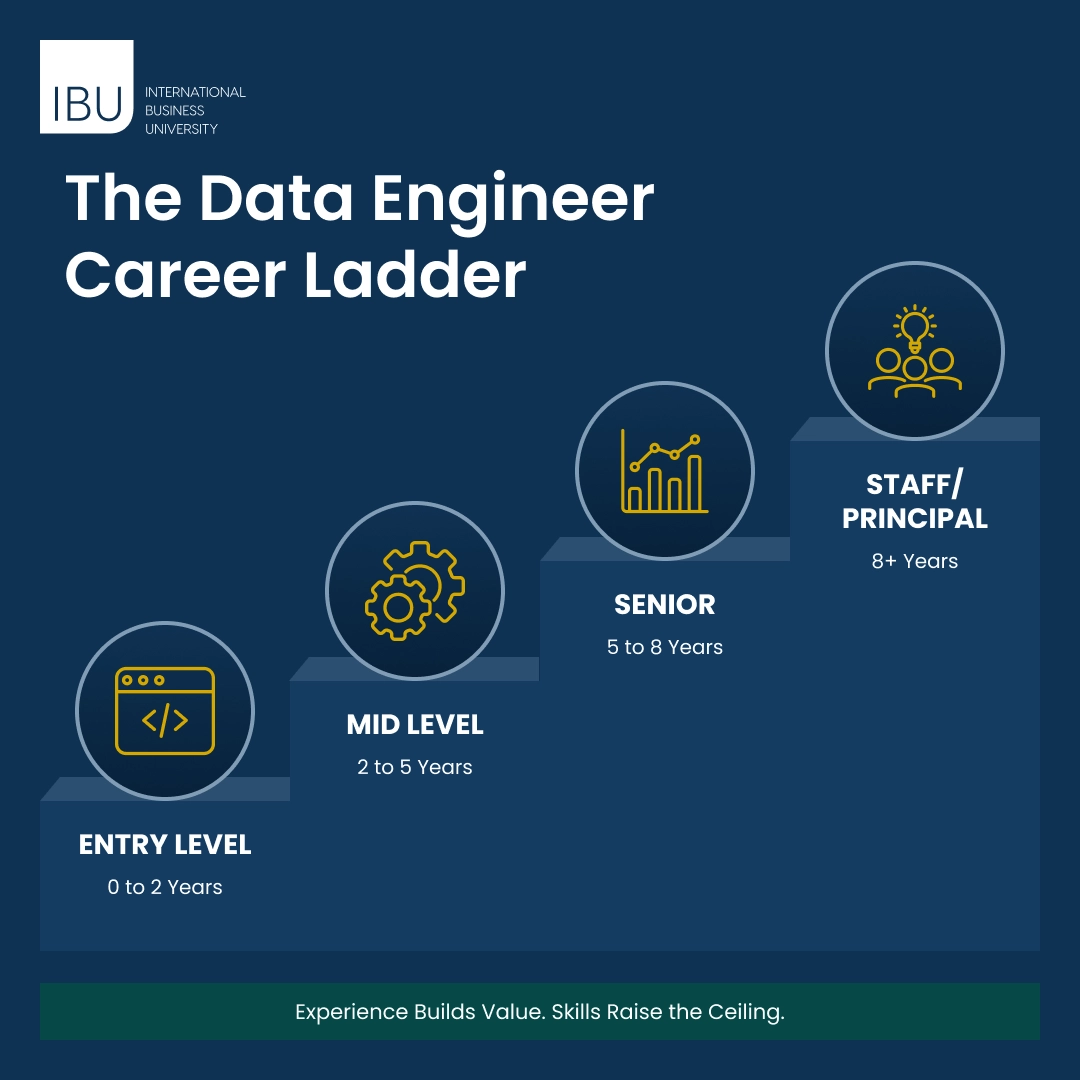
Data engineer compensation follows a predictable progression tied closely to demonstrated technical impact.
- Entry-level data engineer (0 to 2 years): Builds and maintains existing data pipelines under supervision.
- Mid-level data engineer (2 to 5 years): Designs new pipeline architecture and takes ownership of specific data systems.
- Senior data engineer (5 to 8 years): Leads architecture decisions across multiple systems and mentors junior engineers.
- Staff or principal data engineer (8 or more years): Sets technical direction for data infrastructure across the organization.
The jump from entry-level to mid-level typically represents the largest single percentage increase in data engineer salary in Canada, reflecting the shift from executing existing systems to designing new ones independently. This progression tracks the scope of systems an engineer is trusted to own rather than years of service alone, so two professionals with identical tenure can sit at different levels depending on the complexity of the systems they have managed and the independence with which they have managed them.
Job titles also differ across employers, and a senior title at one organization may carry a scope closer to what another organization calls staff or principal. Candidates comparing offers should look past the title itself and examine the stated scope of responsibility, the importance and scale of the systems involved, and the degree of independent judgment the role requires, since two similarly titled positions can carry noticeably different compensation once these factors are considered.
How a Master’s Credential Affects Data Engineer Salary in Canada
A master’s degree in applied AI or a related data engineering specialization does not usually change the starting salary offer for an entry-level position significantly, since many entry-level data engineering roles are filled by bachelor’s degree holders as well. Where the credential shows its value is in the speed of progression afterward.
Graduates with a master’s-level credential typically move into mid-level and specialized roles faster, because they enter the workforce with exposure to machine learning integration, advanced data architecture, and applied project work that would otherwise take years of on-the-job experience to accumulate. This effect compounds over a five to ten-year career, producing a notably higher earning trajectory even though the starting point looks similar. Part of this advantage comes from the type of work built into a graduate-level program rather than the credential alone.
Coursework centred on applied projects, capstone work with production-scale datasets, and structured exposure to cloud platforms such as AWS, Google Cloud, and Microsoft Azure gives graduates a portfolio that hiring managers can evaluate directly, which shortens the interview process for mid-level openings that would otherwise require several years of pipeline experience to prove out.
This advantage is not uniform across employers: larger technology companies and financial institutions with proper levelling frameworks tend to recognize graduate coursework more consistently than smaller firms that rely primarily on interview performance, so the size of the acceleration effect can vary depending on where a graduate applies.
Data Engineer Salary by City: Toronto vs Vancouver vs Ottawa
Data engineering pay in Canada varies by a wide margin across cities, largely reflecting local cost of living and the concentration of technology and financial sector employers.
- Toronto: Highest average compensation nationally, driven by a dense concentration of financial services and technology employers.
- Vancouver: Strong compensation levels supported by a growing technology sector, though generally trailing Toronto for senior and specialized roles.
- Ottawa: Competitive compensation anchored by government technology contracts and a growing private sector presence, often with a lower cost of living than Toronto or Vancouver.
Candidates evaluating offers across cities should weigh total compensation against cost of living, since a lower nominal salary in a city with substantially lower housing costs can represent a stronger overall financial position.
Position yourself for higher-paying data engineering roles.
Learn more about IBU’s MSc in Applied AI, Data Engineering specialization.
What Skills Push Data Engineer Salary Above the Average in Canada
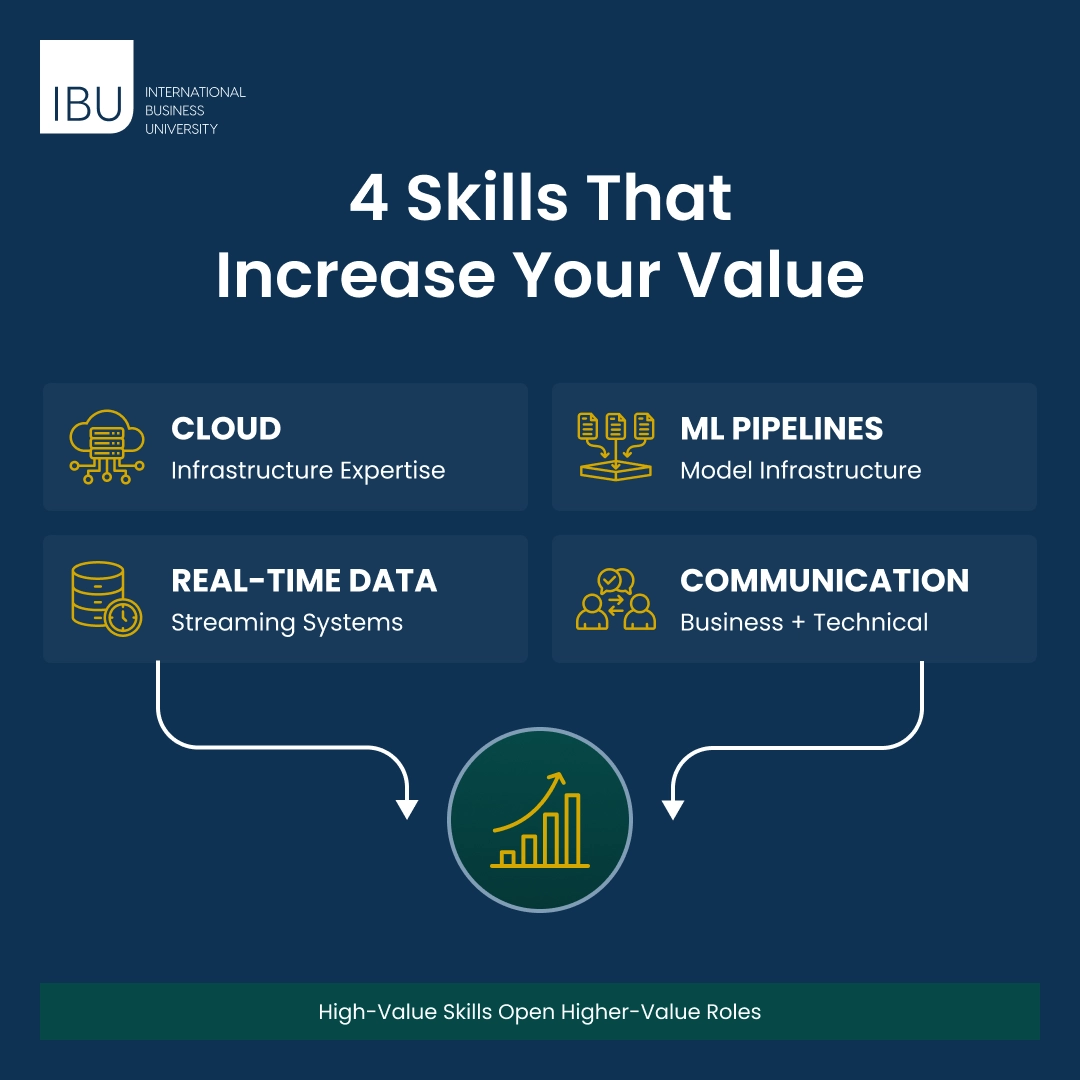
Certain skills consistently correlate with above-average compensation for data engineers.
- Cloud platform expertise: Deep proficiency with major cloud data infrastructure platforms.
- Machine learning pipeline experience: Building the data infrastructure that supports model training and deployment, not just standard reporting pipelines.
- Real-time data processing: Experience with streaming data systems, which remain scarcer than batch processing skills.
- Cross-functional communication: The ability to work directly with data scientists and business stakeholders, not just other engineers.
Engineers who combine strong technical depth with the ability to translate business requirements into pipeline design consistently command higher compensation than those with narrow technical skill alone.
How IBU’s MSc in Applied AI Positions Graduates for Higher-Paying Roles
IBU’s MSc in Applied AI, Data Engineering specialization, builds the specific combination of skills that correlates with above-average compensation: cloud infrastructure, machine learning pipeline design, and applied project experience across legitimate business scenarios. MSc data engineering salary outcomes reflect that advantage, positioning graduates for roles beyond standard entry-level data engineering positions.
The program connects directly to the broader career landscape covered in the data engineering roadmap for MSc AI graduates and to the wider industry context explored in applied AI industries where MSc graduates excel, both of which shape how quickly a graduate can move into higher-compensated specialized roles.
Frequently Asked Questions
What is the average data engineer salary in Canada in 2027?
Average compensation varies by experience level, city, and industry, with entry-level roles starting lower and rising substantially through the mid-career stage. National averages are less useful than city and experience-adjusted figures for evaluating a specific offer. Candidates should benchmark against their specific city and experience level rather than a single national number.
Does a master's degree significantly increase data engineer salary in Canada?
For applied AI salary Canada outcomes, a master’s degree has a more noticeable effect on career progression speed than on the initial entry-level offer. Graduates with advanced credentials typically move into mid-level and specialized roles faster, which produces a higher overall earning trajectory over five to ten years. The effect compounds rather than appearing as an immediate salary jump.
What is the data engineer salary difference between Toronto and Vancouver?
Toronto generally offers higher average compensation, reflecting its larger concentration of financial services and technology employers. Vancouver’s technology sector has grown significantly and offers competitive compensation, though it typically trails Toronto at senior and specialized levels. The gap has narrowed somewhat as Vancouver’s tech sector has expanded.
What skills push a data engineer salary above the average in Canada?
Cloud platform expertise, machine learning pipeline experience, and real-time data processing skills consistently correlate with above-average compensation. Engineers who can also communicate effectively with data scientists and business stakeholders tend to earn more than those with narrow technical skill alone. These combined skills are increasingly what separates senior compensation tiers from mid-level pay.
Build a Career Trajectory, Not a Single Starting Number
Evaluating data engineer income by starting salary alone misses the larger financial picture, since the credential and skill choices made early in a career shape the trajectory over the following decade far more than the first offer does. Focus on building the specific technical skills that correlate with senior compensation: cloud infrastructure, machine learning pipelines, and real-time processing, rather than optimizing only for the first job title. Consider how a graduate credential fits into that longer trajectory before evaluating it purely against entry-level salary data.
Build a career trajectory, not just an entry-level job.
Explore IBU’s MSc in Applied AI, Data Engineering specialization.