
Digital health jobs sit behind every health technology rollout, and most of them are business roles, not engineering roles. Someone has to translate a new system into workflows that clinical staff will actually use day-to-day, and that work depends on business and analytics training more than coding. Digital health roles sit inside that broader shortage, with demand concentrated in data and implementation positions rather than clinical hiring alone.
The Roles Sitting Inside Digital Health Jobs Canadian Employers Want Now
Digital health is one of those fields where the job titles on postings rarely match what candidates picture when they first start looking. Most people assume it skews heavily technical, requiring coding backgrounds or clinical credentials. The reality is that some of the most in-demand roles in this space sit squarely in the middle, requiring people who can translate between the technology and the humans using it. Digital health covers a wider range of roles than most candidates expect.
- Health data analyst: Turns clinical and operational data into reporting that guides hospital and health authority decisions.
- Digital health project manager: Leads the rollout of new health technology systems across clinical and administrative teams.
- Health informatics specialist: Bridges clinical workflows and the technology systems meant to support them.
Each of these roles requires enough technical fluency to work with software teams day to day, without requiring a technical degree to enter the field.
Why This Industry Is Growing Faster Than Clinical Hiring Alone
Canada’s health system is not facing a shortage of ambition when it comes to technology adoption. What it is facing is a shortage of people who can actually implement that technology in environments where the stakes are high, the workflows are complex, and the margin for error is small. That gap is what is driving demand for digital health professionals beyond anything clinical hiring alone can address.
Health authorities are investing in digital infrastructure to manage capacity pressure they cannot solve through clinical hiring alone. Every new system, from scheduling software to remote monitoring tools, needs someone who understands both the technology and the operational reality of a hospital floor.
That combination of skills is harder to source than either skill set on its own, which keeps demand for digital health roles elevated.
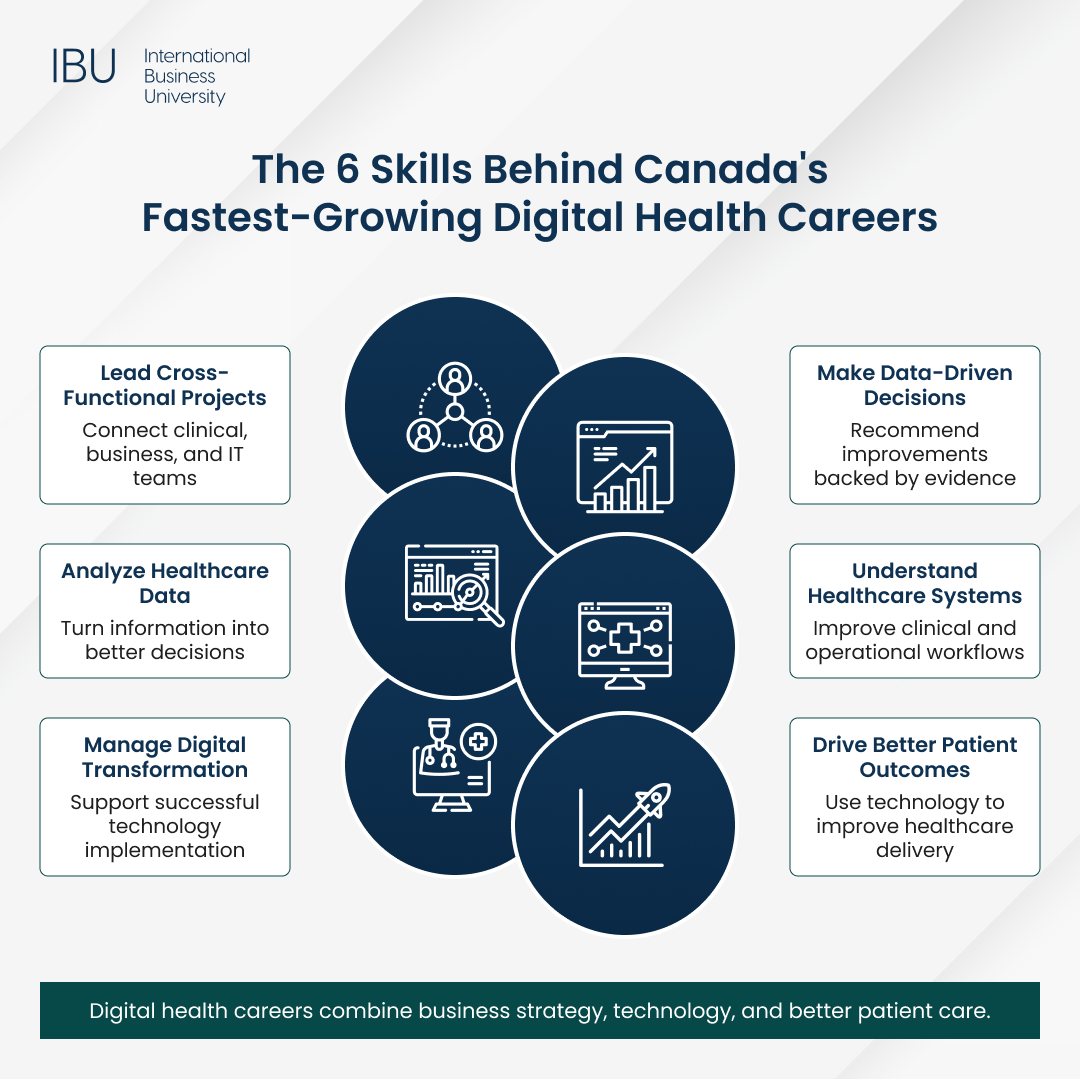
The 6 Skills Behind Canada’s Fastest-Growing Digital Health Careers
Digital health roles reward a specific combination of business, technology, and healthcare fluency, and six skills show up consistently across the fastest-growing positions in this space.
- Lead cross-functional projects: Connect clinical, business, and IT teams around a single technology or process change.
- Analyze healthcare data: Turn information into better decisions rather than letting reporting sit unused inside a system, the same shift covered in predictive analytics in healthcare.
- Manage digital transformation: Support successful technology implementation from planning through adoption, not just the initial rollout.
- Make decisions backed by data: Recommend improvements supported by evidence instead of intuition alone.
- Understand healthcare systems: Improve clinical and operational workflows by knowing how a health organization actually functions day to day.
- Drive better patient outcomes: Use technology to improve healthcare delivery, connecting a technical change back to an actual care result.
Why Business Training Matters as Much as Technical Skill Here
Technical fluency alone rarely moves a healthcare organization forward. A data analysis is only as useful as the recommendation built around it, and a technology rollout only succeeds if someone manages the clinical and operational disruption it creates along the way.
Digital health careers combine business strategy, technology, and better patient care, which is why candidates who can speak to all three areas consistently move ahead of candidates with technical skill alone.
How Canadian Employers Screen for Digital Health Readiness
Getting past the resume screen in digital health hiring requires more than a relevant degree. Employers in this space have learned from experience that candidates who look strong on paper do not always translate into hires who can operate effectively inside a health system from day one. The screening process reflects that. Job postings in this space name a fairly consistent set of requirements.
- Data tool fluency: Postings frequently name Excel, Power BI, or health-specific reporting platforms.
- Health industry familiarity: Understanding how health authorities and hospital systems operate speeds up onboarding significantly.
- Project delivery experience: Any experience leading a cross-functional project, academic or professional, strengthens a digital health application.
Candidates who can point to one completed project involving both data and a business recommendation stand out clearly in this hiring pool.
Health Informatics Salary Expectations in Canada
Compensation in this field varies by role and region across the country, but health informatics and digital health positions generally track above general administrative roles within the health industry due to the specialized skill combination required.
Candidates entering with both business training and health industry context typically command stronger starting offers than candidates with only one half of that skill set.
Regional Differences Worth Knowing
Ontario accounts for more than a third of Canada’s health care and social assistance employment, which concentrates digital health hiring in the province relative to smaller markets. Toronto’s health authorities and hospital networks post the highest volume of digital health and informatics roles nationally.
Candidates open to relocation within Canada for the right opportunity can use this concentration to prioritize where to focus a job search.
Build the Skills Digital Health Employers Are Hiring For
IBU’s MBA in Digital Health and Data Analytics prepares graduates for data and implementation roles across Canada’s health industry.
How IBU’s MBA in Digital Health and Data Analytics Prepares Graduates
Knowing the theory behind digital health systems is not the same as being able to walk into a health authority on day one and do the work. Employers in this space are not looking for graduates who can describe what a rollout involves.
They are looking for graduates who have actually worked through one, made tradeoffs, and produced something concrete. IBU’s program is built around that gap. The program pairs core business training with health-specific data and systems coursework.
- Health data analytics: Builds fluency in interpreting clinical and operational data using tools employers actually use.
- Digital health systems: Covers how technology rollouts function inside hospitals and health authorities.
- Applied capstone: Requires students to complete a digital health project mirroring the work employers hire for directly.
Graduates leave with a concrete project to reference in interviews, not just coursework on a transcript.
Career Progression Inside Digital Health Roles
Digital health is not a field where career growth stalls after the first role. The path forward is well-defined, and for candidates who arrive with the right combination of business and technical fluency, progression tends to move faster than in more generalist health administration tracks. Understanding the structure of that path early helps candidates position themselves for the right entry point and plan the steps beyond it. Digital health careers follow a fairly consistent structure across Canadian health authorities and hospital networks.
- Entry-level analyst or coordinator: Supports data reporting or project coordination under a senior team member’s direction.
- Mid-level analyst or project manager: Owns a specific data domain or system rollout independently.
- Senior digital health lead: Sets digital strategy across multiple systems or departments and reports to health authority leadership.
Business-trained graduates typically progress through these stages faster once they demonstrate they can bridge the technology and operations sides of the work.
Key Takeaways

Business roles, not engineering roles: most digital health jobs require business and analytics training rather than a coding background.
Demand outpaces clinical hiring: health authorities are investing in digital infrastructure to manage capacity pressure that clinical hiring alone cannot solve.
Combined skills stand out: candidates who understand both the technology and the business case behind it move faster through hiring processes.
Applied projects matter: IBU’s capstone structure gives graduates a concrete digital health project to reference directly in interviews.
Frequently Asked Questions
Do digital health jobs require a technical or coding background?
Most digital health roles require business and analytics training rather than a coding background. Enough technical fluency to work credibly with software teams matters more than the ability to write code.
What is the difference between a health data analyst and a digital health project manager?
A health data analyst focuses on turning clinical and operational data into usable reporting. A digital health project manager leads the rollout of new health technology systems across clinical and administrative teams.
What is a typical health informatics salary in Canada?
Compensation varies by role and region, but positions in this field generally track above general administrative roles within the health industry . The specialized combination of business and health data skills tends to command stronger offers.
Why are Canadian health authorities investing more in digital health roles?
Health authorities are managing capacity pressure they cannot solve through clinical hiring alone. New technology systems require staff who understand both the software and the operational reality of a hospital.
How does IBU prepare students for digital health careers?
IBU’s MBA in Digital Health and Data Analytics pairs core business training with health-specific data and systems coursework. An applied capstone project gives graduates a concrete example to bring into interviews.
Where in Canada is digital health hiring most active?
Ontario accounts for more than a third of Canada’s health care and social assistance employment, concentrating digital health hiring in the province. Toronto’s health authorities and hospital networks post the highest volume of these roles nationally.
How fast can someone progress in a digital health career?
Progression from entry-level to a senior digital health role commonly takes several years, depending on demonstrated ability to bridge technology and operations. Business-trained graduates who show this combination early tend to advance faster than candidates with only technical or only business backgrounds.
Where Digital Health Careers Are Headed in Canada
Digital health hiring rewards candidates who combine business judgment with enough technical fluency to work credibly alongside software teams across Canadian health systems. Graduates who pair that combination with an applied project enter the job market with direct evidence of the skills Canadian health employers are screening for.
Prepare for a Digital Health Career With an MBA
Speak with an admissions advisor about IBU’s MBA in Digital Health and Data Analytics.