
The standard advice for how to become a project manager in Canada goes like this: get a coordinator role, accumulate hours, eventually get PMP certified, then apply for a PM position.
That path works. It also takes four to five years and leaves most BCOM and MBA graduates underusing the management, analytical, and organizational skills they spent years building.
The faster path, the one that positions a business graduate for an entry-level PM role within 12 to 18 months of graduation, is possible, but it requires understanding how hiring managers actually evaluate project management candidates and which steps produce the most acceleration.
Key Takeaways
- CAPM is the right first credential: It requires no prior PM experience and signals methodology knowledge to hiring managers. Start here, accumulate hours, and pursue PMP when eligible.
- Scrum certification adds immediate value: For technology and digital PM roles, a Scrum Master credential is often more immediately relevant than PMP.
- Business degree skills are genuinely transferable: Budget management, stakeholder communication, risk assessment, and well-formatted planning from a BCOM or MBA translate directly into PM competencies.
- Technology is the highest-volume hiring sector: Software companies and technology-adjacent organizations post more entry-level PM roles than any other industry in Canada.
- Frame everything in PM language: Experience managing any complex project toward a deadline, academic, professional, or volunteer, counts when framed correctly.
What Project Managers Actually Own Across Different Canadian Industries
Project managers in Canada own the delivery of a defined scope of work: on time, within budget, and to specification. The specific nature of that work varies significantly by industry, and understanding where your background gives you a natural edge shapes where you should be targeting your first PM role.
Technology and Software
Technology PM roles manage software development cycles, system implementations, and digital transformation initiatives. They require familiarity with agile methodologies, Scrum and Kanban specifically, and the ability to translate technical requirements into business terms for non-technical stakeholders. BCOM graduates with any exposure to information systems, data analytics, or technology management have a genuine entry point here.
Financial Services
Banks, insurance companies, and investment firms run continuous project portfolios covering regulatory compliance, product launches, and operational improvement. Financial services PM roles require comfort with compliance frameworks, stakeholder management across large organizations, and strong documentation discipline. Finance-focused BCOM and MBA graduates are natural fits.
Healthcare
Healthcare project management involves technology implementations like electronic health record systems, facility planning, process improvement initiatives, and regulatory compliance projects. The sector is one of the largest and fastest-growing markets for PM talent in Canada, and it actively values candidates who combine business management credentials with an understanding of healthcare operations.
Construction and Infrastructure
The most traditional PM context, construction project management, is a specialized field with its own credential pathway, the Gold Seal Certification, and strong demand across Ontario and Western Canada. BCOM graduates tend to enter in coordinator roles before transitioning to full PM responsibility, but the path is well-defined.
How to Become a Project Manager Faster With a Business Degree
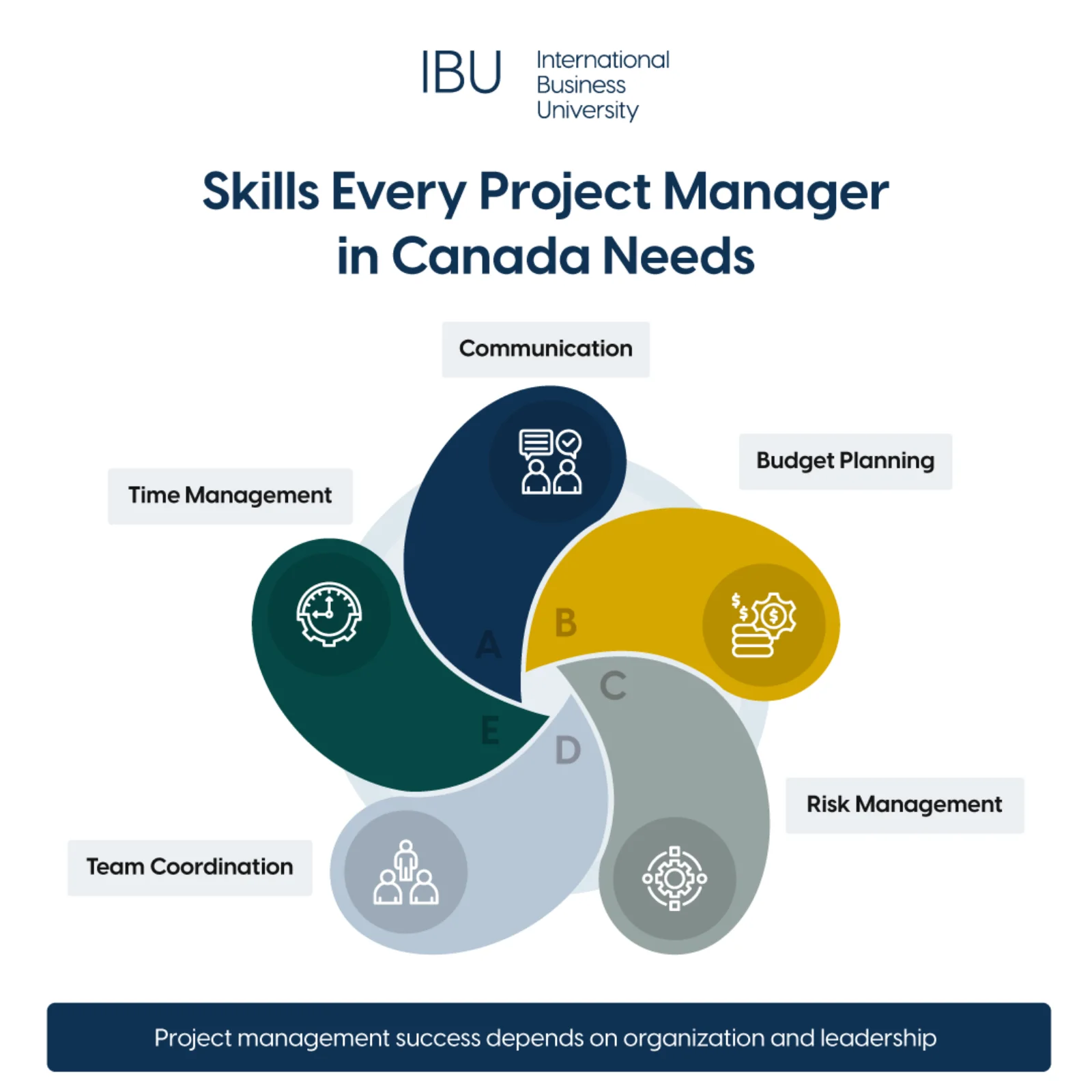
A BCOM or MBA gives you several of the foundational PM competencies already: budget management, stakeholder communication, risk assessment, and planning are all core curriculum areas in business programs. The gap is usually formal PM methodology knowledge and demonstrated application on a defined project.
CAPM First, PMP Later
The Project Management Professional (PMP) certification from the Project Management Institute is the gold standard PM credential globally and is recognized across all Canadian industries. However, the PMP requires 36 months of project management experience before you can sit the exam.
The Certified Associate in Project Management (CAPM), also from PMI, is the entry-level certification with no experience requirement. It signals PM methodology knowledge to hiring managers and is a meaningful differentiator for entry-level PM candidates who have not yet accumulated the hours for PMP eligibility. Start with CAPM, accumulate your 36 months in a coordinator or junior PM role, and convert to PMP at the point when your experience qualifies you.
Build Agile Credentials Alongside CAPM
Agile project management, specifically Scrum, has become the dominant delivery methodology in technology and many non-technology organizations. A Scrum Master certification from Scrum Alliance or a PMI Agile Certified Practitioner credential adds immediate value for candidates targeting technology-adjacent PM roles and costs significantly less time and money than a PMP certification.

Explore IBU Business Programs
IBU’s BCOM and MBA programs build the foundation for project management careers in Canada.
The Project Management Test for Round One
The first screening interview for a project management role, if the coordinator or junior PM, tests for three things before anything technical comes up.
Well-Planned Problem Decomposition
Can you take a messy problem and organize it into a proper set of steps? Hiring managers test this with scenario questions like ‘walk me through how you would approach launching a new process in a department that has never run projects formally.’ The right answer is proper, sequenced, and demonstrates that you default to a systematic approach rather than an ad hoc one.
Stakeholder Communication Clarity
PM roles fail most often because of communication breakdowns, not technical failures. Hiring managers test this directly: how do you communicate a project delay to a senior stakeholder? How do you manage a team member who is not delivering? Candidates who can answer these concisely and with specific frameworks stand out from those who give general answers about ‘being transparent.’
Prior Experience Managing Something Toward a Deadline
Direct PM experience is not required for entry-level roles, but some evidence of managing complexity toward a deadline is. This can be a capstone project, a student club initiative, a volunteer organization, or a part-time job with a defined deliverable. Frame whatever experience you have in PM language: scope, timeline, stakeholders, constraints, and outcome.
The Certifications Worth Getting and the Ones That Waste Your Time
Not all PM certifications carry equal weight with Canadian employers.
- CAPM: High value for entry-level candidates with no formal PM experience. Recognized by all major Canadian employers.
- PMP: Gold standard for mid-career PM professionals. Requires 36 months of PM experience. Worth planning for, not starting immediately.
- Scrum Master (CSM or PSM): High value for technology and software-adjacent PM roles. Lower cost and time investment than PMP. Strong immediate market signal.
- Prince2 Foundation: Recognized in some industries, particularly government and finance. Less universally valued than PMI credentials in Canada.
- Generic online PM courses without a recognized certification: Low employer value. Most hiring managers cannot distinguish between hundreds of online PM course providers. Stick to PMI and Scrum Alliance credentials.
Industries Hiring the Most Entry-Level Project Manager Roles Right Now
Government of Canada Job Bank data shows strong PM demand in healthcare, technology, financial services, and construction across Ontario, BC, and Alberta. The Job Bank occupational outlook for project managers projects a good employment outlook through 2027, with consistent demand across multiple industries.
Technology companies, from established enterprises to scale-ups, are the single largest source of entry-level PM postings in Canada right now. These roles frequently accept candidates with coordinator titles and will consider BCOM or MBA graduates who have a Scrum credential and can demonstrate organizational thinking in an interview.
How to Land Your First Role Without Prior PM Experience on Your Resume
Every experienced project manager was once an entry-level candidate without PM experience. The path to the first role is well-established when you approach it deliberately.
- Frame your academic and professional experience in project language, scope, timeline, stakeholders, deliverables, constraints
- Complete a CAPM or a Scrum certification before applying, so you can demonstrate methodology knowledge without experience
- Target project coordinator and junior project manager titles specifically, not ‘project manager’ roles that require three to five years of experience
- Apply to organizations going through significant change, technology implementations, organizational restructuring, regulatory compliance projects, where PM demand is highest
- Use LinkedIn to identify hiring managers at target organizations and reach out directly after applying through the formal posting
Frequently Asked Questions
How long does it take to become a certified project manager in Canada?
The CAPM certification typically takes two to four months of preparation and can be completed while working. The PMP requires 36 months of PM experience and 35 hours of PM education before you can sit the exam, making it a 24 to 48-month pathway from entry-level coordinator to certified PMP, depending on how quickly you accumulate qualifying hours.
Scrum certifications, CSM or PSM, can be completed in a two-day course plus exam. For candidates targeting technology PM roles, this is often the fastest credential-to-employment pathway available.
Can I become a project manager with only a BCOM degree?
Yes. Many hiring managers at Canadian companies, particularly in technology, financial services, and consulting, will consider BCOM graduates for coordinator and junior PM roles without prior PM experience. The degree signals the organizational, analytical, and communication skills that PM roles require. Adding a CAPM or Scrum certification on top of the degree makes the application significantly stronger.
Is a PMP required for most project manager roles in Canada?
PMP is required for senior and lead PM roles at many large organizations and in regulated industries like government and healthcare. It is not required for entry-level and coordinator roles, where CAPM or relevant experience with demonstrated methodology knowledge is typically sufficient. Plan for PMP as a three to four-year goal rather than an immediate requirement.
The Project Manager Career Path Starts With the Right First Move
How to become a project manager in Canada is not a mystery. The path is well-defined: business foundation, entry-level certification, coordinator role with project hours, and PMP when eligible.
For BCOM and MBA graduates, the path starts faster than most guides suggest because the foundational skills are already built. The gap is methodology knowledge and demonstrated application, both of which can be acquired while working, not before.

Build the Skills Employers Expect From Modern Project Managers
IBU’s business programs help you develop leadership, planning, communication, and strategic thinking skills for project management careers.