

Most people who search ‘what is health informatics’ expect a simple definition.
The simple definition exists: health informatics is the collection, management, and use of health information to improve patient care and health system performance. But that definition tells you almost nothing about what the work actually involves, why it is so difficult to staff, or why Canadian health organizations are offering premium salaries to attract people who can do it well.
Key Takeaways
- Health informatics bridges clinical context and information systems: It is not a pure IT role or a pure clinical role – it is the discipline that makes clinical data trustworthy, accessible, and useful.
- Canadian health systems have a staffing gap in this area: The combination of clinical knowledge and data management capability is rare, which drives consistent demand and above-average compensation.
- Health informatics and healthcare data analytics are related but different: Informatics creates the conditions for reliable analysis; analytics produces insights from the data informatics has structured.
- Senior roles now require graduate-level education: Clinical experience provides context; an MBA in digital health or healthcare data analytics provides the technical and leadership foundation that senior informatics positions require.
The Definition of What Is Health Informatics That Actually Makes Sense
Health informatics is the bridge between clinical care and information systems.
On the clinical side: care teams generate enormous amounts of structured and unstructured data – diagnoses, treatment records, medication histories, lab results, imaging reports, vital signs. This data is the raw material of clinical decision-making.
On the information systems side: electronic health records, clinical data warehouses, population health platforms, and AI-assisted diagnostic tools all require design, governance, and management to function reliably and produce trustworthy outputs.
Health informatics professionals work in the space between these two worlds. They understand enough clinical context to know why a particular data element matters in a care setting. They understand enough systems and data management to build, govern, and analyze the infrastructure that captures it. This combination is what makes health informatics both valuable and difficult to staff.
How Health Informatics Differs From Healthcare Data Analytics
Health informatics and healthcare data analytics are related but distinct disciplines that are frequently confused in job postings and career discussions.
- Healthcare data analytics: Focuses on analyzing existing health data to produce insights – identifying patterns in patient outcomes, measuring quality indicators, supporting population health research. Primarily a quantitative analytical discipline.
- Health informatics: Encompasses the full lifecycle of health information – how it is captured, structured, governed, exchanged between systems, and made available for analysis and clinical decision support. More operational and systems-focused than pure analytics.
A healthcare data analyst works with data that health informatics professionals have structured and made accessible. A health informatics professional creates the conditions under which reliable analysis becomes possible. Both roles are in high demand in Canada, and many senior professionals operate across both domains.
The Systems Canadian Hospitals Rely on That Health Informatics Professionals Manage
Understanding what health informatics professionals actually manage requires familiarity with the technology infrastructure of modern Canadian healthcare organizations.
Electronic Health Record Systems
EHR systems like Epic, Cerner, and MEDITECH are the core clinical information platforms at most major Canadian hospitals. Health informatics professionals manage implementations, upgrades, integration with other systems, and the ongoing training and governance required to keep clinical staff using them effectively. Epic alone powers dozens of Canadian hospital networks, and each implementation involves years of configuration, testing, and change management led by informatics professionals.
Clinical Data Warehouses and Analytics Platforms
Health authorities maintain data warehouses that aggregate patient data from multiple source systems to support population health management, performance reporting, and research. These platforms require data engineers, informaticists, and analysts who understand both the clinical meaning of the data and the technical architecture needed to make it accessible and reliable.
Interoperability and Data Exchange Standards
Canadian health systems operate across dozens of organizations – hospitals, family health teams, pharmacies, laboratories, long-term care facilities, and public health authorities. Making patient data flow reliably between these organizations requires professionals who understand interoperability standards like HL7 FHIR and who can design the clinical workflows and system configurations that make cross-system data exchange work in practice.
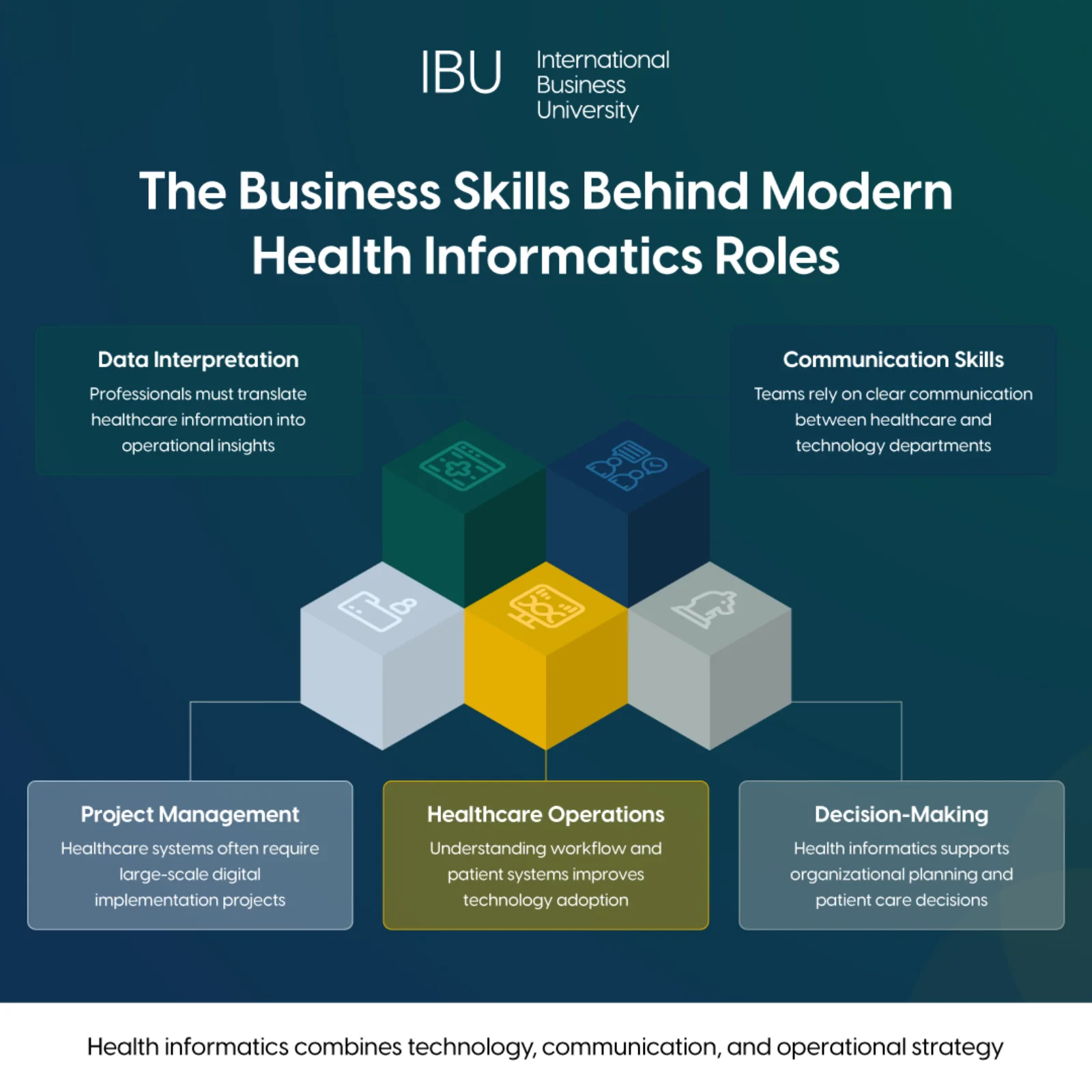
Why Clinical Experience Alone No Longer Qualifies You for Leadership Roles
A decade ago, many health informatics leadership roles in Canada were filled by experienced clinical professionals – nurses, pharmacists, physicians – who had developed an interest in technology and had been promoted into informatics positions based on their clinical credibility.
This model worked when health technology was simpler. It is breaking down as health data systems become more complex, as AI and machine learning tools enter clinical environments, and as regulatory requirements around data governance and privacy become more demanding.
Modern health informatics leadership roles require not just clinical knowledge but graduate-level competency in data management, analytics, organizational leadership, and healthcare policy. Clinical experience provides context and credibility. Graduate-level education in health informatics or healthcare data analytics provides the technical and leadership foundation that those roles now require.
Health Informatics Jobs and the Career Paths They Create in Canada
The career structure within health informatics in Canada offers clear progression from entry-level roles to senior leadership.
Entry Level
Entry-level health informatics roles – clinical informatics analyst, health information technician, data quality analyst – are available at hospitals, health authorities, and health technology companies across Canada. They require a combination of post-secondary education and demonstrated familiarity with health information systems. Starting salaries typically range from $55,000 to $75,000 in Ontario.
Mid-Career
Mid-career health informatics professionals move into specialist and coordinator roles: EHR project coordinator, clinical systems lead, health data analyst, informatics education coordinator. These roles require demonstrated delivery experience and often a professional designation like CHIM. Compensation ranges from $75,000 to $105,000, depending on the organization and specialization.
Senior Leadership
Director, VP, and Chief Medical Information Officer (CMIO) roles are the senior leadership tier in health informatics. These positions own digital health strategy, oversee major system implementations, and manage the organizational change that technology transformation requires. Candidates for these roles increasingly come from MBA programs with healthcare and data analytics specializations, not just clinical backgrounds with self-taught technical skills.
Build the Skills Canadian Health Systems Need
IBU’s MBA in Digital Health and Data Analytics prepares graduates to lead in health informatics.
What Degree Prepares You Best for a Health Informatics Role in Canada
The most competitive preparation for mid-to-senior health informatics roles in Canada combines a clinical or health sciences background with graduate-level education in healthcare management and data analytics.
An MBA in Digital Health and Data Analytics – like IBU’s program – specifically addresses this combination. It builds the data analytics competency that modern informatics roles require, alongside the healthcare management and leadership skills that clinical informatics positions need. Graduates of this program are well-positioned for both clinical informatics specialist roles and the mid-career leadership transitions that follow.
The CHIM designation from the Canadian Health Information Management Association remains the recognized professional credential for health information management specifically. Many health informatics professionals hold both the CHIM and an MBA, particularly those targeting director-level and above positions.
Frequently Asked Questions
Is health informatics a good field to enter in Canada right now?
Can I work in health informatics without a clinical background?
Yes, particularly in roles focused on data management, analytics, and technology implementation rather than clinical systems governance. Health data analysts, data engineers, and health technology project managers often come from non-clinical backgrounds with strong data or IT expertise.
For roles that involve direct clinical systems governance, EHR configuration, or clinical education for health informatics systems, some clinical exposure is advantageous. An MBA in Digital Health and Data Analytics provides the healthcare context that non-clinical candidates often lack, making it a strong credential for those transitioning from technology or analytics backgrounds into health informatics.
What is the difference between health informatics and health information management?
Health information management is a specific professional domain focused on patient record governance, medical coding, privacy compliance, and data quality within healthcare organizations. It is credentialed through the CHIM designation from CHIMA.
Health informatics is a broader term that encompasses health information management alongside clinical analytics, health technology management, digital health strategy, and health data science. The two overlap significantly, but health informatics is the larger, more encompassing field.
Health Informatics Is the Career That Canadian Healthcare Needs
What is health informatics? It is the discipline that determines if the data Canadian health systems generate every day is managed well enough to be trusted, analyzed meaningfully enough to be useful, and governed responsibly enough to protect patient privacy.
The professionals who do this work are among the most valuable in Canadian healthcare – and among the most difficult to find. For students with an interest in healthcare and a capacity for analytical and systems thinking, health informatics is one of the most durable and opportunity-rich career directions available in Canada today.

Check If You Qualify for an MBA Pathway
Health informatics careers increasingly require business, data, and healthcare systems knowledge