
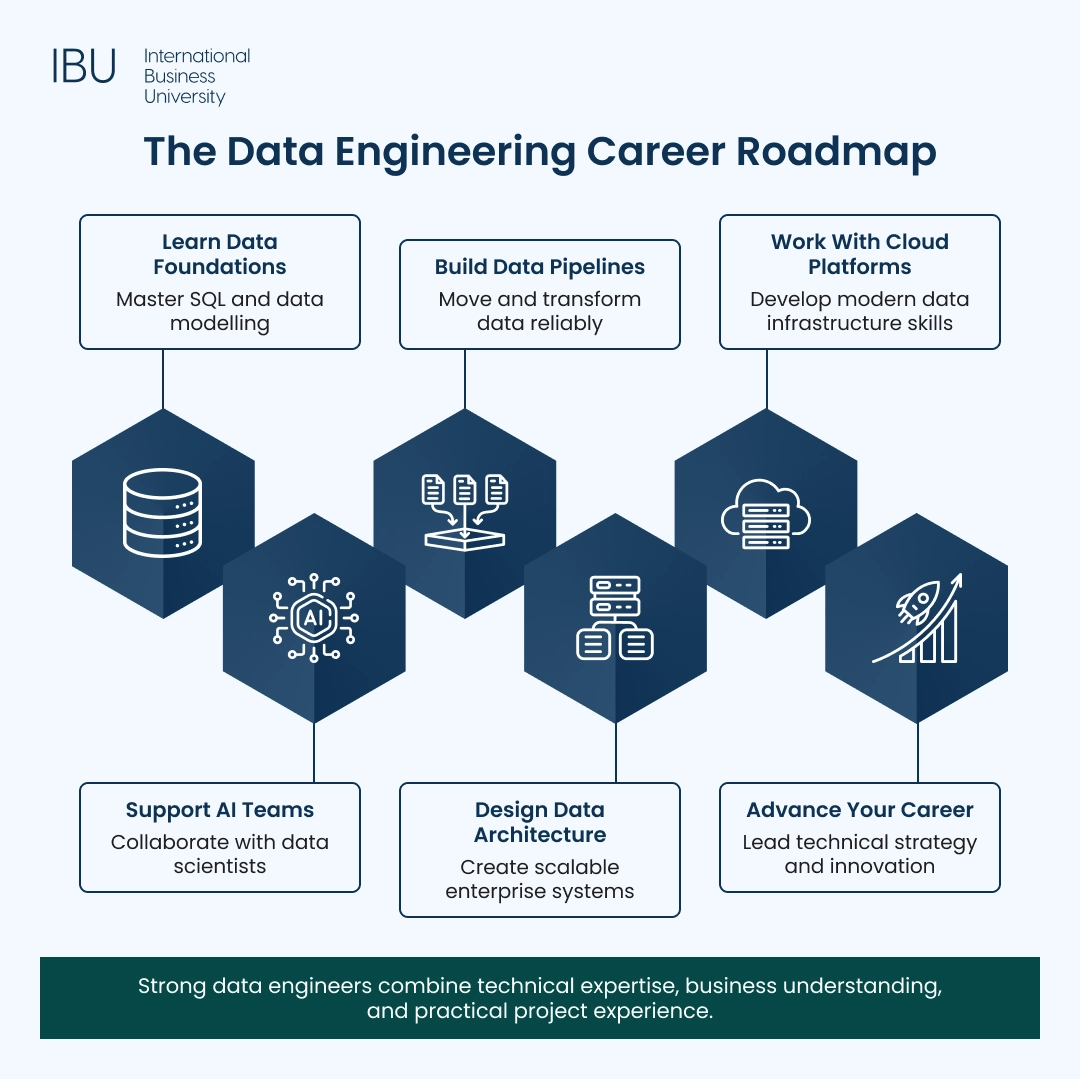
A data engineering roadmap maps the specific skills a candidate needs at each stage of the career, from building a first data pipeline to architecting systems across an organization. Many candidates study the technical tools in isolation without understanding how the different pieces actually connect into a coherent progression.
Canadian employers hiring for data engineering roles increasingly screen for candidates who understand this full sequence, not just isolated technical skills learned separately. This article covers the roadmap stage by stage and how IBU’s MSc program maps to it directly.
What a Data Engineering Roadmap Actually Covers at Each Stage
The roadmap moves through a consistent progression regardless of the specific industry a data engineer eventually works in. Understanding this structure early helps candidates prioritize the right skills at the right time.
- Foundational data skills: SQL, data modeling, and a clear understanding of how raw data becomes structured and usable.
- Pipeline construction: Building automated processes that move and transform data reliably between different systems.
- System architecture: Designing how multiple pipelines and storage systems fit together at a full organizational scale.
Skipping the foundational stage to move directly into pipeline tools is a common mistake that shows up later as gaps in troubleshooting ability.
How Long Each Stage Typically Takes
Foundational data skills generally take three to six months to build to a working level, depending on prior technical background. Pipeline construction skill develops over the following one to two years of applied project work, inside a program or on the job.
System architecture judgment usually takes several years of hands-on experience across multiple projects to develop fully.
Data Engineering Roadmap: The Skills Canadian AI Teams Hire For First
Canadian AI and data teams consistently prioritize a specific set of skills over others when screening early-career candidates. These priorities differ somewhat from what many bootcamp-style courses emphasize.
- Data quality judgment: Recognizing when data is unreliable or incomplete before it moves further down a pipeline toward production use.
- Cloud platform fluency: Working knowledge of at least one major cloud data platform used widely across Canadian industry.
- Collaboration with data scientists: Understanding what a data science team needs from a pipeline, not just how to build one in isolation.
Candidates who can demonstrate all three areas together, not just tool proficiency, tend to move through technical interviews more successfully overall.
Why Most Data Engineering Roadmaps Leave Out the Business Context
Technical roadmaps commonly focus on tools and architecture while skipping how a data engineer’s work connects to actual business decisions. This gap shows up clearly once graduates enter the workforce.
- Cost awareness: Understanding how pipeline design choices affect cloud infrastructure costs, not just technical performance.
- Stakeholder communication: Explaining a data quality issue to a non-technical business stakeholder clearly enough for them to act on it.
- Prioritization judgment: Knowing which data problems affect business decisions most and should be fixed first.
Engineers who build this business context early advance into senior and lead roles faster than engineers who focus purely on technical execution alone without this broader awareness.
Build the Data Engineering Skills Canadian Teams Hire For
IBU’s MSc in Applied Artificial Intelligence includes a dedicated data engineering track.
How IBU’s MSc in Applied AI Maps to This Roadmap
The program structures its data engineering track to follow the same progression employers actually hire against in the current market, rather than teaching tools in isolation.
- Foundational coursework: Covers data modeling and structured query skills before introducing pipeline tools.
- Applied pipeline projects: Students build working pipelines using tools currently used across Canadian industry.
- Business context integration: Coursework pairs technical pipeline work with cost and stakeholder communication training.
Graduates leave with a working pipeline project to reference directly in interviews, backed by a clear understanding of why it was built that specific way.
Data Engineer Career: What the Progression Looks Like in Canada
The career path follows a fairly consistent structure across most Canadian employers hiring for these roles.
- Junior data engineer: Builds and maintains pipelines under the direction of a senior engineer.
- Data engineer: Owns pipeline architecture for a specific system or team independently.
- Senior data engineer: Leads architecture decisions across multiple systems and mentors junior engineers.
- Lead engineer or architect: Sets data infrastructure strategy across an organization.
Progression speed depends heavily on demonstrated architecture judgment, not simply years of pipeline-building experience accumulated over time.
Data Engineering Course vs MSc: What Each One Builds and When to Choose
Short courses and a full MSc program serve different purposes depending on a candidate’s starting point and career goal.
- Data engineering course: Builds specific tool proficiency quickly, suited to candidates already working in an adjacent technical role.
- MSc in Applied AI: Builds the full roadmap from foundational data skills through system architecture, suited to candidates entering the field or aiming for senior roles.
Candidates already working with data in some capacity may find a targeted course sufficient for their needs, while career changers benefit more from the full program structure.
The Data Engineering Roadmap IBU Students Complete Before They Graduate
Students move through the full roadmap inside the program rather than assembling it piecemeal from disconnected electives after graduation.
IBU’s guide on what data engineering is and its companion piece on how to become a data engineer in Canada cover related foundational concepts in more depth.
Key Takeaways
Four points summarize what separates hireable data engineering graduates from qualified ones.

Sequence matters more than tool count: following the roadmap in order builds troubleshooting ability that skipping the foundation does not.
Business context is often missing: cost awareness and stakeholder communication distinguish engineers who advance quickly.
Progression rewards architecture judgment: moving from junior to senior depends on demonstrated system-level thinking, not tenure alone.
Applied practice signals readiness: a working pipeline project built during the program gives graduates concrete interview material.
Frequently Asked Questions
What is the correct order to follow a data engineering roadmap?
Foundational data skills come first, followed by pipeline construction, then system architecture. Skipping the foundational stage often creates troubleshooting gaps later in a career.
Is a short data engineering course enough to get hired in Canada?
A short course can build specific tool proficiency for candidates already working in an adjacent technical role. Career changers typically need the fuller progression an MSc program provides.
What business skills matter for a data engineering career?
Cost awareness, stakeholder communication, and prioritization judgment all matter alongside technical skill. Engineers who build this context early tend to advance into senior roles faster.
How long does it take to progress from junior to senior data engineer?
Timelines vary, but three to five years is common for engineers who build demonstrated architecture judgment. Progression depends more on system-level thinking than years of pipeline-building experience alone.
How does IBU's MSc in Applied AI structure its data engineering training?
The program follows the same progression employers hire against, starting with foundational data skills before pipeline and architecture work. Coursework also integrates business context training alongside the technical material.
How long does each stage of the roadmap typically take to develop?
Foundational skills generally take three to six months, with pipeline construction skill developing over the following one to two years. System architecture judgment usually takes several years of hands-on experience to develop fully.
Following the Data Engineering Roadmap Deliberately
A data engineering roadmap followed in order builds the troubleshooting and architecture judgment that isolated tool learning does not provide on its own. Graduates who complete this progression with an applied project and business context training enter the job market with a clear advantage over candidates focused on tools alone.
Follow a Roadmap Built Around Actual Hiring Criteria
Learn how IBU’s MSc in Applied AI structures data engineering training around what employers actually screen for.