

For most organizations today, asking why companies go international is less a question of curiosity than a practical business exercise. Companies go global to capture new markets, reduce risk, access resources, and stay competitive. Engaging in international business enables companies to sustain long-term growth and thrive in a rapidly shifting marketplace.
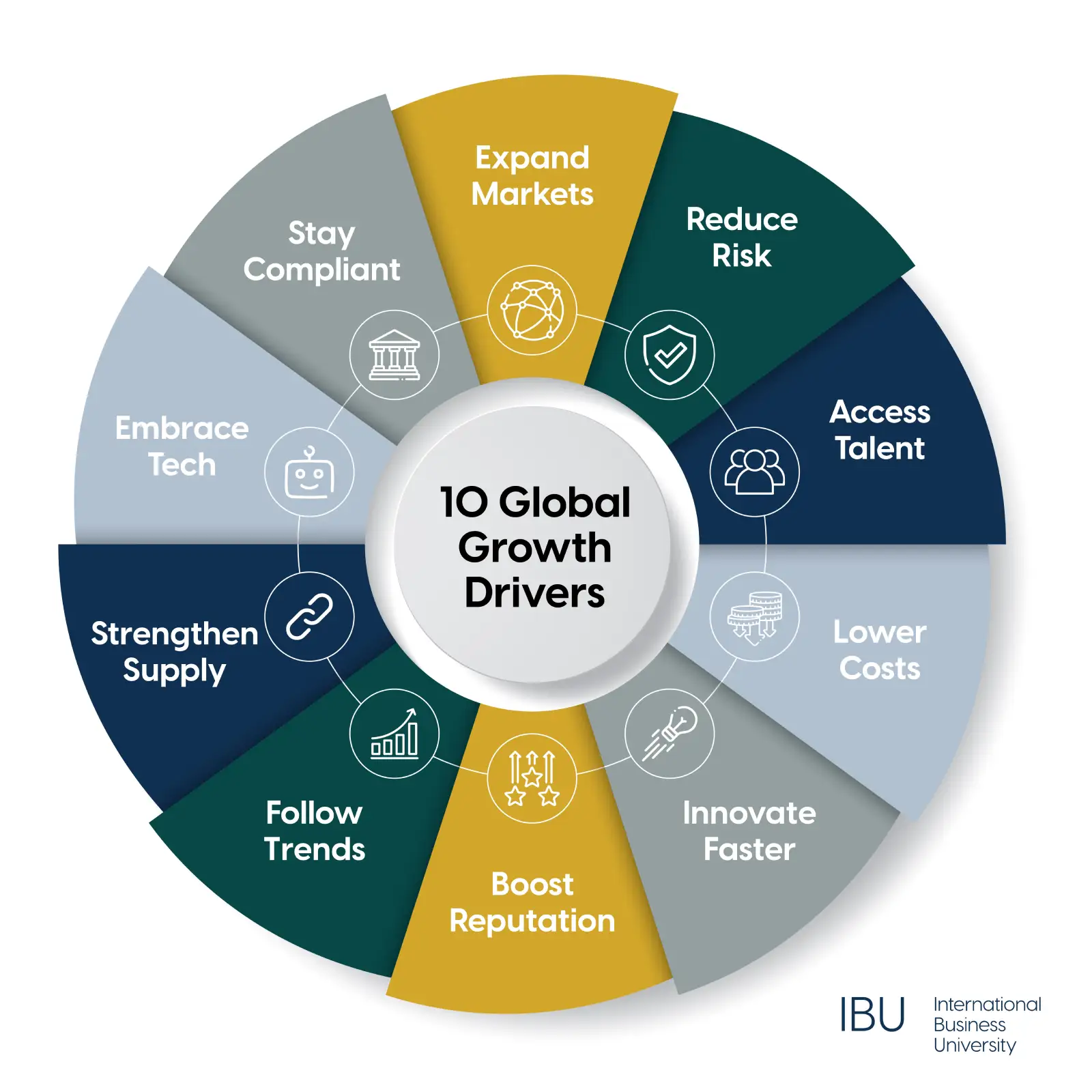
10 Reasons Why Companies Engage in International Business
Understanding the forces behind global business growth starts with the goals organizations are trying to solve. The 10 reasons below reflect the documented motivations behind international expansion across industries.
1. Market Expansion: Tapping Into Global Demand
One of the most compelling answers to why do companies go international is the pursuit of untapped customer bases. When domestic markets become saturated or growth plateaus, expanding international business allows companies to increase revenue from regions with rising consumer demand
It is mentioned in the Industry Canada and Export Development Canada, Canadian exporters report significantly higher revenue growth rates than companies that sell exclusively in domestic markets. For a Canadian technology firm, entering Southeast Asia or Latin America can open demand for software, infrastructure, and services that have no equivalent in the home market.
- Increase sales volume beyond domestic limits
- Reach consumers in high-growth economies
- Strengthen brand recognition across markets
- Support international sales growth by reducing dependence on one revenue source
For growing business internationally, market expansion is typically the primary driver. See international business examples from companies that have successfully executed this strategy.
2. Diversification: Reducing Risk Through Global Spread
Diversification is more than a buzzword, it’s a resilience strategy. By conducting business internationally, companies create multiple revenue streams that reduce dependence on any one country’s economy. This buffers them against:
- Economic recessions
- Political instability
- Localized industry shifts
In volatile times, diversified operations offer companies a financial safety net. Emerging markets like India, Brazil, and Vietnam offer promising returns for firms ready to spread their risk while maintaining strategic growth.
3. Access to Resources and Global Talent
International operations give companies access to labor pools, raw materials, and technical expertise unavailable or prohibitively expensive at home. Manufacturing firms often locate production in countries with lower input costs, while technology companies access specialized engineering talent in markets such as Eastern Europe, India, or Southeast Asia. Expanding internationally provides companies with strategic access to:
- Skilled and affordable labor
- Region-specific raw materials
- Unique technological expertise
For instance, manufacturing firms often relocate operations to countries with lower production costs, while tech companies tap into engineering hubs like Eastern Europe or India. These global footprints enhance innovation and cost-efficiency.
Explore: 20 Jobs You Can Get With an International Business Degree
4. Competitive Advantage: Staying Ahead in a Global Economy
In many industries, going international isn’t optional, it’s essential for staying ahead. Companies gain an edge by offering unique products or services that outperform local competition abroad. Additionally, when rivals expand globally, staying domestic can mean falling behind.
International expansion helps businesses:
- Increase market share
- Build stronger brands
- Achieve economies of scale
- Stay agile against competitors
The global arena rewards early movers and well-prepared entrants. Companies that enter international markets with clear positioning and local market knowledge build competitive advantages that compound over time.
5. Cost Optimization Through Global Efficiency
Another major reason why do companies go global is cost savings. Operating in countries with lower labor costs or favorable tax regulations reduces production expenses and improves profit margins.
This approach also allows for:
- Flexible sourcing
- Economies of scale
- Improved pricing competitiveness
Ethical considerations are crucial, companies must balance cost-cutting with responsible practices. When done right, global cost optimization boosts both revenue and reputation.
Lead Global Operations
IBU’s MBA in Global Business Management builds the skills for it.
6. Innovation and Cross-Cultural Learning
Global exposure breeds innovation. By operating in diverse regions, companies absorb different ideas, business practices, and consumer behaviors. This creates a culture of adaptability and learning.
- New product development inspired by local needs
- Cross-cultural collaboration
- Continuous improvement through diverse perspectives
For international business ideas and opportunities that have emerged from cross-cultural operations, IBU’s resource page covers documented case examples.
Explore: 5 International Business Ideas and Opportunities
7. Brand Reputation and Global Recognition
Operating internationally signals strength, trustworthiness, and influence. Companies with global footprints often attract better partnerships, investor confidence, and customer loyalty.
Strategically expanding your brand beyond borders:
- Builds global recognition
- Elevates your brand’s prestige
- Opens doors to multinational partnerships
A globally respected brand can command premium prices and inspire stakeholder confidence.
8. Responding to Global Trends and Localized Demand
Global demand shifts fast, and smart companies stay ahead of the curve. Whether it’s a health trend emerging in Asia or a fintech breakthrough in Europe, companies must act fast to leverage those opportunities.
Being international enables businesses to:
- Launch first in trend-setting regions
- Adapt offerings based on regional preferences
- Build early mover advantages
Flexibility and responsiveness drive success when conducting business internationally.
9. Supply Chain Strength and Operational Resilience
Establishing supplier relationships across borders makes supply chains:
- More reliable
- Less vulnerable to disruptions
- More adaptable to market changes
During events like pandemics or geopolitical conflicts, companies with international supply chains often navigate issues more smoothly.
Global networks support stability, customer satisfaction, and sustainable growth.
10. Commitment to Global Responsibility and Sustainability
Many global businesses are shifting toward ethical and sustainable practices. International operations allow companies to:
- Source fair-trade materials
- Launch renewable initiatives overseas
- Collaborate with global NGOs
These practices align with stakeholder values and promote positive social and environmental impact. They also serve long-term strategic interests.
An MBA in Global Business Management can prepare leaders to design and implement CSR strategies that work across cultures and markets.
Get the Skills to Lead Globally
IBU’s MBA program is built for international careers.
The Importance of International Marketing in Global Expansion
The importance of international marketing becomes concrete when companies realize that a product positioned for one cultural or economic context requires significant repositioning for another.
Pricing strategies, messaging, channel selection, and brand identity all require market-specific adaptation. Companies that treat international marketing as a translation exercise rather than a strategic function consistently underperform against competitors who invest in localized market research and tailored campaign execution.
For professionals building careers in this area, https://ibu.ca/bcom-in-international-management-and-technology/ covers the applied marketing and cross-cultural strategy skills that international roles require.
Technological Advancements and Digital Transformation
Another important reason why do companies go international is to gain access to global technology ecosystems. By expanding into tech-forward markets, businesses can benefit from:
- Cloud computing and scalable digital infrastructure
- AI-powered tools for smarter decision-making
- International digital collaboration platforms
These tools enhance global operations, optimize performance, and improve the customer experience. Companies adapting digital transformation in international markets are better positioned to innovate and adapt quickly to change. Global expansion can also accelerate digital maturity, giving businesses a competitive edge in the era of Industry 4.0.
In addition to operational gains, entering new markets can expose businesses to regulatory environments that encourage innovation, such as data sandbox testing, e-government integration, and cross-border tech investment incentives. For companies in sectors like fintech, e-commerce, and logistics, these environments serve as fertile ground for piloting new platforms and scaling digital products.
International business growth through digital transformation requires organizational readiness alongside technology adoption. Companies that succeed invest in workforce upskilling, governance frameworks, and change management as core components of their global digital strategy. MBA programs with an international focus build these capabilities directly into leadership training curricula.
Managing Political, Legal, and Regulatory Complexity
Companies exploring why do companies go international must be prepared for regulatory complexity. Each country comes with its own set of:
- Legal compliance standards
- Political environments
- Trade policies and tariffs
Managing these variables builds operational resilience and reduces legal and financial risks. By proactively addressing international regulatory challenges, companies demonstrate maturity and readiness for long-term success. Navigating these frameworks is a skill taught in global MBA programs, helping leaders develop informed, compliant, and ethical business strategies across borders.
In international business, even minor legal missteps can result in costly delays, damaged reputation, or complete market withdrawal. That’s why companies expanding globally must work closely with international legal experts, monitor local policy changes, and adjust strategies to align with dynamic political landscapes. Multinational firms often establish government relations teams and internal compliance units to oversee risk mitigation across regions.
Businesses must be aware of international treaties, regional trade blocs like the EU or ASEAN, intellectual property enforcement levels, and local employment laws. Political volatility, election cycles, and geopolitical tensions also influence expansion decisions. Understanding how to anticipate and respond to these external pressures is essential, and often marks the difference between success and stagnation in international markets.
What Are the Real Benefits of International Business?
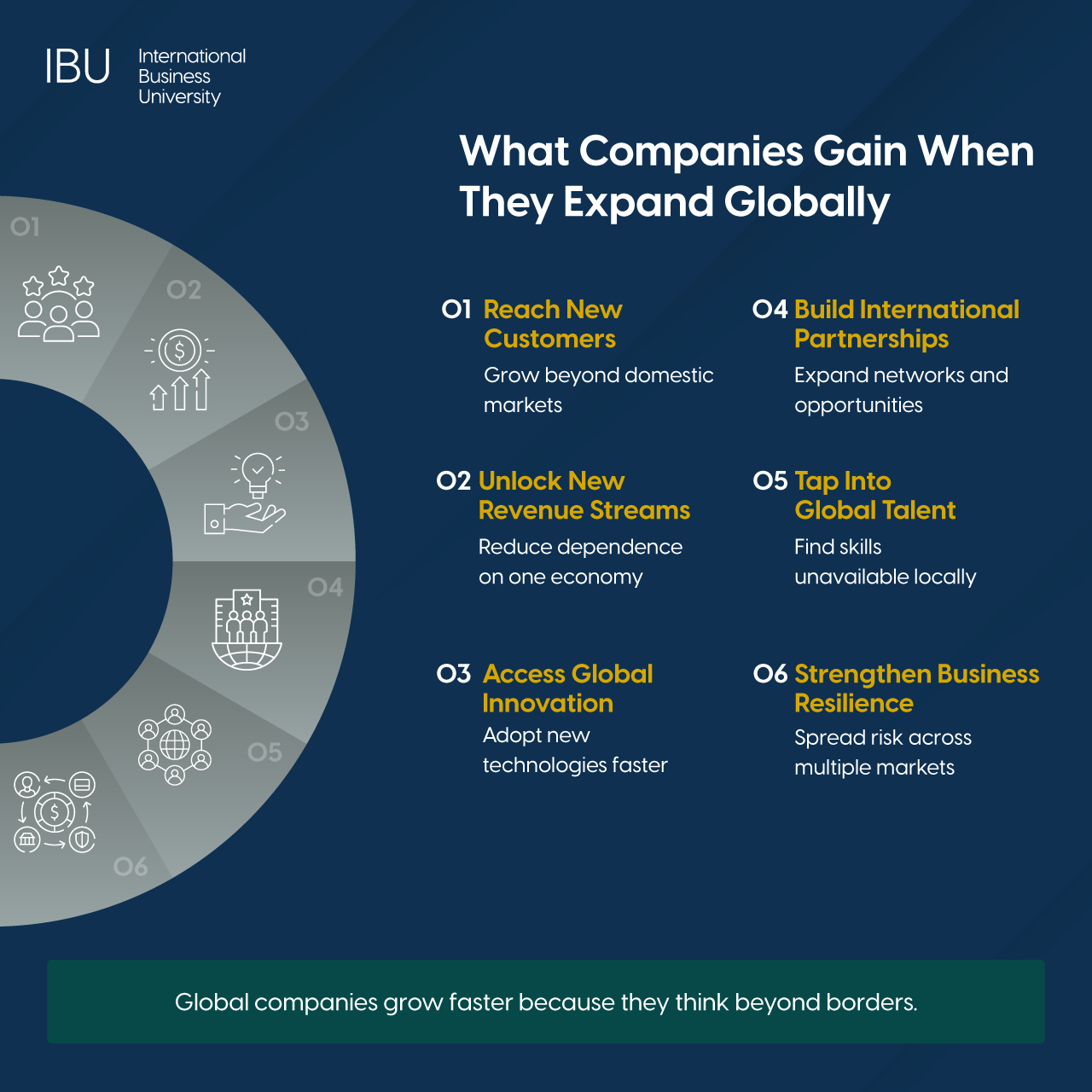
The benefits of international business extend beyond revenue growth. Companies that operate across borders build structural advantages that compound over time: broader customer bases, more resilient supply chains, stronger brand positioning, access to global talent, and exposure to innovation cycles that domestic-only firms miss entirely.
For individual professionals, the career benefits align with these organizational gains. Roles in global strategy, international marketing, supply chain management, and cross-border compliance are among the fastest-growing segments of the Canadian business labor market. According to Government of Canada Job Bank projections, demand for professionals with international business competencies is projected to grow steadily through 2030 across multiple sectors.
For a better look at career pathways, see international business degree jobs in Canada.
Key Takeaways

Companies pursue international markets to access growth that domestic operations cannot provide and to reduce dependence on any single market’s economic conditions.
International operations provide access to global talent, raw materials, technology ecosystems, and cross-cultural knowledge that strengthen long-term competitive position.
Professionals with formal training in international business strategy, cross-cultural management, and global operations are better positioned for senior roles as companies continue expanding internationally.
Frequently Asked Questions
Do I need to know how to code to work with data engineering tools?
Basic coding knowledge in Python or SQL is necessary for most data engineering roles. Tools like Apache Airflow, Spark, and AWS Glue all involve writing or reading code at some level. That said, MBA-level programs at IBU, such as the MBA in Technology, Innovation, and Entrepreneurship, focus on helping students understand and work alongside technical teams without needing to build infrastructure themselves.
Which data engineering tools are most in demand for AI jobs right now?
Apache Spark, Kafka, Snowflake, and Airflow consistently appear at the top of data engineering job postings. Cloud-specific tools like AWS Glue and Azure Data Factory are also heavily requested by organizations migrating to cloud-first AI architectures. Familiarity with at least one data processing tool, one streaming tool, and one storage platform covers the most common requirements across roles in data engineering for AI.
Are these tools relevant for business and management students, not just technical ones?
Yes, and the relevance is increasing as AI becomes central to business strategy. Managers who understand how data pipeline tools work can make better technology investment decisions, evaluate vendor proposals, and communicate clearly with engineering teams. IBU’s MBA in Financial and Management Analytics is specifically built for business professionals who want to work intelligently with data systems without being the person who builds them.
How does growing a business internationally reduce financial risk?
Growing a business internationally reduces financial risk by distributing revenue across multiple markets and currencies. When one country’s economy contracts, revenue from stable or growing markets offsets the impact. International diversification also protects companies against localized regulatory changes, political instability, and industry-specific downturns in any one country.
What is the importance of international marketing in global expansion?
The importance of international marketing is that market entry without a localized strategy consistently underperforms. Pricing, messaging, channel selection, and brand positioning require adaptation to each market’s cultural context and consumer behavior. Companies that invest in market-specific research and localized campaign execution build stronger early-mover positions and more durable customer relationships in new markets.
What skills are needed for a career in international business?
Core skills for international business careers include cross-cultural communication, international trade and regulatory knowledge, financial analysis across currency environments, global supply chain management, and strategic decision-making in complex multi-stakeholder environments. Formal education through programs such as IBU’s MBA in Global Business Management or BCOM in International Management and Technology develops these competencies in a structured academic framework.
Why International Business Matters for Your Career
From accessing high-growth markets to fostering innovation, the answer to why do companies go international lies in strategic evolution. The modern business landscape rewards companies that look beyond borders, learn from diversity, and create impact on a global scale.
Yet, this journey isn’t without its challenges, navigating legal systems, understanding cultural nuances, and managing global operations require specialized knowledge. That’s why investing in your education with a global-focused MBA is the smart choice for your career growth. With the right training, you’ll be equipped to help companies succeed in conducting business internationally, and to elevate your own career in the process.
Lead Global Business With Confidence
Build skills for international teams and cross-border operations.