

When students imagine robotics engineering, most picture research labs, experimental platforms, and the kind of work that appears in technology conference keynotes. That work exists. It represents a small fraction of what robotics engineers actually do in the Canadian industry.
The majority of robotics engineering roles in Canada involve deploying, integrating, maintaining, and optimizing existing robotic and automated systems in manufacturing, logistics, agriculture, mining, and construction environments. These are not research positions. They are operational roles at the intersection of mechanical engineering, software, and AI, and they are among the most consistently in-demand technical positions in the Canadian economy right now.
What Robotics Engineers Work On Day to Day
Robotics engineering is not just about building robots. The actual work spans five distinct technical areas, each one feeding into how a robot thinks, moves, senses, and operates in real environments.
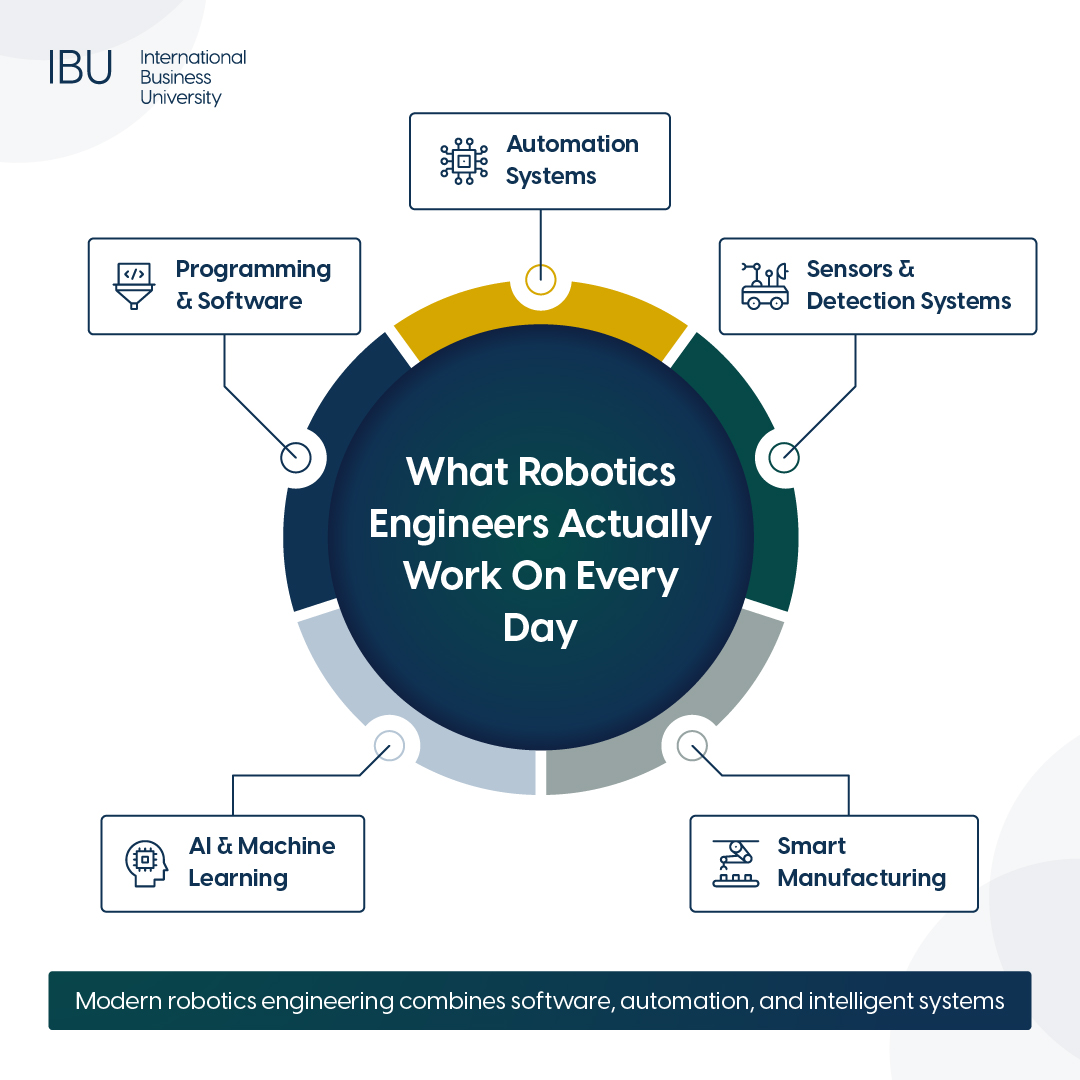
Automation Systems
Robotics engineers design and program systems that execute tasks without human input each time. This includes setting up control logic, sequencing operations, and making sure machines respond correctly to changing conditions on a production line or in a controlled environment.
Programming and Software
Most of a robotics engineer’s time involves writing and debugging code. They build the software that tells a robot what to do, when to do it, and how to handle errors. Languages like Python, C++, and ROS (Robot Operating System) are common tools in this work.
Sensors and Detection Systems
Robots need to understand their surroundings. Engineers work with cameras, lidar, ultrasonic sensors, and other hardware that let a robot detect objects, measure distances, and react to physical input in real time.
AI and Machine Learning
Beyond pre-programmed behavior, engineers also integrate models that let robots learn from data. This covers tasks like object recognition, motion planning, and decision-making in situations the robot has not been explicitly programmed for.
Smart Manufacturing
Robotics engineers apply all of the above in factory and production environments. This means designing systems where robots work alongside humans, machines talk to each other, and production data gets used to improve output and catch problems early.
How AI Changed Robotics Engineering From Mechanical to Intelligent Systems
The shift from traditional industrial robotics to AI-enabled intelligent systems is the most significant change in the field over the past decade, and it is the change that most robotics programs have been slowest to reflect in their curricula.
Traditional industrial robots execute pre-programmed sequences. They are precise, fast, and reliable in structured environments where tasks do not vary. They fail immediately when conditions change outside their programmed parameters.
Modern intelligent robotic systems use machine learning, computer vision, and sensor fusion to perceive their environment, adapt to variation, and make operational decisions without constant human reprogramming.
A robot sorting packages in a fulfillment center today needs to handle thousands of different package shapes, sizes, and orientations. A cobot working alongside humans on a manufacturing line needs to perceive human motion and adjust its behavior accordingly.
This shift from mechanical execution to intelligent perception and adaptation is what makes AI and data engineering skills central to modern robotics engineering. Engineers who understand machine learning frameworks, real-time data processing, and computer vision have a significant advantage over those with purely mechanical or electrical backgrounds.
Build AI and Robotics Skills at IBU
IBU’s MSc in Applied AI prepares graduates for intelligent systems roles in Canadian industry.
The Industries in Canada Hiring Robotics Engineers Hardest Right Now
Three industries are generating the most robotics engineering demand in Canada right now.
Automotive and Manufacturing
Ontario’s automotive and manufacturing sector, centered on the Windsor, London, and GTA manufacturing corridor, operates some of North America’s most automated production environments. EV transition investments from Stellantis, Honda, and GM in Ontario are driving new automation deployments that require robotics engineers with both integration experience and AI capability.
Food and Consumer Goods
Food manufacturing automation is one of the fastest-growing segments in Canadian industrial robotics. Labor shortages in food processing, combined with Food Safety Modernization requirements that favor automated production controls, have driven significant capital investment in robotic systems across Ontario and Western Canada.
Fulfillment and Distribution
Amazon’s Canadian fulfillment network, Shopify’s logistics partners, and major Canadian grocery and retail chains are all operating or building highly automated distribution centers. The volume of robotic systems in these facilities, and the operational complexity of maintaining them at high throughput, requires dedicated robotics engineering teams that Canadian universities and colleges are not producing in sufficient numbers.
What the MSc in Applied AI (Industrial Innovation) Teaches That Robotics Degrees Miss
Traditional robotics degrees are strong on mechanical design, control systems, and embedded software. They are typically weaker on the AI and data engineering dimensions that modern industrial systems require.
IBU’s MSc in Applied AI with an Industrial Innovation specialization addresses this directly, combining machine learning, computer vision, real-time data processing, and industrial systems integration in a program designed specifically for graduates entering intelligent automation and robotics roles.
The program builds on the data engineering foundations covered in IBU’s guide to data engineering tools that power AI systems, applying those tools to industrial contexts where robotic systems generate and consume data in real-time at production scale.
Industrial Robotics Canada: The Capstone Projects IBU Students Work On
IBU’s Applied AI program culminates in capstone projects drawn from real industrial contexts, not hypothetical scenarios designed for academic assessment.
Recent capstone areas include: vision-guided robotic picking system optimization for a logistics client, predictive maintenance modeling for CNC machine tool arrays in a manufacturing environment, real-time anomaly detection for automated quality inspection systems, and autonomous mobile robot path optimization for warehouse environments.
These projects produce portfolio artifacts that are directly relevant to the roles students are applying for, which is why IBU graduates entering robotics and industrial automation roles are consistently competitive against candidates from pure engineering programs who have broader mechanical knowledge but narrower AI application experience.
How to Position Yourself for a Robotics Engineering Role With an AI Graduate Degree
Graduates entering robotics engineering from an AI-focused graduate program need to bridge the credibility gap with candidates who have traditional engineering backgrounds. Three positioning moves make this transition most effective.
- Lead with industrial application projects in your portfolio: Hiring managers in manufacturing and logistics automation care about demonstrated capability to solve operational problems, not academic achievement. Capstone and applied projects from a well-designed MSc program carry real weight when presented concretely.
- Target system integration and AI application roles, not pure mechanical design: The roles where AI graduate training provides the most competitive advantage are those focused on deploying intelligent systems, computer vision integration, ML model implementation, sensor data processing, rather than mechanical design or control systems, where traditional engineering backgrounds have a deeper foundation.
- Build familiarity with industrial robotics platforms: ROS (Robot Operating System), common industrial robot programming environments, and PLC integration basics can be acquired through structured online learning alongside graduate study. This supplementary knowledge closes the most common objection from hiring managers evaluating AI graduates for robotics roles.
Key Takeaways

Most robotics jobs are operational, not research: The majority of Canadian robotics engineering positions are in manufacturing, logistics, and resource industries, deploying and managing systems, not developing them.
AI capability is now central to the field: Machine learning, computer vision, and real-time data processing are core competencies for modern industrial robotics roles, not supplementary skills.
Ontario and Western Canada are the largest hiring markets: Automotive, food manufacturing, logistics, and resource industry employers are the primary sources of robotics engineering demand in Canada.
Frequently Asked Questions
Can I work in robotics engineering with an AI degree rather than a traditional engineering degree?
Yes, for roles focused on AI-enabled system integration, computer vision deployment, machine learning model implementation, and intelligent automation, which represents a growing proportion of the total robotics engineering job market. Pure mechanical design and control systems roles remain more accessible to traditional engineering graduates, but the AI application layer of modern robotic systems creates genuine entry points for MSc in Applied AI graduates.
What salary can a robotics engineer expect in Canada?
Robotics engineers in Canada typically earn between $75,000 and $130,000, depending on industry, experience, and specialization. Senior roles in automotive OEM environments and resource industry automation command premium compensation. AI and machine learning engineers working on intelligent automation systems tend to earn at or above the upper end of this range given the undersupply of qualified candidates.
Is robotics engineering a stable career path in Canada?
Yes. Industrial automation is a structural trend driven by demographic labor shortages, productivity pressures, and falling automation hardware costs, none of which are reversing in the foreseeable future. The need for engineers who can integrate, manage, and optimize robotic and intelligent automation systems is structural, not cyclical, making robotics engineering one of the more durable technical career paths in the Canadian economy.
Robotics Engineering Rewards Graduates Who Understand Intelligent Systems
The robotics engineering career in Canada that most students imagine looks like a research lab. The career that actually exists looks like a manufacturing floor, a fulfillment center, or a mining operation, and it needs engineers who can make intelligent automated systems work reliably, efficiently, and safely in complex operational environments.
The graduates who enter this field with both systems understanding and AI capability are consistently the most competitive candidates for these roles. IBU’s MSc in Applied AI (Industrial Innovation) is built specifically to produce them.
Turn Robotics Career Into an MSc App
IBU’s MSc in Applied AI prepares students for careers in intelligent automation, and AI-enabled industries.