

The gap between what Canadian healthcare organizations need and what their current workforce can provide is widening every year.
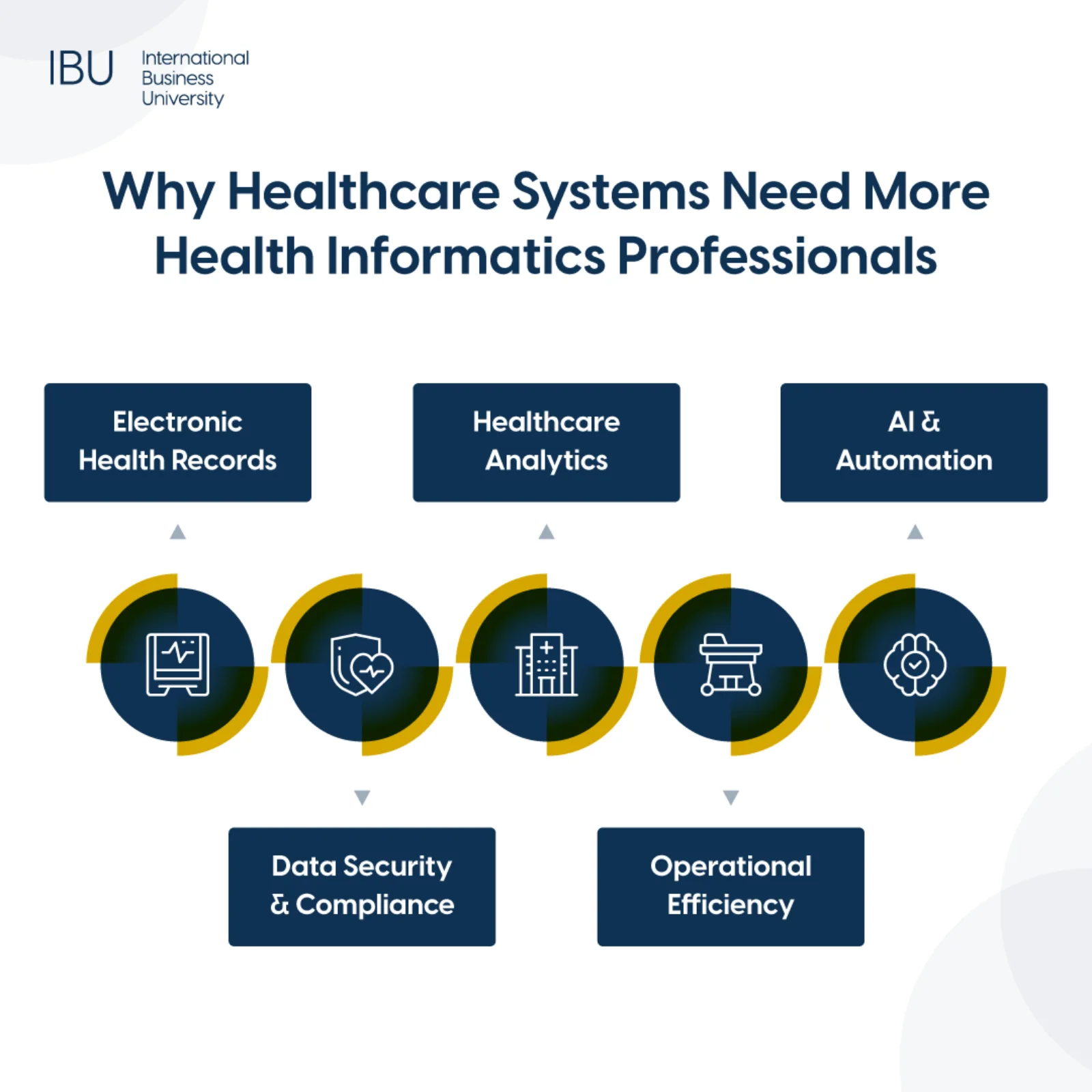
Electronic health record systems, real-time clinical data platforms, population health management tools, and AI-driven diagnostic systems are all producing more structured data than Canadian health systems have the capacity to analyze, manage, and apply effectively.
Key Takeaways
- The gap between clinical knowledge and data literacy is widening: Professionals who bridge clinical context and data capability are among the most in-demand in Canadian healthcare.
- Health informatics is multiple distinct roles, not one job title: Clinical informatics analyst, health information manager, digital health project manager, and senior leadership roles all fall under the health informatics umbrella with different entry paths.
- Ontario is the largest market, but hiring is national: British Columbia, Alberta, and digital health companies across major Canadian cities all hire health informatics professionals consistently.
- MBA-level credentials unlock senior roles: Director and VP of Clinical Informatics positions are increasingly hiring MBA graduates with healthcare and data analytics backgrounds over candidates with clinical credentials alone.
What Health Informatics Professionals Actually Do Inside Canadian Hospitals
Health informatics is not a back-office technology function. It is an active, patient-facing discipline that determines how clinical information flows, how data is structured and governed, and how clinical decisions are supported by evidence.
Clinical Systems Management
Health informatics professionals manage the electronic health record systems, clinical decision support tools, and patient data infrastructure that hospitals operate on. This includes overseeing system implementations, training clinical staff, and managing data quality. In a large hospital like Toronto’s Sunnybrook or Vancouver General, this function involves dozens of people working across IT, clinical operations, and administration simultaneously.
Data Quality and Governance
Healthcare data is only useful if it is accurate, consistently coded, and properly governed. Health informatics professionals establish and enforce the standards that make clinical data trustworthy for analysis, reporting, and regulatory compliance. This is an unglamorous but critical function – poor data quality directly affects patient care quality and institutional compliance with provincial and federal reporting requirements.
Clinical Analytics and Reporting
Converting clinical data into actionable insights for care teams, administrators, and policy makers is a growing function inside every mid-to-large Canadian health organization. Health informatics professionals in analytics roles work with tools like Power BI, Tableau, and specialized clinical analytics platforms to produce dashboards, utilization reports, and performance metrics that guide operational decisions.
Why the Gap Between Clinical Training and Data Literacy Is Becoming a Crisis
Clinical professionals – nurses, physicians, pharmacists, allied health workers – are trained to deliver care. They are not trained to manage data systems, govern clinical databases, or analyze population health trends. And data professionals without clinical backgrounds do not understand the care environment well enough to build systems that clinical staff will actually use.
Health informatics professionals occupy the bridge between these two worlds. They have enough clinical context to understand why a data field matters in a care setting, and enough technical capability to work with the systems that manage that data. This combination is rare, which is why demand for people who can genuinely operate in both domains consistently exceeds supply in the Canadian healthcare market.
The Roles That Sit Inside Health Informatics: Titles, Scope and Demand
Health informatics is not a single job title. It is a domain that encompasses multiple distinct roles, each with different scopes, entry requirements, and career trajectories.
Clinical Informatics Analyst
Clinical informatics analysts work directly with healthcare data systems to support clinical operations. They troubleshoot EHR issues, build reports for clinical teams, support system upgrades, and act as the interface between IT and clinical departments. This is one of the most accessible entry-level health informatics roles and is available across hospitals, health authorities, and long-term care organizations across Canada.
Health Information Manager
The Canadian Health Information Management Association’s Workforce Study identifies health information managers as one of the foundational professional categories in Canadian healthcare. These professionals oversee patient record management, coding accuracy, privacy compliance, and data reporting. CHIMA’s professional certification – the CHIM designation – is the recognized credential for this pathway.
Director or VP of Clinical Informatics
Senior leadership roles in health informatics are among the fastest-growing executive positions in Canadian healthcare organizations. These leaders own the digital health strategy, oversee technology implementations, and manage the teams responsible for data governance and clinical analytics. MBA graduates with healthcare backgrounds who also have data analytics competency are among the strongest candidates for these roles.
Digital Health Project Manager
Technology implementations in healthcare – EHR rollouts, telehealth platform deployments, AI diagnostic tool integrations – require project managers who understand both clinical workflows and IT delivery methodologies. Digital health project managers command premium compensation precisely because the combination of competencies is uncommon.
Explore MBA in Digital Health and Data Analytics
IBU’s MBA in Digital Health and Data Analytics prepares graduates for health informatics careers.
How Digital Health Jobs Are Reshaping the Canadian Healthcare Workforce
The acceleration of digital health investment in Canada following the COVID-19 pandemic created demand that has not slowed. Canada Health Infoway, provincial health authorities, and the federal government have collectively committed billions of dollars to digital health infrastructure over the past five years.
This investment is creating a generation of health informatics positions that did not exist a decade ago – and a hiring challenge for organizations that need professionals who can operate at the intersection of clinical knowledge, data science, and organizational management.
The graduates best positioned to fill these roles are those who combine clinical or healthcare education with graduate-level data analytics training – the exact profile that programs like IBU’s MBA in Digital Health and Data Analytics are built around.
How an MBA in Digital Health and Data Analytics Builds the Right Foundation
An MBA in healthcare-focused digital health combines business management with the specific analytical and systems knowledge that health informatics careers require.
- Healthcare operations and systems thinking – understanding how hospitals and health authorities function as organizations
- Data analytics tools and methods – working with clinical data, building dashboards, and interpreting population health metrics
- Healthcare technology management – EHR systems, clinical decision support, digital health platform governance
- Leadership and change management – managing the organizational and clinical change that technology implementations produce
This combination is what health informatics hiring managers describe as the ideal background for senior informatics roles – technical enough to work with clinical data systems, leadership-capable enough to manage teams and influence clinical staff.
Which Canadian Cities and Health Systems Are Hiring the Most Right Now
The Government of Canada Job Bank’s occupational outlook for health information management shows moderate-to-good demand in Ontario for the 2025-2027 period, with consistent openings created by both growth and retirement-driven vacancies.
Ontario is the largest market by volume, driven by the scale of its hospital networks – Ontario Health, hospital networks like the University Health Network, Sunnybrook, and the provincial health authorities managing dozens of facilities each. British Columbia, Alberta, and Quebec also have strong health informatics hiring activity, particularly for senior analytical and leadership roles.
Digital health companies and health technology vendors headquartered in Toronto, Vancouver, and Ottawa represent a second major hiring stream outside hospital systems – including companies like OceanMD, Maple, League, and dozens of smaller health data and analytics firms.
Frequently Asked Questions
What qualifications do you need for health informatics jobs in Canada?
Entry-level health informatics roles typically require a post-secondary degree in a health-related field or information technology, along with some exposure to health data systems. The CHIM designation from CHIMA is the recognized professional credential for health information management specifically.
For senior informatics and leadership roles, employers increasingly seek candidates with a combination of healthcare domain knowledge and graduate-level education in data analytics or healthcare management. An MBA in Digital Health and Data Analytics provides this combination in a structured credential recognized by Canadian health organizations.
What is the salary range for health informatics professionals in Canada?
Salary ranges vary significantly by role and seniority. Clinical informatics analyst roles typically range from $60,000 to $90,000. Health information managers earn $65,000 to $95,000. Directors of Clinical Informatics command $110,000 to $160,000 or more, depending on the organization’s scale.
The Coursera health informatics salary guide notes that health informatics professionals often earn higher-than-average salaries for health sector roles, driven by the specialized combination of technical and clinical knowledge the positions require.
Is health informatics a good career in Canada?
Yes. The combination of consistent healthcare demand, government investment in digital health infrastructure, and an undersupply of professionals who bridge clinical and data domains creates one of the more favorable career contexts in the Canadian job market.
The field also offers career longevity – health systems are not discretionary spending, and the digitization of Canadian healthcare is a multi-decade transition that will require informatics professionals at all levels for the foreseeable future.
Health Informatics Is the Career That Connects Clinical Context to Data Capability
Canada’s healthcare system is mid-transition from paper and siloed data to integrated, data-driven clinical operations. The professionals leading that transition – managing the systems, governing the data, and building the analytics that turn clinical information into better patient outcomes – are health informatics specialists.
The demand is clear. The supply of qualified candidates is not keeping up. For students with an interest in healthcare and an aptitude for data and systems, health informatics is one of the most opportunity-rich career directions in Canada right now.

Start Your MBA Application at IBU
Build the business, healthcare, and data foundation needed for digital health and health informatics roles in Canada.