

Every hiring manager who interviews a business graduate is running two parallel assessments.
The first is technical: Does this person have the knowledge, interpersonal skills, and credentials the role requires? This assessment is largely complete before the interview, which is why the candidate was invited.
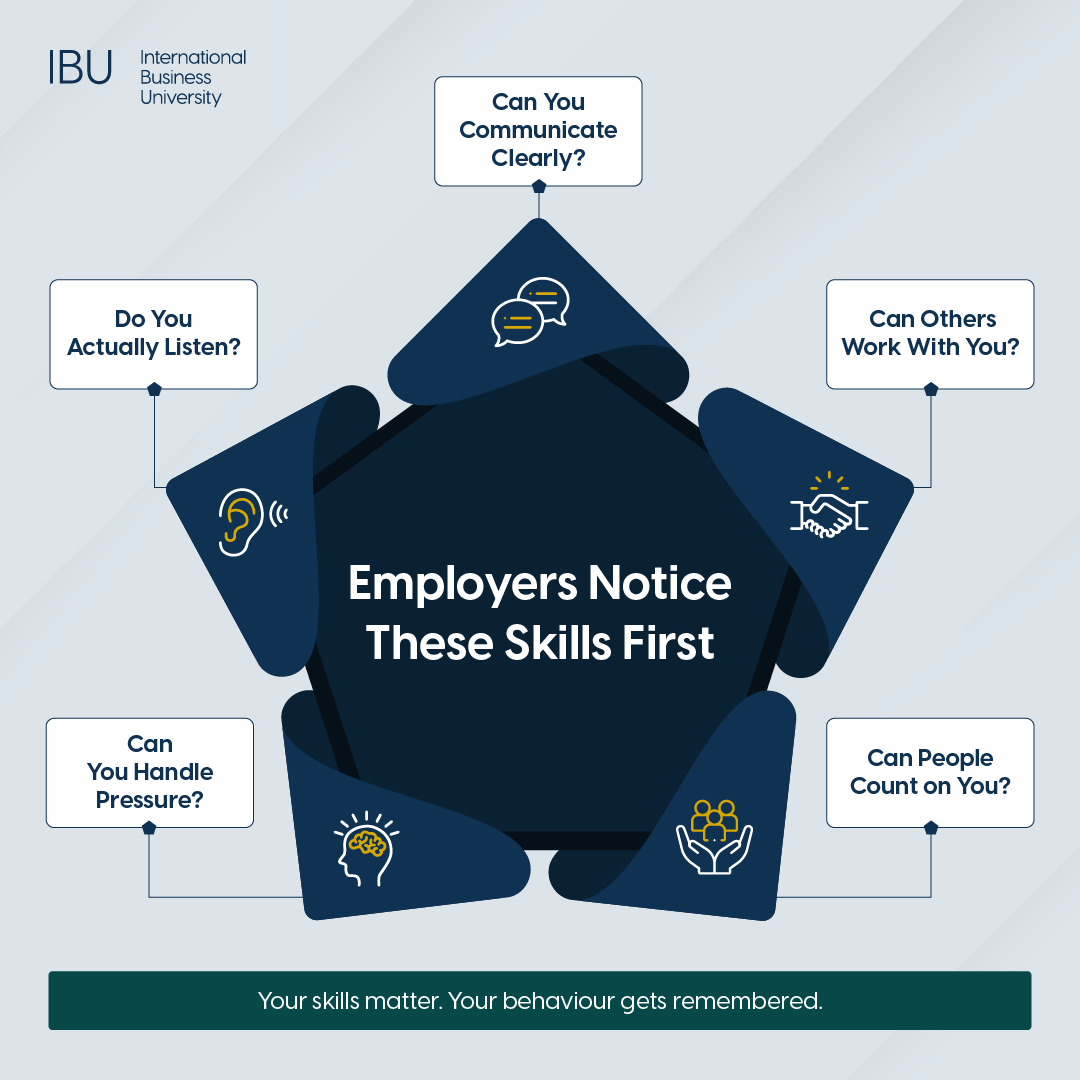
The second is interpersonal: Can this person communicate clearly, build trust quickly, navigate disagreement without damaging relationships, and influence outcomes without direct authority? This assessment happens in real time, across every interaction in the interview and in the first 90 days of employment.
The candidates who understand that the second assessment is happening, and who have deliberately developed the skills it measures, consistently outperform those who invested only in technical preparation.
Why Interpersonal Skills Decide Promotions Before Performance Reviews Do
Performance reviews measure output. Promotions are made by the people above you based on their experience of working with you, and that experience is shaped almost entirely by your interpersonal effectiveness.
A technically strong performer who is difficult to communicate with, who cannot manage disagreement without creating friction, or who struggles to influence peers without direct authority creates organizational cost that offsets the technical value they produce. Organizations promote people they trust to represent the organization to others, manage teams effectively, and navigate the complexity of multi-stakeholder environments.
These are interpersonal skills. They are learnable, developable, and directly connected to career velocity in ways that additional technical credentials rarely replicate once you are past the initial qualification threshold.
The Interpersonal Skills Canadian Employers Score You On in Week One
The first week in any new role is the highest-stakes interpersonal assessment you will face at that organization. Impressions formed in week one are deeply persistent and require months of sustained counter-evidence to shift.
Situational Awareness
Situational awareness means reading the room accurately before acting. New professionals who challenge decisions publicly, make confident assertions before building credibility, or attempt to demonstrate intelligence before earning trust consistently damage their standing in ways that take months to recover.
The effective approach in a new environment:
- Listen before asserting: spend the first month listening significantly more than speaking
- Ask over conclude: ask questions that signal curiosity rather than declaring positions
- Observe before acting: understand organizational culture, power structures, and existing dynamics before attempting to change them
Responsiveness and Follow-Through
In week one, managers and colleagues are watching one thing closely: do you do what you said you would do, when you said you would do it.
- Respond promptly: every communication warrants a timely acknowledgment, even if full resolution takes longer
- Deliver on time: complete every commitment at or above the quality implied when you accepted it
- Communicate early: if something will be late or incomplete, raise it before the deadline, not after
These behaviors compound into a reputation for reliability that carries more weight in organizational advancement than most formal credentials. See how IBU’s BCOM program builds these professional habits from year one.
How Interpersonal Communication Shapes Every Client and Team Relationship
Interpersonal communication is not presentation skills or articulation alone. It is the full set of behaviors that determines whether the person you are communicating with understands you, trusts you, and is willing to act on what you are suggesting.
The Clarity Principle
Business communication fails most often because the communicator structures information at their own level of understanding rather than their audience’s. The disciplines that distinguish excellent communicators from merely knowledgeable ones:
- Lead with the conclusion: state the outcome or recommendation before the supporting evidence
- Sequence for the listener: organize information in the order the audience needs it, not the order you learned it
- Remove jargon: cognitive friction from unnecessary terminology reduces comprehension and erodes credibility
This structure, known in consulting as the “so what first” principle, respects the listener’s time and makes your message easier to act on.
Conflict Navigation
Professional environments produce disagreement continuously. The interpersonally effective professional navigates disagreement in ways that preserve relationships while still advancing their position honestly.
- Acknowledge first: recognize the other person’s perspective before presenting your own
- Separate position from person: frame disagreement around the idea, not the individual
- Find shared interest: identify the underlying common goal rather than defending a position at the expense of the relationship
Build Interpersonal Skills From Year One
Develop communication, teamwork, and professional habits through applied business learning
Active Listening Skills: The Competency Most Business Graduates Underestimate
Active listening is consistently identified as one of the highest-value interpersonal competencies in professional environments and one of the least practiced. It is the foundation of trust development, conflict resolution, and effective feedback delivery.
Active listening is not passive silence while waiting to speak. It requires:
- Visible engagement: appropriate eye contact, nodding, and verbal acknowledgment that signals attention
- Listening between the lines: noticing hesitation, qualifiers, and what someone mentions briefly and moves past
- Responding to what was said: replying to what was actually communicated, not the response you prepared before the other person finished speaking
Why Most Graduates Are Poor Active Listeners
Business programs teach you to arrive prepared, hold a position, and defend it. That preparation habit is genuinely valuable. In meetings where the goal is to understand a client’s concern, a colleague’s objection, or a manager’s feedback, it becomes an interpersonal liability.
Arriving with a prepared position and defending it regardless of what the other person says is an interpersonal failure that presents as confidence. Graduates who develop the discipline to genuinely listen, and to update their position based on what they hear, build significantly stronger professional relationships.
Practical Active Listening Behaviors
- Summarize before responding: “So what you’re saying is…” confirms understanding before you react
- Ask before concluding: “Can you tell me more about what you mean by…” prevents premature assumptions
- Resist solving early: let the other person finish describing the problem before offering a solution
- Reflect emotional content: acknowledge the feeling behind what someone is sharing, not just the factual content
Emotional Intelligence in the Workplace and Why It Outranks Your GPA
Emotional intelligence (EQ) describes the ability to recognize, understand, and manage your own emotions and to recognize and influence the emotions of others. Research consistently shows positive correlations between EQ and job performance, with the strongest effects in roles requiring significant interpersonal interaction. The 7Cs of communication framework used in professional development programs reflects this directly, placing emotional awareness at the center of high-performance communication.
In practical organizational terms, EQ manifests in three specific behaviors.
Self-Awareness
Knowing how you come across, understanding your emotional triggers, and recognizing when your emotional state is affecting your judgment before it creates a problem. Self-aware professionals catch themselves before an emotional reaction causes interpersonal damage rather than needing to repair it afterward.
Empathy
Accurately reading the emotional state of the people you work with and adjusting your communication accordingly:
- Feedback delivery: The manager who delivers difficult feedback in a way that respects the recipient’s emotional reality produces better outcomes than one who does not
- Team reading: the colleague who notices a teammate is overwhelmed and adjusts their requests accordingly maintains team capacity and trust
- Environmental impact: empathetic behaviors produce conditions where people perform at their best
Emotional Regulation
Managing your own emotional responses in high-pressure situations is one of the most visibly valued interpersonal qualities in any professional environment:
- Under pressure: delivering difficult news calmly and maintaining composure when the situation triggers frustration
- In conflict: navigating disagreement without escalating the emotional register of the exchange
- In leadership: senior professionals consistently describe emotional regulation as a prerequisite for the trust that leadership positions require
Coaching and Mentoring as Leadership Competencies BCOM and MBA Graduates Need Early
Most graduates do not consider coaching and mentoring as skills relevant to the early years of their career. This creates a gap in how they develop peer relationships and professional visibility.
The ability to ask good questions, help a colleague work through a problem rather than giving them the answer, and support someone’s development without taking over their work are interpersonal skills that make you more valuable to your team and more visible to the leaders above you.
Early-career professionals who develop basic coaching behaviors build peer reputations that produce upward visibility faster than technical achievement alone:
- Ask before solving: “What have you tried?” before offering a solution signals respect and builds autonomy
- Follow up deliberately: checking back on challenges colleagues mentioned previously demonstrates that you were listening and that you care about outcomes
- Give specific feedback: behavioural and specific feedback, rather than generic praise, is more useful and more memorable
IBU’s BCOM and MBA programs build these interpersonal leadership competencies through applied coursework, team-based projects, and structured mentorship exposure.
Strengthen the Skills That Move Leaders Forward
Build leadership, communication, and decision-making skills for management roles.
How to Build Stakeholder Management Skills Before You Graduate
Stakeholder management is the practice of identifying the people whose support, approval, or engagement you need to accomplish a goal, understanding their interests and concerns, and communicating with them in ways that maintain that support. It is one of the core business skills that separates graduates who advance quickly from those who plateau.
This skill is available to develop right now, in every group project, student club leadership role, part-time job, and academic presentation. Students who treat these experiences as genuine stakeholder management practice build a competency that most graduates only develop years into their careers.
Mapping Stakeholders Before You Need Them
Before any significant professional interaction, a presentation, a project pitch, or a difficult conversation, work through three questions:
- Who needs to be on your side for this to go well?
- What are their specific concerns and interests?
- How does your communication address those concerns directly?
This pre-interaction stakeholder thinking is the foundational habit of effective stakeholder management. It takes five minutes and produces significantly better outcomes than walking into professional interactions without it.
How IBU Builds Interpersonal Skills Into Every Program
IBU’s BCOM and MBA programs integrate interpersonal skill development into the academic curriculum rather than treating it as a co-curricular add-on. Every program produces specific interpersonal development through:
- Group project work is structured to require negotiation, conflict resolution, and collaborative decision-making across diverse teams
- Case presentations to panels with challenging follow-up questions that develop composure under pressure and active listening under critique
- Peer feedback processes that build self-awareness and the ability to give and receive specific behavioural feedback
- Networking events and alumni panels that develop professional introduction and relationship-building skills in live settings
- Leadership simulations in the MBA program that put students in managerial scenarios requiring stakeholder management, coaching conversations, and team communication under time pressure
Key Takeaways

Interpersonal skills are assessed before technical skills in most hiring conversations: The first assessment in any interview or performance review is whether the person builds trust, communicates clearly, and navigates complexity without creating friction.
Active listening is underpracticed and highly valued: The discipline of genuinely updating your position based on what you hear, rather than defending a prepared stance, builds trust faster than any other communication behavior.
EQ correlates positively with job performance: Particularly in roles with significant interpersonal requirements, emotional intelligence is one of the strongest predictors of sustained performance and advancement.
Coaching behaviors are learnable and valuable early: Early-career professionals who ask good questions, support colleagues’ thinking, and give specific behavioural feedback build peer and upward visibility faster than those who compete only on technical output.
Stakeholder mapping before important interactions produces better outcomes: Five minutes of thinking about who needs to be on your side and what their concerns are consistently improves the outcomes of professional presentations, pitches, and difficult conversations.
Frequently Asked Questions
Can interpersonal skills be taught in a business program?
Yes, but only if the program is designed to develop them through practice rather than through lecture. Interpersonal skills are behavioural competencies, they improve through repeated application, feedback, and reflection, not through reading about them.
IBU programs create structured environments for interpersonal skill practice: group work with genuine conflict and deadline pressure, presentation feedback from faculty and peers, stakeholder communication exercises, and leadership simulation scenarios that require real-time interpersonal decision-making. Students who engage with these experiences deliberately, not just to complete the assignment but to develop the skill, leave the program with meaningfully stronger interpersonal capability than those who treat them as boxes to check.
What is the most important interpersonal skill for a new business graduate?
Active listening is consistently identified by hiring managers as the most underdeveloped and most valued interpersonal skill in new graduates. The ability to genuinely hear and respond to what a client, colleague, or manager is actually saying, rather than defending a prepared position, produces faster trust development than almost any other single behavior.
After active listening, clarity of communication, specifically the ability to deliver complex information in a structure the audience can follow and act on, is the interpersonal skill most frequently cited as differentiating strong performers from merely competent ones in the first year of employment.
How do interpersonal skills affect MBA and BCOM graduate salaries?
Interpersonal skills affect graduate salaries primarily through their effect on career velocity, not directly through job offer amounts, but through promotion timing, performance bonus access, and the access to senior roles that interpersonal reputation determines.
Graduates who develop strong interpersonal skills consistently reach the management and leadership levels that command significantly higher compensation faster than those who rely on technical credentials alone. The salary differential between individual contributor and management-track roles in Canadian business is typically $20,000 to $50,000+ annually, and access to that trajectory is largely determined by interpersonal effectiveness.
Interpersonal Skills Are the Multiplier on Everything Else You Build
Technical credentials determine which doors are available to you. Interpersonal skills determine which ones you can actually open and what happens once you are through them.
BCOM and MBA graduates who invest in developing their interpersonal capability, not as a soft supplement to hard skills but as a core career investment, consistently build more successful, more sustainable, and more satisfying careers than those who treat the people side of professional life as secondary to the technical side.
The two sides are not in competition. Technical strength with interpersonal capability is the combination that drives the careers employers promote into leadership, and the combination that IBU’s programs are designed to produce.
Turn Interpersonal Strength Into Career Preparation
Start your IBU application and choose the business pathway that fits your goals.