

Most graduates treat convocation as a ceremony. The best ones treat it as a career event.
Convocation brings together a specific combination of people who are almost never in the same room at the same time: your graduating cohort, faculty who know your work, institutional leadership, employer guests, and alumni at every career stage. The room is full of people who share a common reference point with you, the institution, and who are, at least for that day, predisposed to engage.
The graduates who leave convocation with three meaningful new contacts change the odds of their first-year career outcomes significantly compared to those who leave with only photographs.
Key Takeaways
- Convocation is a career event: Treat it as one. Prepare in advance, identify who you want to speak with, and have a plan for the follow-up.
- Warm context is a real advantage: The shared institutional reference creates an opening that cold LinkedIn messages cannot replicate.
- Five contact types produce the best outcomes: Faculty, employer representatives, senior alumni, high-value classmates, and institutional leadership are the priority contacts in every convocation room.
- Follow up within 48 hours: The follow-up window is short. A message the next morning turns a handshake into a connection. Waiting four days turns it into nothing.
- LinkedIn is a starting point, not a destination: Converting a connection into a relationship requires ongoing, low-pressure engagement over months.
Why Networking at Convocation Is the Most Underused Career Move in Your Degree
Graduates who network effectively in their first year out report that their most valuable early connections came through warm contexts, referrals, events, and institutional connections, rather than cold applications. Convocation is one of the warmest contexts available to a new graduate.
The shared institutional context creates an opening that a LinkedIn cold message cannot replicate. You are not a stranger reaching out. You are a fellow alumnus, a student someone taught, or a peer of someone’s colleague. That context lowers the social friction of making a first connection dramatically.
Most graduates do not take advantage of this because they are self-conscious, unsure of what to say, or distracted by the social aspects of the event. The ones who prepare in advance, who know who they want to speak with and what they want to say, have a material career advantage.
The Five People Worth Finding in Every Convocation Room
Not every conversation at convocation has the same career value. Prioritizing five specific types of contacts gives your networking at convocation a structure that produces actual outcomes rather than pleasant small talk.
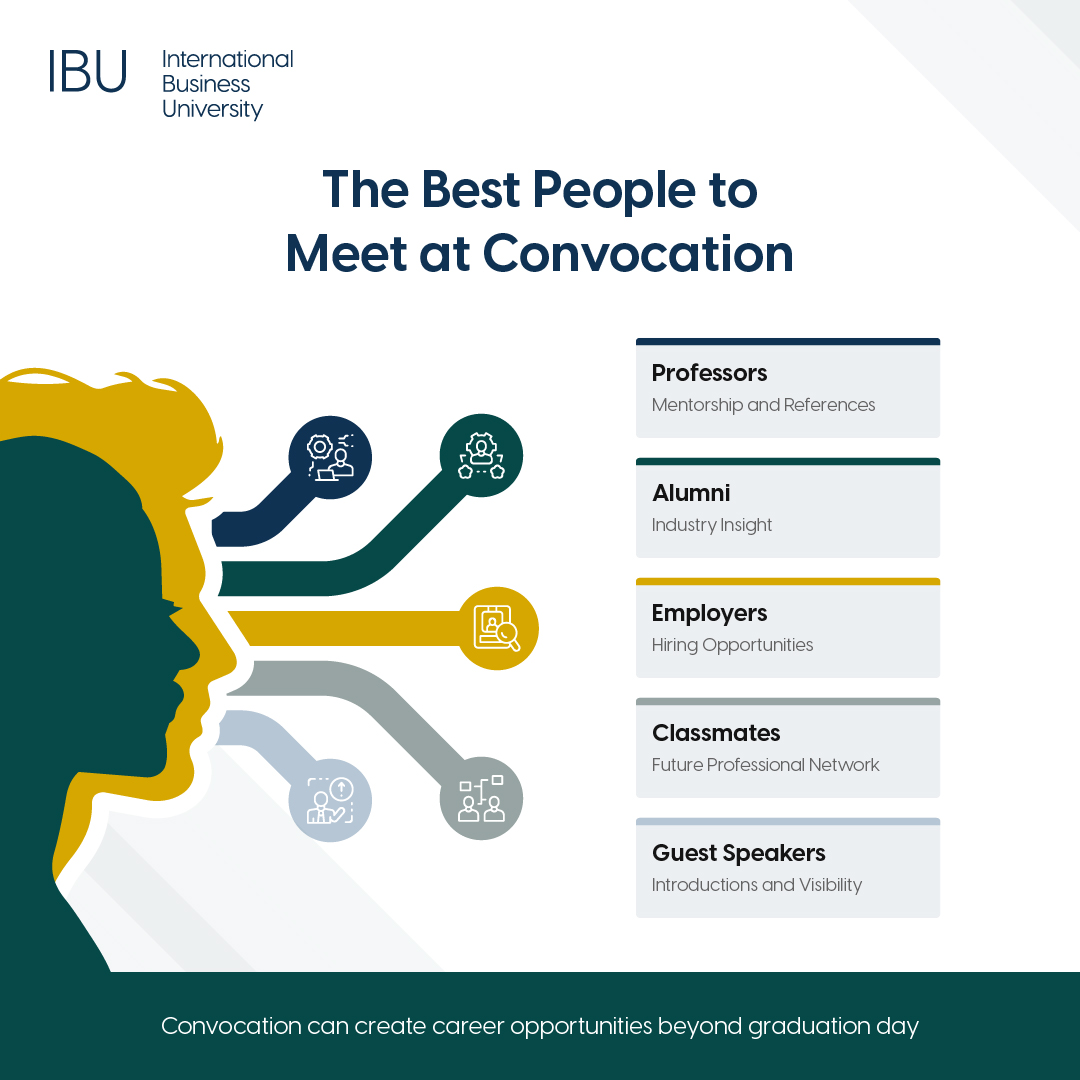
1. Faculty Who Know Your Work
Faculty who supervised your capstone project, gave you strong feedback in a core course, or wrote a reference letter for you are among the highest-value contacts in the room. They can provide referrals, recommend you for positions they hear about, and serve as credible professional references for years after graduation. Thank them specifically, not generically, and ask if you can stay connected.
2. Employer Representatives Present at the Event
Companies that sponsor convocation events, send representatives to congratulate graduates, or partner with the institution for recruitment are actively signaling hiring interest. Identify them before the event through the institution’s event program. These are warm leads, not cold contacts.
3. Alumni at Senior Career Stages
Senior alumni attending convocation, particularly those from five to fifteen years ahead of you, represent a direct view of what your career could look like and a potential referral path into their organizations. Most are genuinely willing to speak with new graduates from the same institution, particularly in the convocation context.
4. Classmates Entering High-Value Organizations
Your cohort is your peer network. The classmate who accepted a position at a bank, a consulting firm, or a technology company is a potential referral source within months of graduation. Stay in active contact with classmates entering organizations you would consider working for.
5. Department Heads and Program Directors
Institutional leadership at convocation often has direct relationships with employer partners and is aware of opportunities before they are publicly posted. A brief, professional introduction, thanking them for the program and expressing your career direction, can result in an introductory email to someone they know.
How to Network as a Student Without Sounding Rehearsed
The most effective networking conversations at convocation feel natural. That does not mean they are unprepared, it means the preparation is in the thinking, not in a memorized script.
The Opener That Works
Start with a specific, genuine observation rather than a generic introduction. ‘Your course on organizational behaviour completely changed how I think about management’ is better than ‘Hi, I’m one of your former students.’ Specificity signals that you paid attention and creates a real conversational starting point.
The Bridge to Career Context
After the opener, share briefly where you are going, not as a request for help, but as context. ‘I’m heading into a business analyst role at [company] next month’ or ‘I’m actively looking for operations roles in the GTA’ gives the other person the information they need to know whether they can be useful to you, without you having to ask.
The Close That Creates a Next Step
End every conversation with a specific next action, not a vague ‘stay in touch.’ Ask for a LinkedIn connection on the spot. Ask if you can send a brief email next week. If the conversation was particularly valuable, ask if you can schedule a 20-minute call in the following month. Vague closes produce no follow-up. Specific closes produce connections.
Build Your Professional Network
IBU connects students to alumni networks and career support from day one.
The 48-Hour Follow-Up That Turns a Handshake Into a Referral
The conversation at convocation is the opening. The follow-up within 48 hours is what determines whether anything comes from it.
Send a LinkedIn connection request the same evening or the morning after, with a brief personalized note: ‘It was great speaking with you at convocation yesterday. I appreciated your thoughts on [specific thing discussed]. I’d value staying connected.’
For contacts where the conversation was substantive, send a short email within two days referencing the specific exchange and proposing a concrete next step, a 20-minute call, a coffee meeting, or simply an offer to send your resume for their files.
The follow-up window closes quickly. A message sent four days after convocation feels like an afterthought. One sent the next morning feels like the action of someone who takes their professional relationships seriously.
How to Convert a LinkedIn Connection Into a Mentor or Job Lead
A LinkedIn connection is not a relationship. It is the starting point for one. Converting it into something useful requires consistent, low-pressure nurturing over time.
- Engage meaningfully with the contact’s posts, a substantive comment, not just a like
- Share occasional professional updates that are relevant to their work or their area of interest
- Reach out with a specific question relevant to their expertise every two to three months
- Refer others to them when appropriate, reciprocity builds professional relationships faster than any other mechanism
The graduates who use LinkedIn actively, not as a resume storage site but as a relationship management tool, build networks that produce referrals, informational interviews, and job leads within one to two years of graduation.
The Mistakes That Make You Forgettable Before You Leave the Room
- Asking for a job directly in the first conversation: Convocation is not a job fair. Treating it as one signals that you are not reading the social context of the room. Build the connection first.
- Generic conversation with no specific memory hook: If someone cannot remember anything specific about your conversation an hour later, the connection will not survive the follow-up window.
- Not following up at all: The majority of convocation connections fail not because the conversation was bad, but because no one sent the message the next morning.
- Spending the whole event with your graduating cohort: Your classmates are valuable contacts, but they are the people you will stay in touch with naturally. The higher-leverage investment is time with faculty, senior alumni, and employer representatives you would not otherwise encounter.
Frequently Asked Questions
What should I say when introducing myself at convocation?
Lead with something specific and genuine, a reference to a course, a project, or a professional interest that connects to the person you are speaking with. Follow it with a brief statement about your career direction, not a request for help. Close with a specific next step, like a LinkedIn connection request or a proposal to follow up by email.
The most important thing is specificity. Generic introductions are forgettable. Specific ones, ‘Your marketing analytics course gave me the foundation I used in my internship at [company]’, create a real conversational moment that is worth remembering.
Is it awkward to network at convocation?
Slightly, the first time. Less than at any other professional event, because the shared institutional context removes most of the cold-start awkwardness. Everyone in the room went to the same school, knows the same faculty, and has at least something in common with you from the start.
The graduates who find convocation networking awkward are almost always those who do not prepare. Knowing who you want to speak with, why, and what you want to say eliminates most of the discomfort.
What if the conversation was short and I did not get to say much?
Short conversations are fine. A 60-second exchange that ends with a LinkedIn connection request and a follow-up message the next day is more productive than a 10-minute conversation that ends with a vague promise to stay in touch.
Use the follow-up message to continue the conversation. ‘It was brief at convocation, but I wanted to follow up, I’m genuinely interested in [specific area they mentioned] and would value your perspective if you have 20 minutes in the coming weeks.’
Convocation Is the Start, Not the Finish
Networking at convocation does not produce results on the day. It produces results in the three to six months that follow, as conversations turn into informational interviews, informational interviews turn into referrals, and referrals turn into offers.
The graduates who treat convocation as the beginning of their professional network, not as the end of their academic career, consistently outperform their peers in the first-year job market.